You bought a tent and want to head on your great outdoor adventure, but now you read that wild camping is illegal in many European countries. Does it mean you are doomed to stay on official campgrounds, surrounded by families with kids or groups of young party makers and paying 20 euros a night? Luckily, in many European countries, there are alternatives!
This post was last updated in August 2026
My comprehensive guide to wild camping in Europe will help you plan your holidays with the tent and enjoy the beautiful nature of the Old Continent.
I’ll also share some tips on camping in the Netherlands, Germany, Belgium and other countries where wild camping isn’t allowed.
But first things first…
How to wild camp responsibly?
The basic rule of wild camping says: leave no trace. Here are some things you need to remember when sleeping in nature:
- Pack all your trash and take it with you.
- Be considerate when choosing a pitch so as not to destroy the vegetation.
- Only use biodegradable soap when washing your dishes and yourself. It is best to get some water into a pot, wash it and spill it somewhere on the ground to avoid contaminating the running water.
- Your toilet should be at least 30 metres from the water sources. It is best to dig a hole and cover it with soil later.
- Be quiet, and don’t disturb the animals (or other people).
- Be careful with campfires. If there is a drought, skip them.
- Respect wildlife.
- Don’t camp on private land without permission.
Rules for wild camping in Europe per country
Wild Camping in Albania
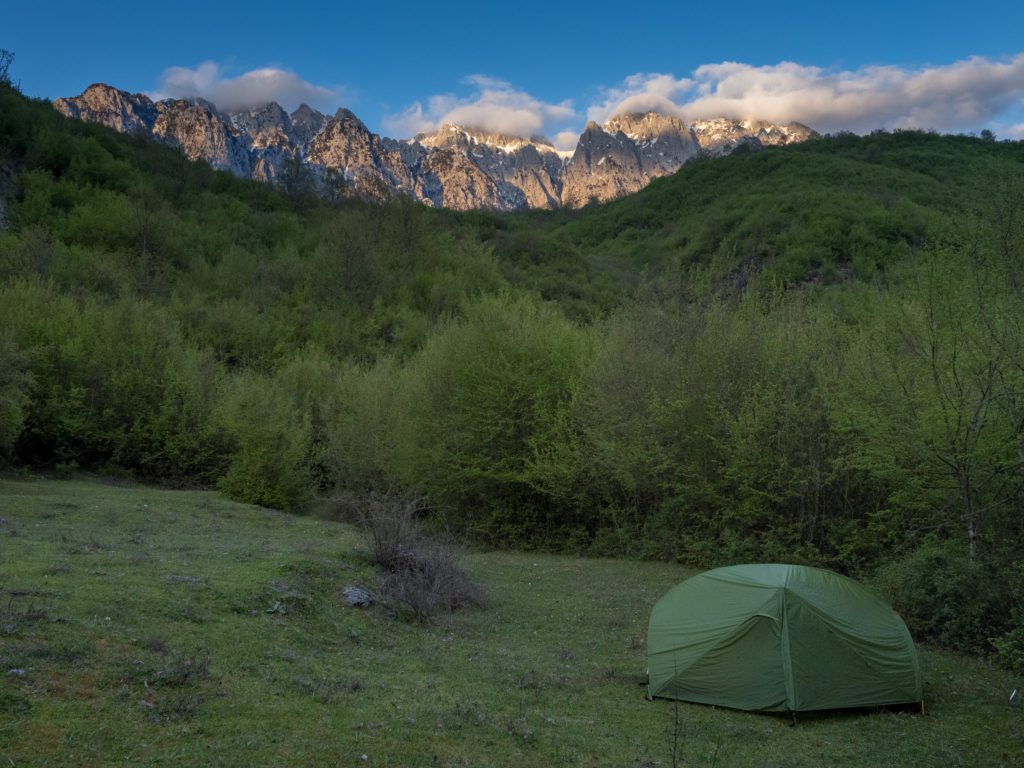
Albania is definitely one of my favourite countries in Europe for camping. The stunning views behind every corner and the wild mountains simply invite you to spend a night in your tent.
Wild camping in Albania is legal, and it’s easy to find a great spot to pitch your tent, especially in the mountains and in less touristy areas. The coast, however, is slowly becoming less friendly for tourists trying to pitch their tent in the wild. The beach resorts are expanding and more and more land is ending up in private hands.
Avoid also setting a camp near the borders or military areas (or you might get woken up by the police patrol). The same applies to protected nature reserves.
Wild camping in Austria
Wild camping in Austria is generally forbidden, and the fines for breaking the law are high. However, the rules vary from one federal state to another.
Wild camping is entirely forbidden in Burgenland, Lower Austria (Niederösterreich), and Vienna province (in Vienna, it’s not even legal to lay out and use your sleeping bag!).
In Carinthia and Tirol, the law allows for emergency bivouacking. That means you can only set up your tent in high alpine terrain in case of bad weather or injury.
In Upper Austria (Oberösterreich) and Styria, you can pitch your tent in the mountains, above the tree line, provided the land isn’t private or used as pastures or farmland.
Salzburg and Vorarlberg provinces don’t have an outright ban on wild camping, but every mayor can decide on the rules in his municipality. Camping above the tree line is also tolerated, as long as it’s done with great respect for nature and agriculture.
Wild Camping in Belarus
Setting a camp outside of designated areas is illegal in Belarus. It is allowed in certain areas determined by the local authorities.
Wild Camping in Belgium
Wild camping is illegal in Belgium. There is also not a lot of wild nature where you could find a quiet spot to pitch your tent.
Lucliky, there are some small semi-wild campsites, called bivouac zones, where you can legally camp for one night. They are accessible for non-motorised tourists only and are spread throughout the country in Flanders and Wallonia.
Some of the Belgian bivouac zones require travellers to reserve a spot beforehand (you can do it online for free).
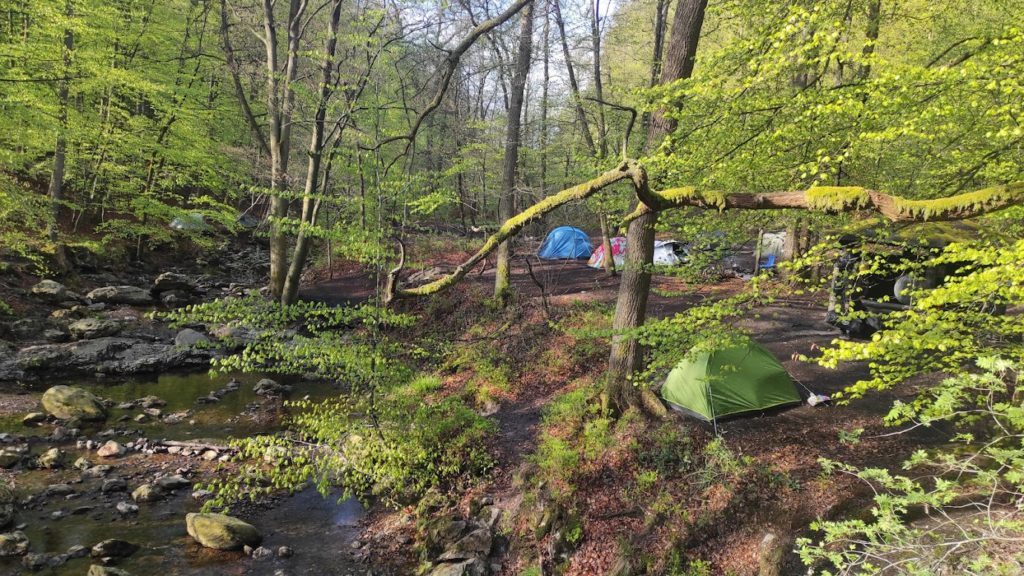
Another great alternative to wild camping in Belgium is the platform Welcome to My Garden. It is a non-profit organisation where the hosts offer tourists a part of their garden to pitch a tent. Thanks to WTMG, you can even camp in the centre of Brussels!
It’s also a great opportunity to meet locals and have an authentic experience, not only in Belgium. In 2026, the WTMG community is rapidly growing and you can even find a host in countries like Spain, the US, or even India.
A yearly membership costs 36 euros.
Cycling in Belgium – practical bike touring guide
Cycling the Vennbahn – one of Europe’s weirdest borders
Cycling in West Flanders – Hills, canals, and fries

Welcome to My Garden – How a Covid idea grew into a global community for slow travellers
Wild Camping in Bosnia and Herzegovina
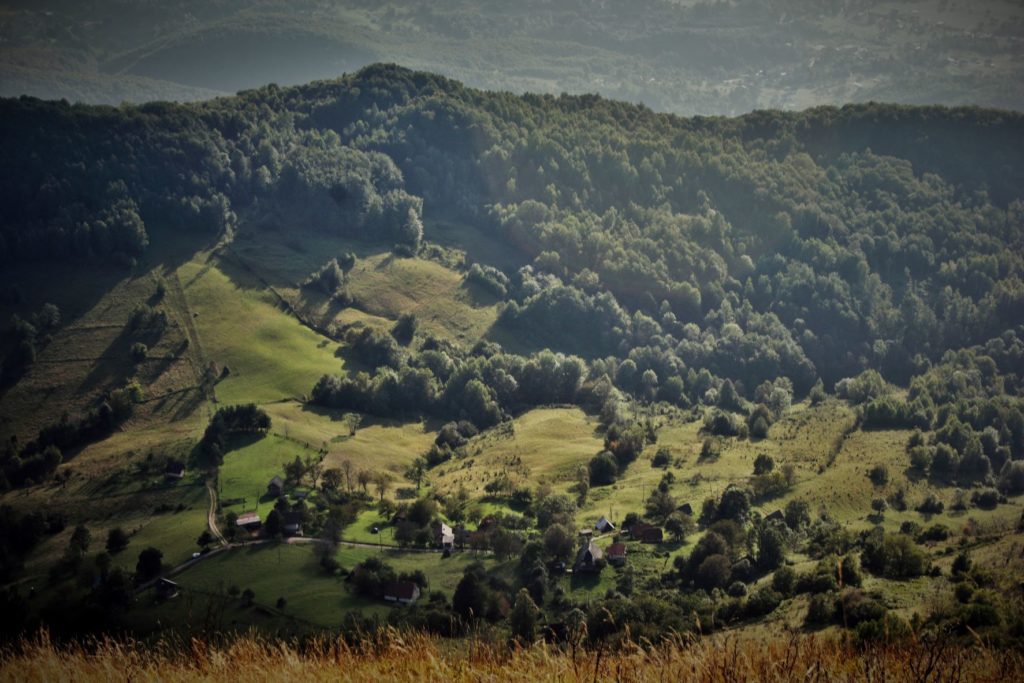
Wild camping is not officially allowed in Bosnia & Herzegovina, but it’s widely tolerated. As long as you stay off private land, nature reserves or military areas and set your camp somewhere in the mountains, you should be fine.
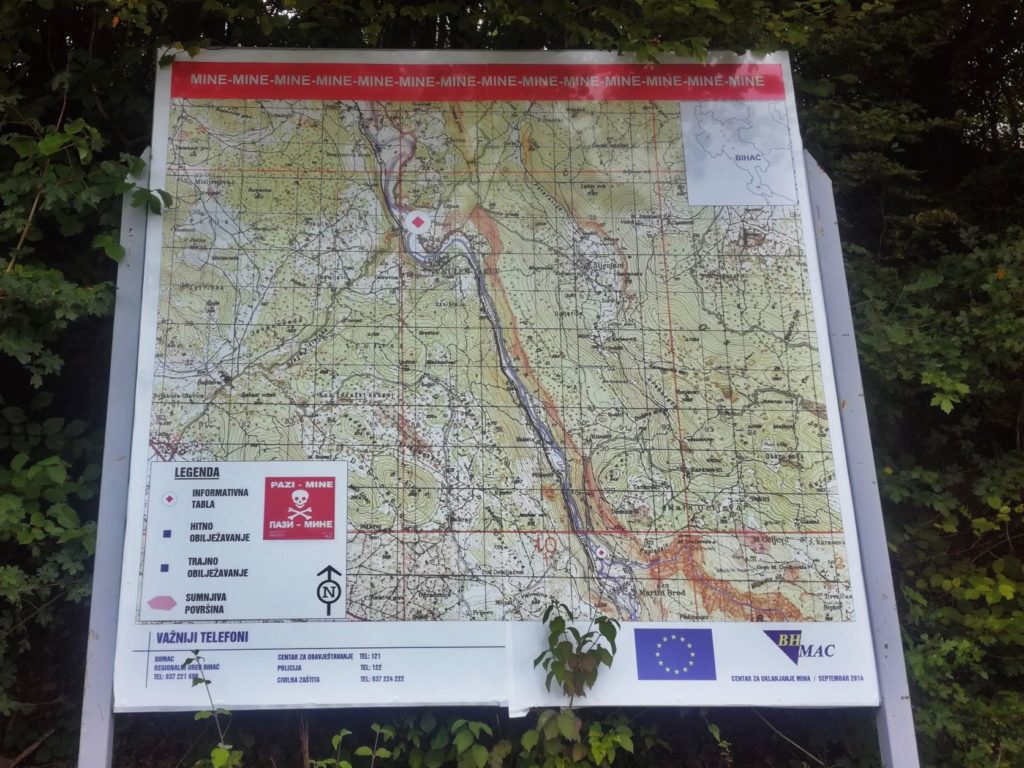
However, you should be extra cautious when searching for a spot, especially in remote areas. 30 years after the Bosnian war, mines still contaminate parts of the country.
You can recognise dangerous areas by red signs with a skull and crossbones. Before setting a camp in the wild, check the area map on the Mines Information Coordination Cell (MICC) website.
Wild Camping in Bulgaria
Bulgaria has a strong camping culture, and although wild camping is officially not allowed, people have always loved spending the summer in a tent on a beach or in the mountains. Wild camping is widely tolerated in less touristy areas but can be more restricted on the Black Sea coast.
You should definitely not wild camp outside of designated sites in national parks and protected areas or near natural and cultural landmarks.
It’s also forbidden to light a fire outside of designated places.
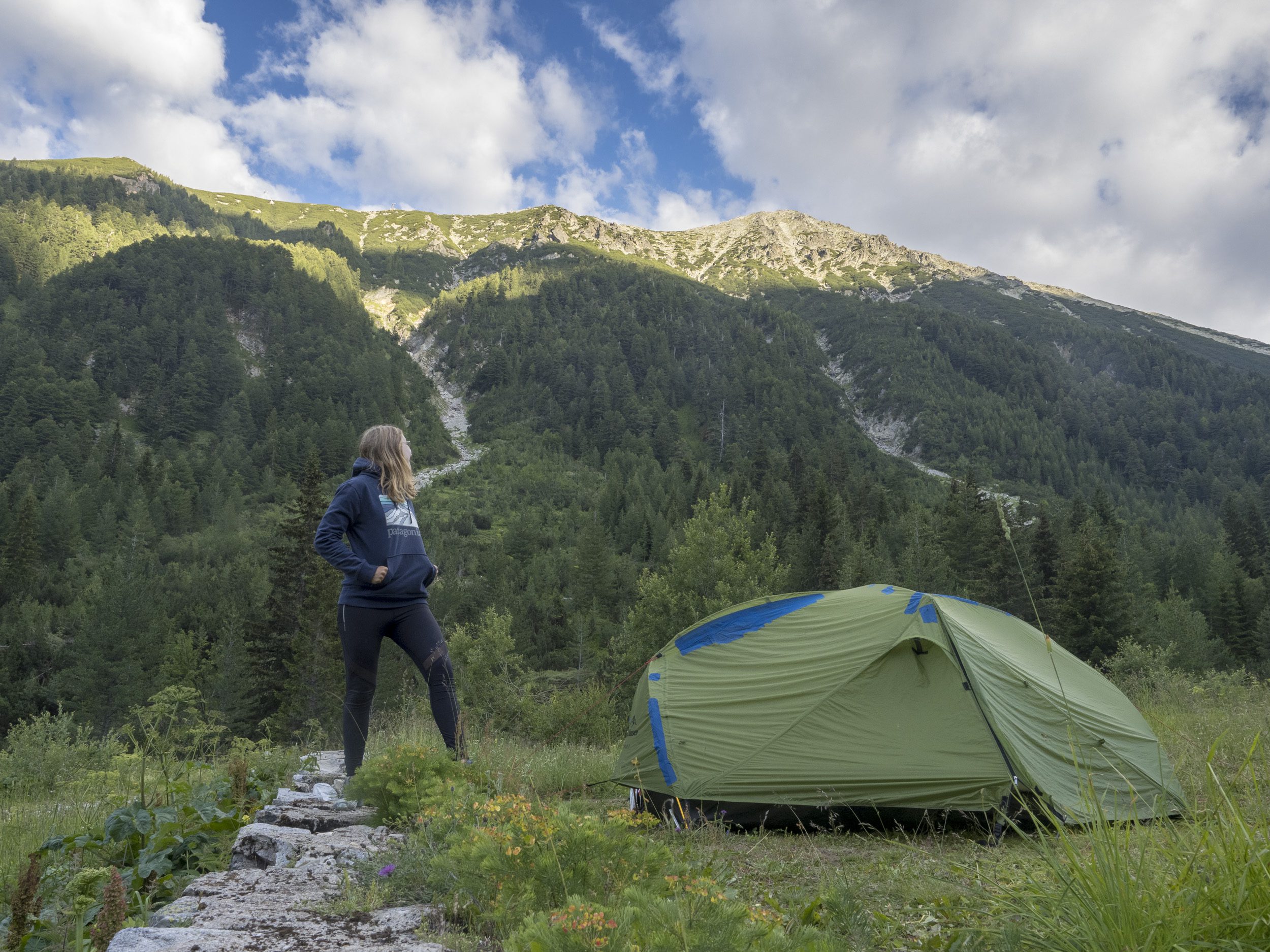
Wild Camping in Croatia
Wild camping is prohibited in Croatia, and trying to do it on the coast, you risk receiving a fine of up to 400 euros (most of the beaches have “no camping” signs and are regularly patrolled by the police).
In rural areas farther from the riviera, wild camping is more tolerated. However, it’s still best to ask local residents if and where you could set up your tent for a night.
Wild Camping in Czechia
Wild camping is illegal in the Czech Republic. However, you can bivouac (in a bivy sack, on a camping mat or in a hammock) for one night, provided you leave no trace.
National parks, nature protection areas, and private grounds are off the limits, both for camping and bivouacking. The fines for breaking the rules can be quite high (up to 200 euros), and the park rangers frequently patrol the national parks.
In the mountains, you can often find wooden shelters for emergency overnight stays. They are called bouda or utulna. A list of these huts is here.
In Šumava National Park, you’ll find a number of Emergency Overnight Campsites where you can legally spend one night free of charge. Here is a map of these campsites:
Wild Camping in Denmark
Wild camping outside of designated spots is not legal in Denmark. However, Denmark has an excellent network of legal free campsites (sometimes with basic wooden shelters and fireplaces. You can find them on udinaturen.dk, the official website of the Danish Nature Agency.
Wild Camping in Estonia
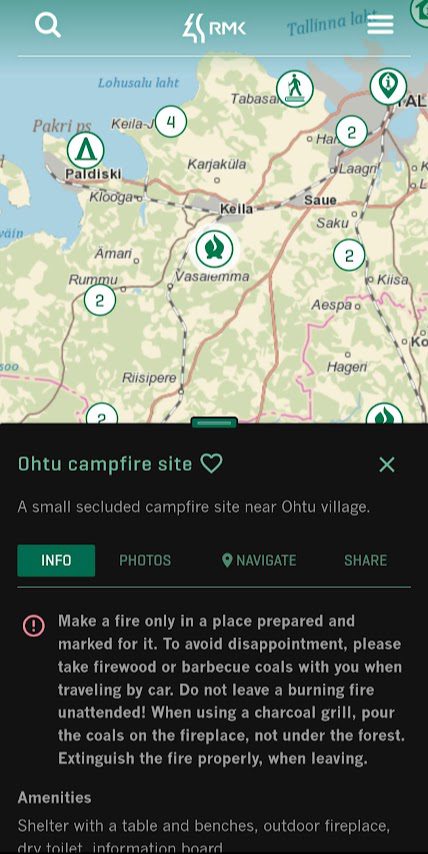
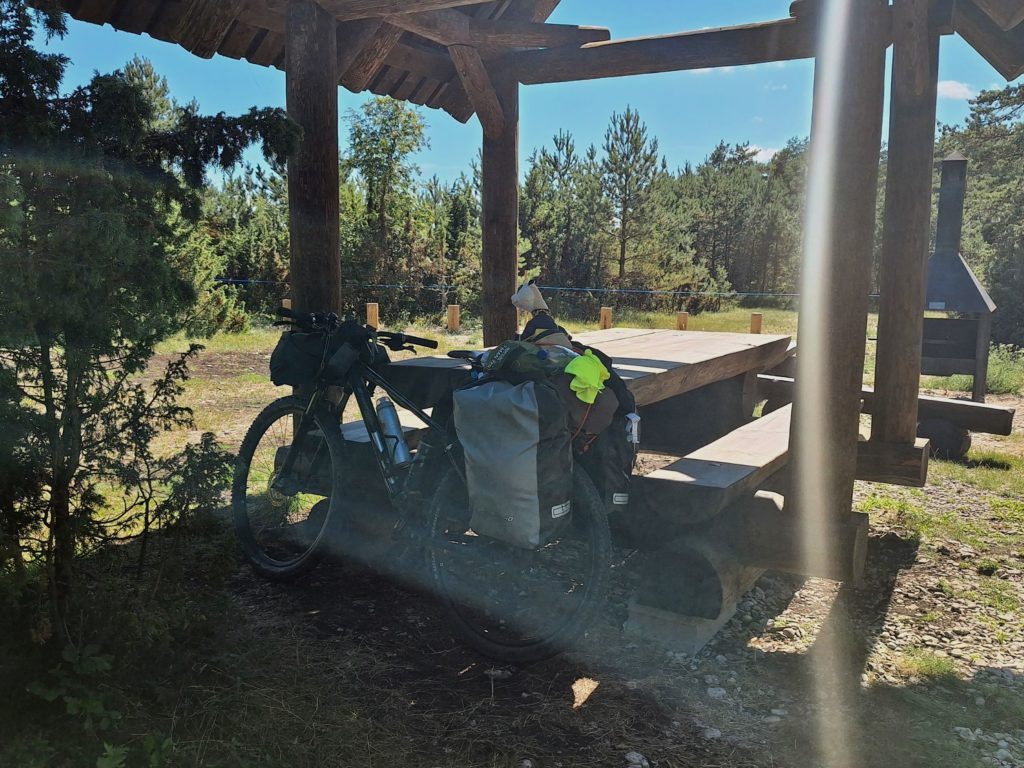
Estonia is one of my favourite places for wild camping. Wild camping is legal in Estonia, except for private land, national parks or military areas. If you’re looking for great camping spots and hiking trails, the RMK mobile app is very useful. You can find there designated spots for camping, that often feature a fireplace, shelter and pit toilet.
Wild Camping in Finland
Like in other countries on the Scandinavian Peninsula, everybody in Finland has the right to roam. If you maintain some distance from houses and properties, you can camp basically everywhere (for one night).
Finland has an impressive network of open shelters (look on the map here and see how densely they cover the whole country!). You can basically travel across Finland without a tent and find a place to stay every night.
Wild Camping in France
Wild camping is not legal in France. You can, however, also set a camp in some natural areas for one night with a light tent or bivvy after 7 pm and remove it before 9 am. There might be some local restrictions. It’s best to check the laws of the region you are visiting.
For more details, visit this website.
Wild camping in Germany
Wild camping in Germany is illegal, and the fines for violating the rules can be quite high.
In some hiking areas in Germany, you’ll, however, find designated places where you can legally stay a night free of charge or for a fee (for example, in Eifel, a night in your tent costs 18 euros). They are called Trekkingplätze. Similarly to the Belgian Bivakzones, some of them require a reservation. You can find them in the Eifel region, Schleswig-Holstein, Pfalz and Schwarzwald.
If you’d like to camp and met locals, you should try out 1nitetent.com. It is a platform where people let you stay in their garden or land (similar to Welcome to My Garden). Usually, you will need to call them beforehand. Most profiles are in German, so you might need Google Translate to communicate.
In the mountains, you might also stay in one of the Schutzhütten – wooden shelters used for emergency stays.Find a map here.
Wild Camping in Greece
Wild camping in Greece is illegal, but widely accepted, at least off the coast, in more remote areas.
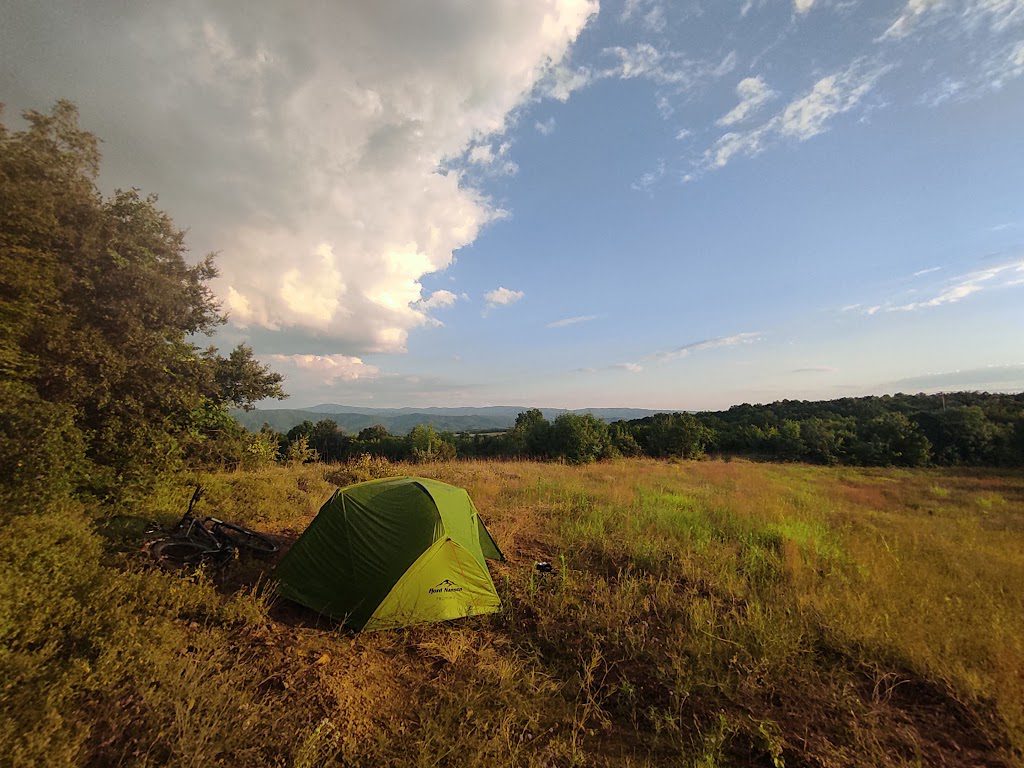
Wild Camping in Hungary
Thanks to the Forest Act, wild camping for less than 24 hours is allowed in Hungary, except for nature reserves (it only applies to camping in tent, not to car camping). Nevertheless, finding a good spot that isn’t private property or a protected area can sometimes be difficult.
Wild Camping in Iceland
Wild camping in Iceland is generally not permitted. You can stay one night in your tent on uncultivated land, provided there is no campsite in the immediate vicinity, and the land owner has not restricted or prohibited access, passage or stay within the area by means of signs on gates and walking paths.
There are also specific restrictions in protected areas. You can find more information on the official website of the Icelandic Environmental Agency.
Wild Camping in Ireland
Wild camping per se is not prohibited in Ireland. You need to be aware, though, that most of the land is privately owned and setting up your tent there requires the owner’s permission.
Wild camping code
- Camp at least 500m from a road capable of carrying a vehicle and at least 500m from a building.
- Ensure your campsite is visually unobtrusive and leave it as you found it – or better.
- Move your tent after every second night so vegetation can recover.
- Take away your food waste and litter (even if it’s biodegradable). Animals and erosion can expose buried waste.
- Keep your soap and toothpaste at least 50 metres away from watercourses.
- When you wash dishes, do so 50 metres from water bodies, and strain and scatter your wastewater (never pour it into lakes, streams or rivers).
- Conduct yourselves in a manner that won’t disturb the local community, wildlife or other visitors.
Special rules apply for wild camping in Irish national parks:
- Wicklow Mountains National Park, allows camping without lighting a fire. Camping is not permitted in Glendalough.
- In Wild Nephin National Park, you can camp only in designated spots after prior registration. Camping is prohibited during Condition Orange/Red Fire Risk Danger Notices. Check out the official website for more information.
- Camping is not permitted in Burren National Park and Killarney National Park.
- Camping is permitted in Glenveagh National Park except in the Exclusion Zone. It’s not allowed to light a fire.
- Wild camping is permitted in Connemara National Park (but only for unmotorised travellers. Car camping isn’t allowed). Lighting a fire is forbidden.
Wild Camping in Italy
In Italy, there are no uniform rules on wild camping. Each region has its own law.
Legally, there is also a clear distinction between wild camping and bivouacking. Bivouacking is considered staying in a tent (or without it) from dusk to dawn; wild or free camping is longer. A night bivouac is sometimes legally allowed, while free camping is generally forbidden in Italy.
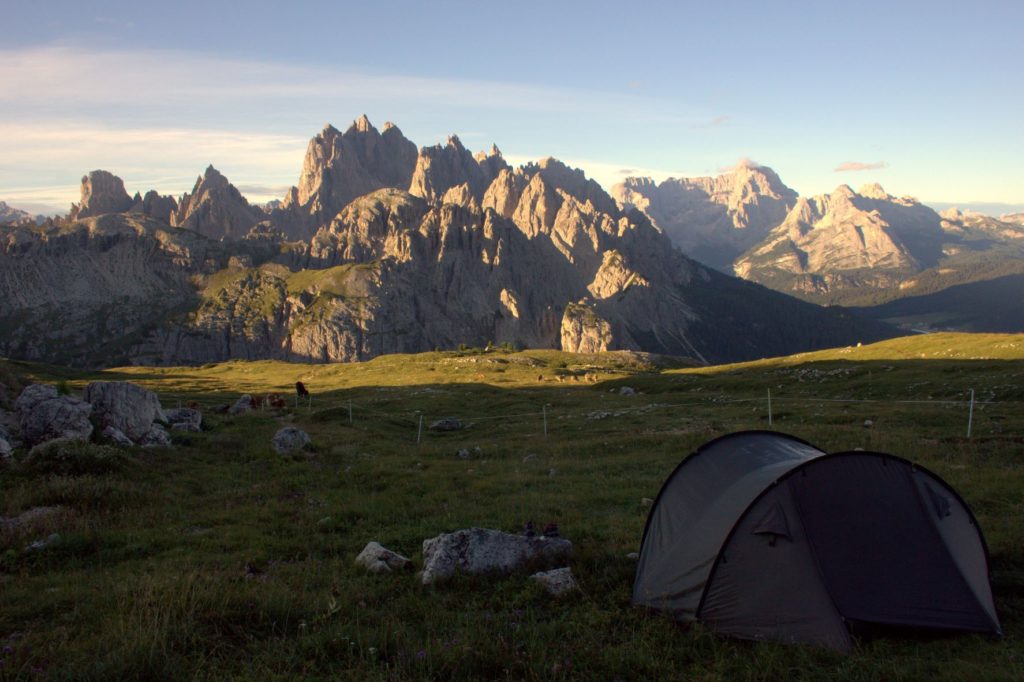
Wild Camping in Kosovo
The legal status of wild camping in Kosovo is unclear. There are no laws prohibiting it, and free camping is widely tolerated. However, you should not wild camp in national parks, and in protected areas, such as Bjeshkët e Nemuna or Sharr Mountains.
Wild Camping in Latvia
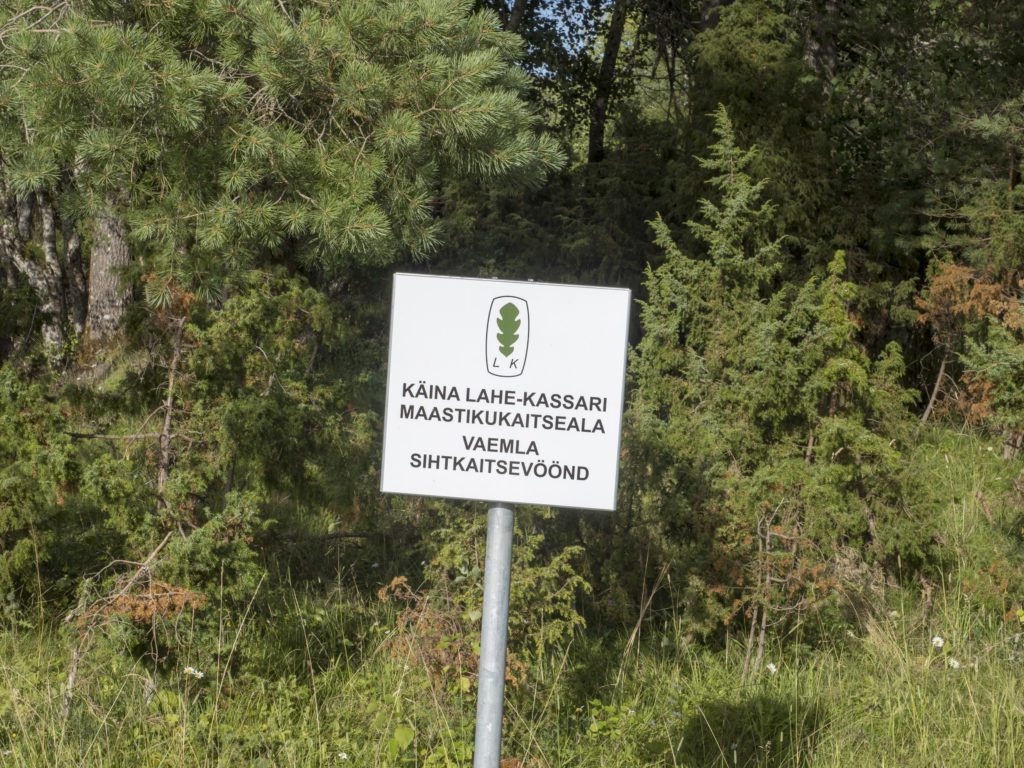
The Forest Law in Latvia states that everybody has the right to stay and move freely in the state and municipal forest unless otherwise specified in the laws and regulations. That means wild camping in Latvia is mostly legal, except for private property and nature protection areas (marked with signs with an oak leaf).
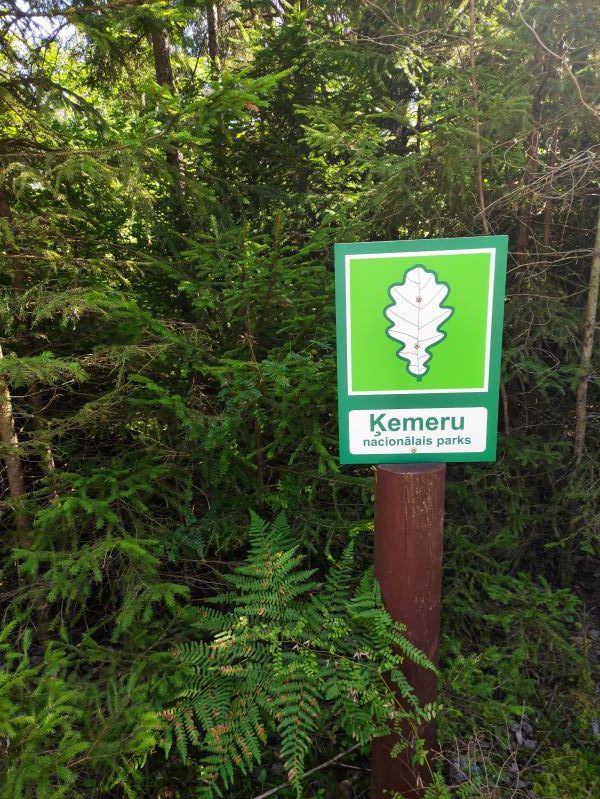
(Photo: CC BY-SA 4.0 Fry72, Karel Frydrýšek)
Wild Camping in Lichtenstein
Free camping in Lichtenstein is illegal.
Wild Camping in Lithuania
Like the other Baltic Countries, Lithuania also allows wild camping. However, it is prohibited in nature reserves, urban areas, beaches, and private property.
Wild camping in Luxembourg
Wild camping is not allowed in Luxembourg.
Wild Camping in Malta
Wild camping in Malta is officially not allowed. There is, however, an official free campsite on the island of Comino and in L-Ahrax in the north of the island.
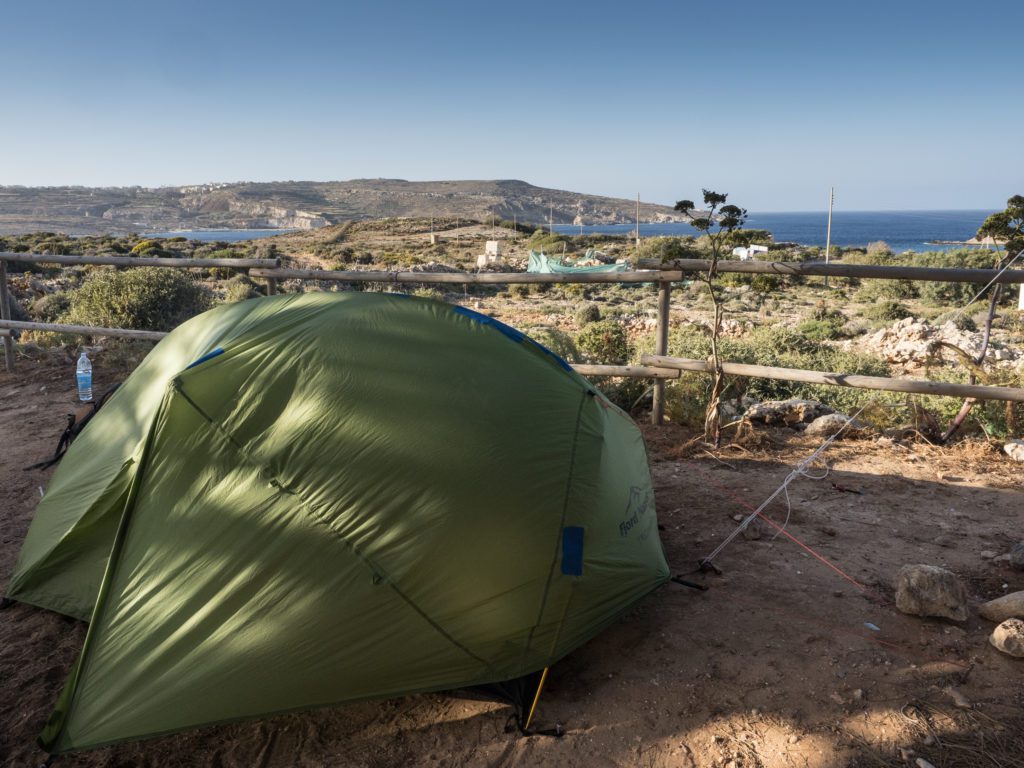
Wild Camping in Moldova
Free camping in Moldova is legal.
Wild Camping in Montenegro
The situation in Montenegro is similar to Croatia: wild camping is officially not allowed, but if you pitch your tent in remote regions and are discreet, no one will mind. Don’t do it on beaches, in touristy areas, and protected areas and respect private property.
Wild camping in the Netherlands
Wild camping in the Netherlands is illegal, and you might face a high fine. Finding a quiet spot in this densely populated country is nearly impossible.
Until 2020, there was a way to camp for free legally—Paalkamperen, simple campsites with basic amenities. Unfortunately, the State Forest Management has closed them due to campers leaving trash and not respecting nature.
There are, however, many Welcome To My Garden hosts in the Netherlands, so it’s quite easy to find a garden where you can pitch your tent.
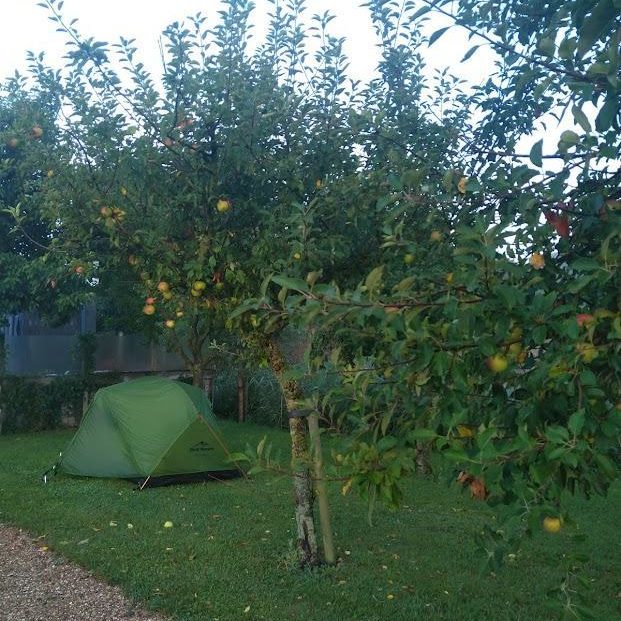
Wild Camping in North Macedonia
Theoretically, wild camping is not legal in North Macedonia. In practice, it is widely accepted by the locals and authorities. I camped there without any problems.
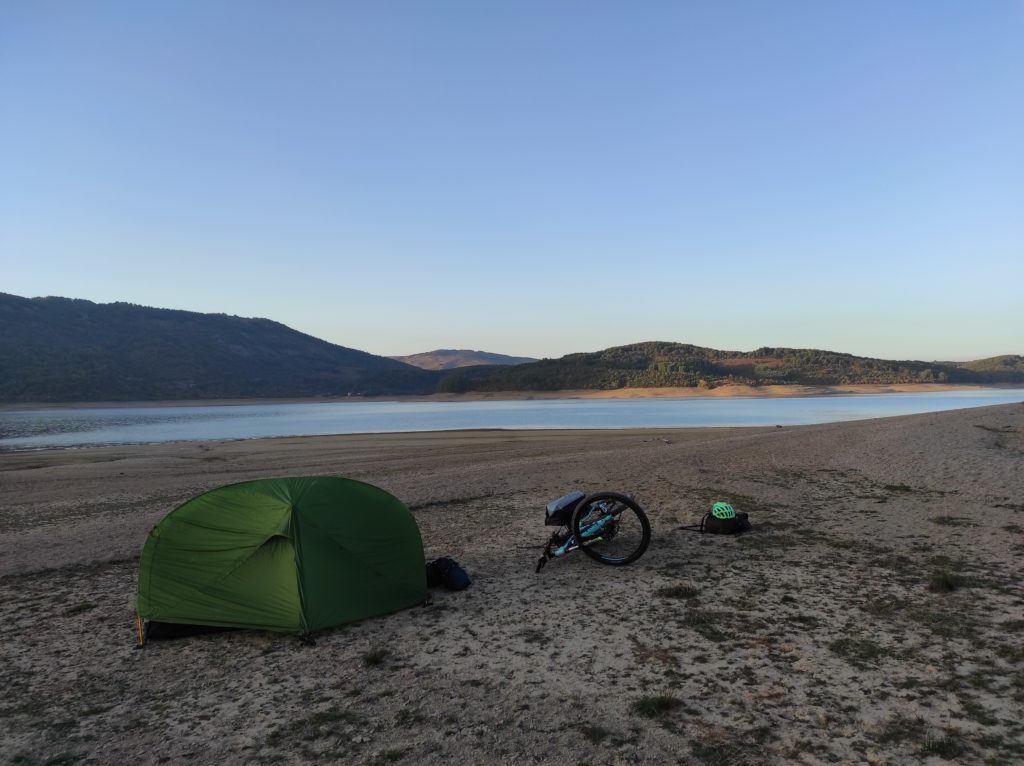
Wild Camping in Norway
Norway is one of the few countries in Europe where wild camping is legal. You can pitch your tent nearly everywhere thanks to allemannsretten (everyman’s right). There are two basic rules you need to follow:
1. Stay 150 meters from the nearest house or other buildings and not on cultivated farmland.
2. You cannot camp in one spot for more than two nights. Respect nature and wildlife, take your trash with you and be quiet.
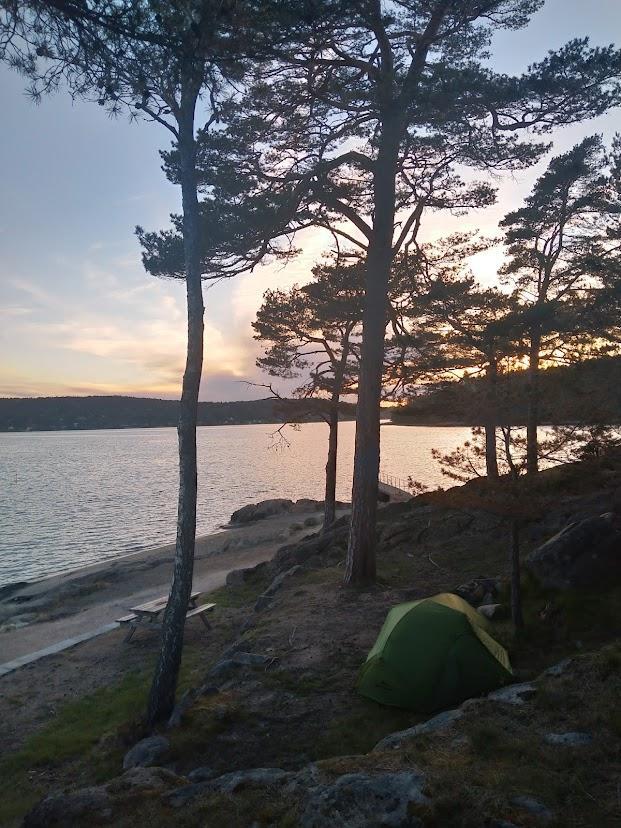
From 15 April to 15 September, open fire in the wild is banned, so forget about the campfires in the summer! A total ban on camping stoves is possible during droughts.
In the Norwegian mountains, there are also a lot of open shelters (gapahuk). Some of them have a supply of firewood and food (sometimes, you will find a bank account where you can send money if you take wood or food). You can access the map with the shelters here.
Wild Camping in Poland
Wild camping is not officially forbidden in Poland. It is also widely tolerated. However, you need to ensure you’re not on private property.
In the state-owned forests, you can only pitch your tent in designated areas. You can find a map of these areas here.
In the mountains, you can also find some provisional wooden shelters. To find them, visit this website (including some shelters in other European countries). It is illegal to wild camp in national parks and nature reserves, as well as on most beaches.
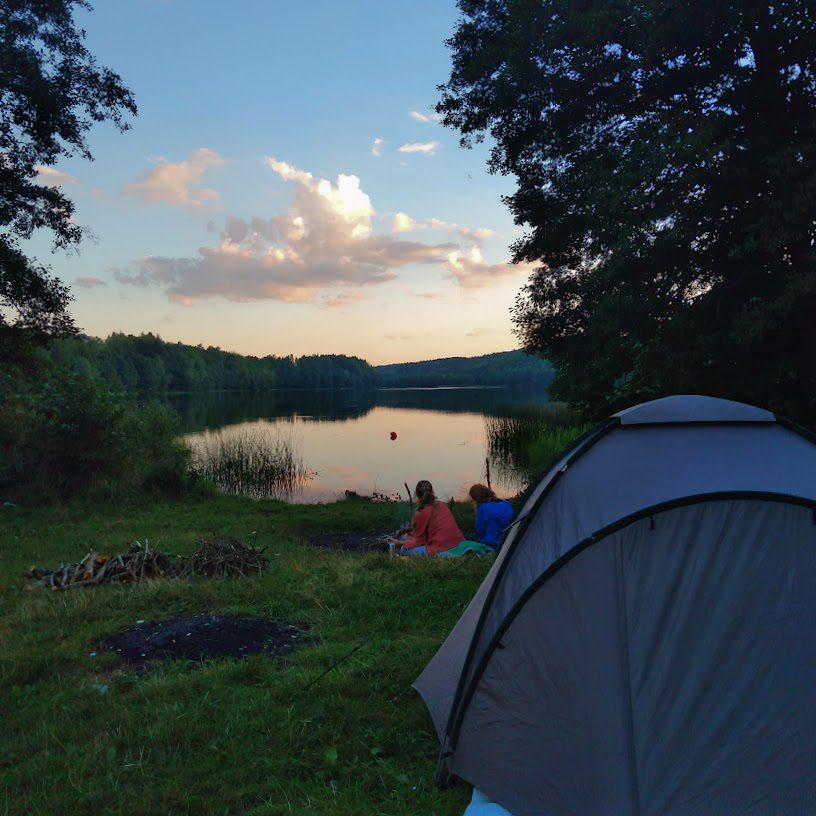
Wild Camping in Portugal
Wild camping in a tent is illegal in Portugal.
Wild Camping in Romania
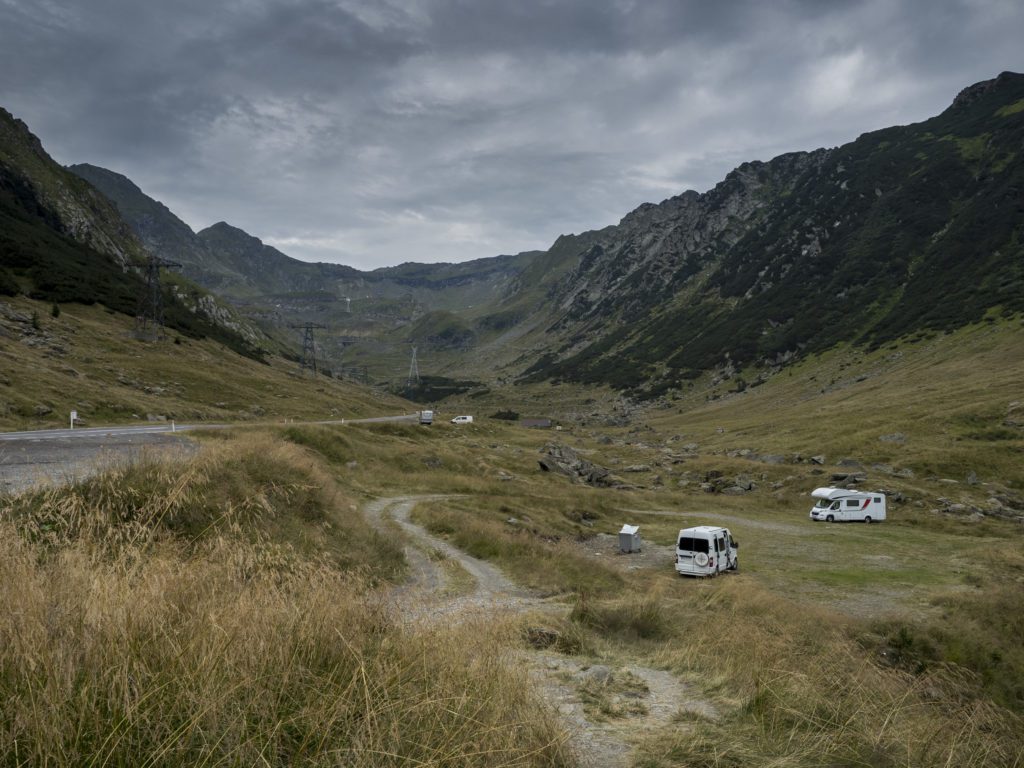
Wild camping in Romania is officially allowed. Most landowners will also agree if you ask them permission to pitch a tent on their land. Some local restrictions may apply, especially in the nature reserves.
In the mountains, you should be extra cautious, as there are many bears in Romanian Carpathians.
Wild Camping in Serbia
Wild camping in Serbia is not officially allowed, but it’s usually tolerated by locals and authorities.
Wild Camping in Slovakia
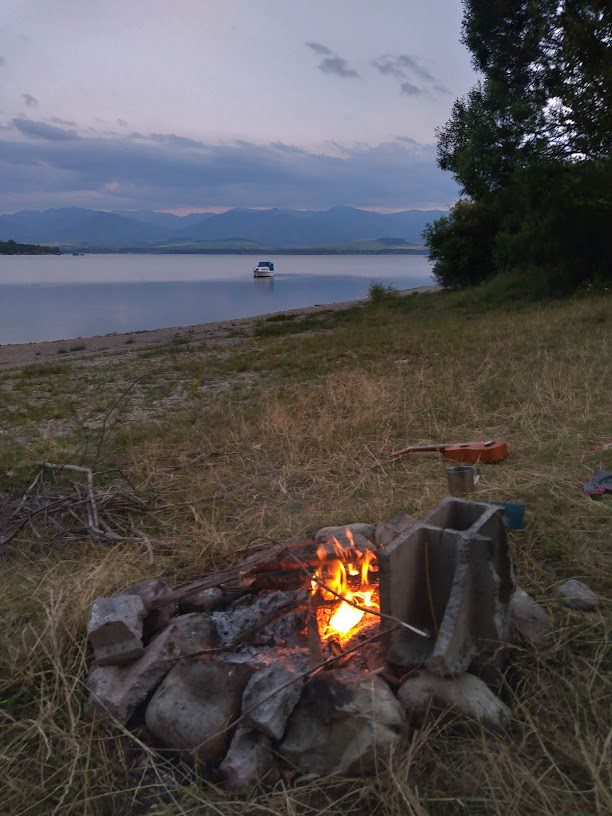
Wild camping is officially not allowed in Slovakia. It is, however, tolerated in most of the country. You shouldn’t set up a tent in national parks, forests, and protected areas unless there is a designated bivouac place.
Wild Camping in Slovenia
Wild camping is illegal in Slovenia. Definitely don’t do it in Triglav National Park, where a fine for wild camping can be up to 1000 euros!
Wild Camping in Spain
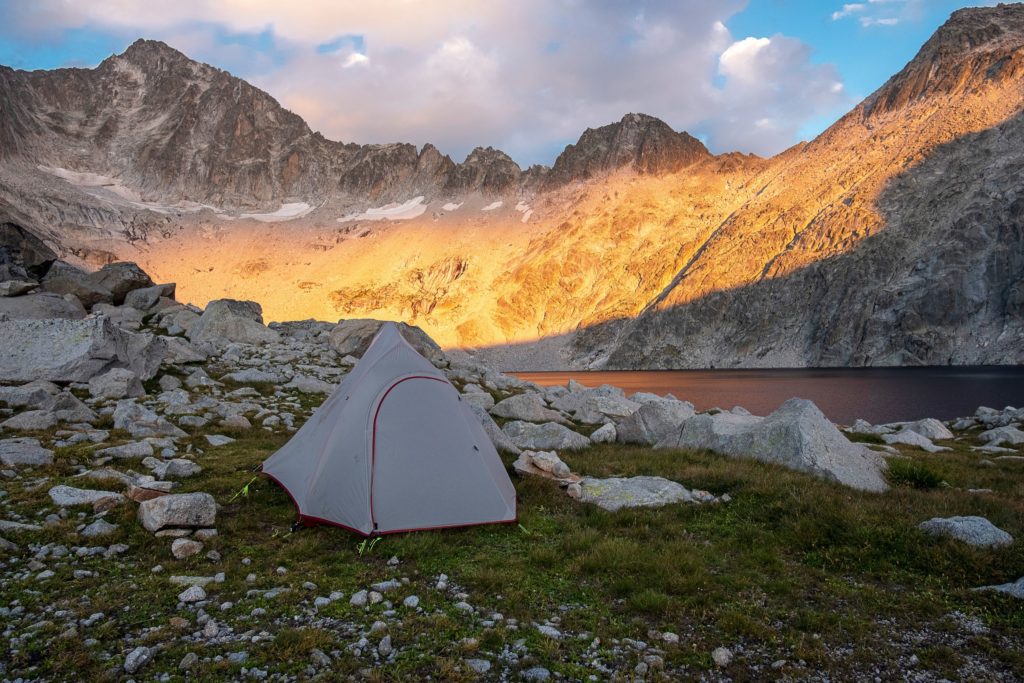
Generally, wild camping in Spain is not allowed. It is strictly prohibited on the coast and in national parks, and it is an absolute no-go in Andalucia, Valencia, Navarra, Galicia, Extremadura, and Asturias.
When it comes to national parks, camping is allowed at the following altitudes: 2500 m in the Ordesa region, 2550 m in Pineta (above Balcón de Pineta), 1800 m in Escuaín (La Ralla), and 1650 m in Añisclo (Fuenblanca). In this case, you have to pitch your tent no earlier than 1 hour before sunset and pack it no later than 1 hour after sunrise.
Wild Camping in Sweden
Like in Norway, Swedish law guarantees you the freedom to roam, and you can legally wild camp for one night nearly everywhere, as long as you keep enough distance from houses and private property.
There are also free shelters and basic huts in many wild areas where you can stay a night. Check out the map on this website.
Wild Camping in Switzerland
Wild camping in Switzerland is more or less illegal, and like everything in this country, the fines are atrociously high! However, you can camp in the mountains above the tree line for one night (don’t do it in national parks and protected areas!). Some cantons are more liberal, others more restrictive, so before setting up a camp, check the laws of the region you visit.
Wild Camping in the United Kingdom
Wild camping is prohibited in England and Wales. It is, however, tolerated in unpopulated mountain areas. In Dartmoor National Park, there are areas where it is legal. Check out the map here.
In Scotland, free camping is allowed.
In remote areas in Scotland and Wales, you can also use bothies – shelters without facilities like water, beds and electricity, where you can stay free of charge. You can find a map of bothies here
 English
  Polski
Awesome information. Thank you
Amazing information Joanna
Thank you so much
Pingback: Cycling in Sicily - practical bike touring guide - Wobbly Ride
Pingback: Cycling Albania - practical bike touring guide - Wobbly Ride
Pingback: The Best Cycling Routes in Poland - Wobbly Ride
Pingback: Accommodation on a Bicycle Tour - Resources and Tips
Pingback: Inspiration til cykelture rundt i Europa – Med tog fra Danmark til udlandet