I would’ve probably never chosen cycling in West Flanders, from Kortrijk to Oostende, if I was planning a weekend trip myself. I was never someone who obsessively watched the great classics of road cycling on TV. I’ve heard about the famous cobbles of Flanders and the iconic climbs like Kemmelberg but come one, they were not as long and brutal as Stelvio or Alpe d’Huez.
And if I were to choose a cycling route in Belgium myself, I would’ve probably go for something in the Ardennes, or in the High Venns.
But I signed up for the VeloTour Festival, and a week before the event, received a roadbook and the information that we’ll be riding through the hilly part of Flanders.
-Well, I’ve never been to this part of Belgium – I thought. – Who knows, maybe it’s more interesting than I expected?
Day 1: Cycling from Kortrijk–Nieuwkerke
We spent the night before the Velotour in Hostel Groeninghe in Kortrijk, which turned out to be one of the most bike-friendly hostels I’ve ever been to. It doesn’t happen often that you can safely and conveniently store your bike in a large separate room that can fit at least 30 bikes, if not more!
Kortrijk is often overlooked by people travelling to Belgium, so I was very surprised by how charming the town actually was. Especially since I remembered my old roommate from Brussels complaining it was boring and gray (I guess Kortrijk might be like most Belgian towns – if you visit them on a grey November day, they are super depressive. But on a sunny day in May, it becomes green, laid back and pleasant.
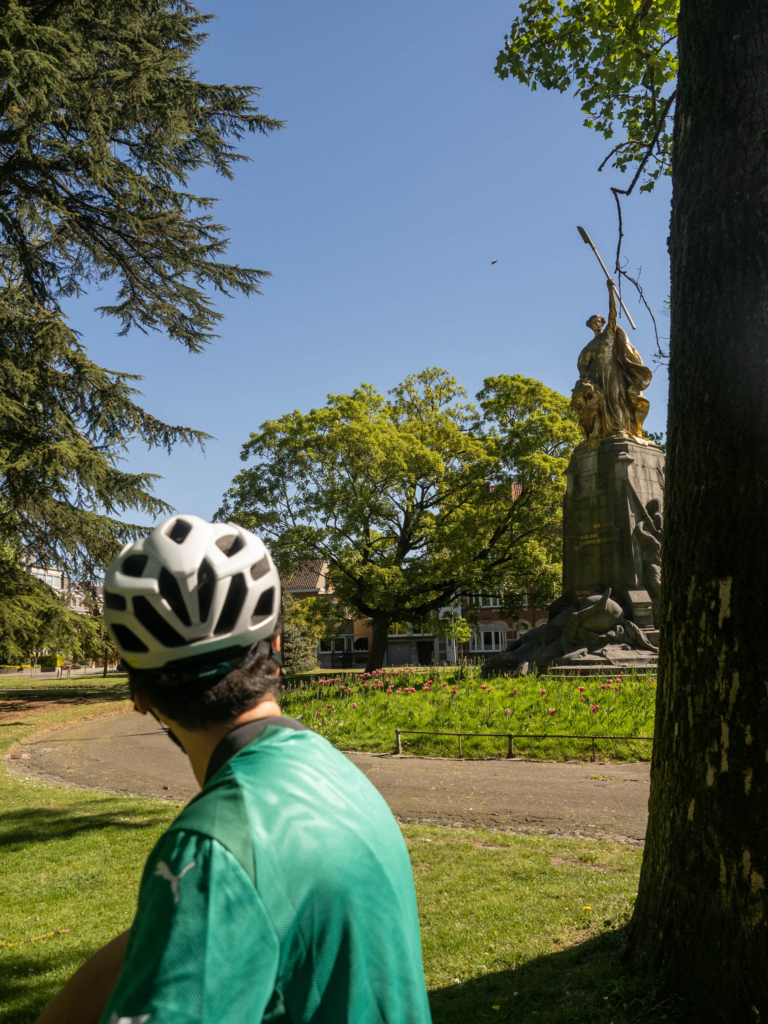
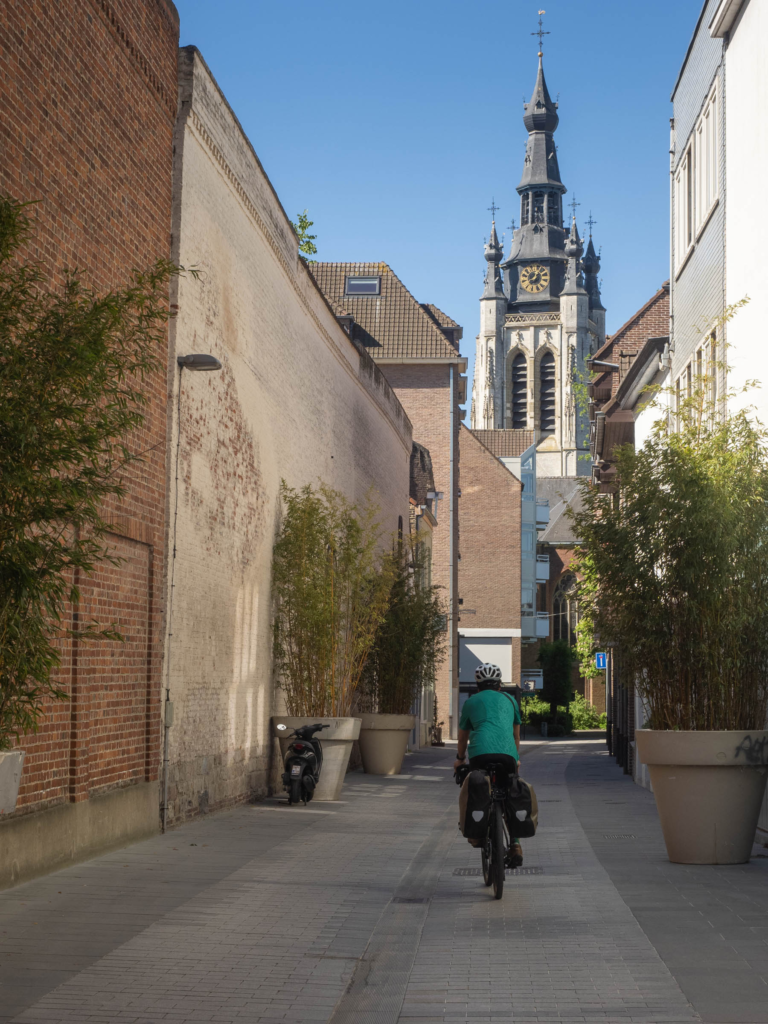
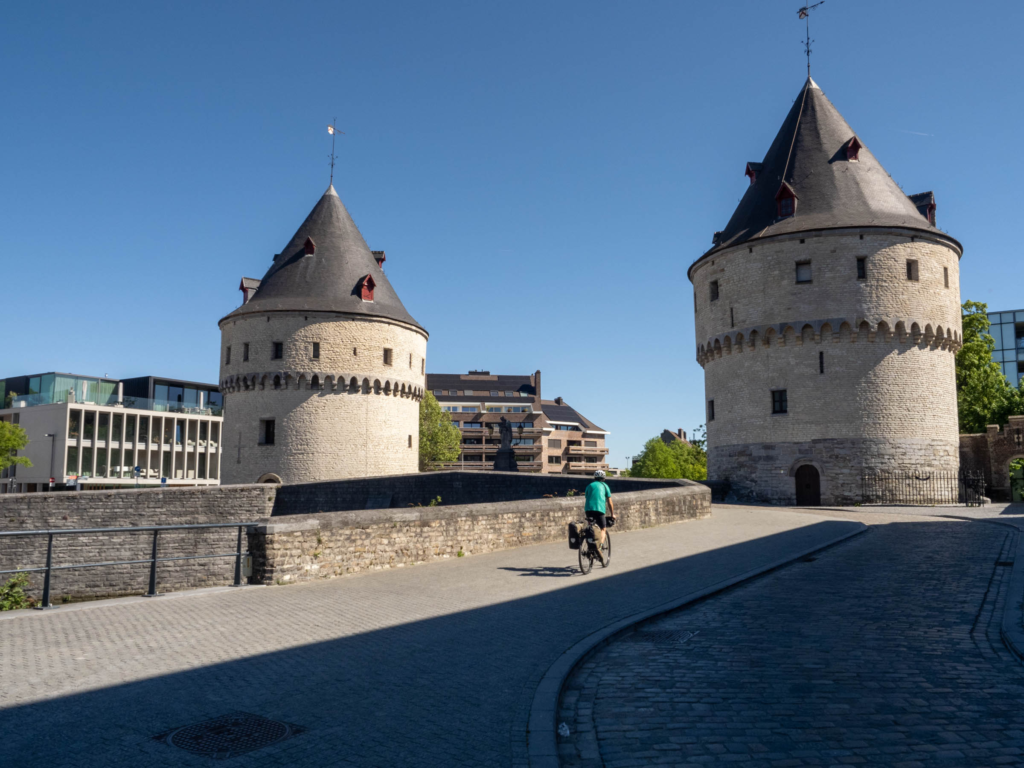
The medieval streets of the old town were almost deserted, since it was Labour Day – a national holiday in Belgium. Even though it was quite early, we could already feel that the day was going to be quite hot. We crossed the Broel Bridge, with the characteristic symmetrical towers, and followed the river Leie. The air smelled of summer mornings by the water.
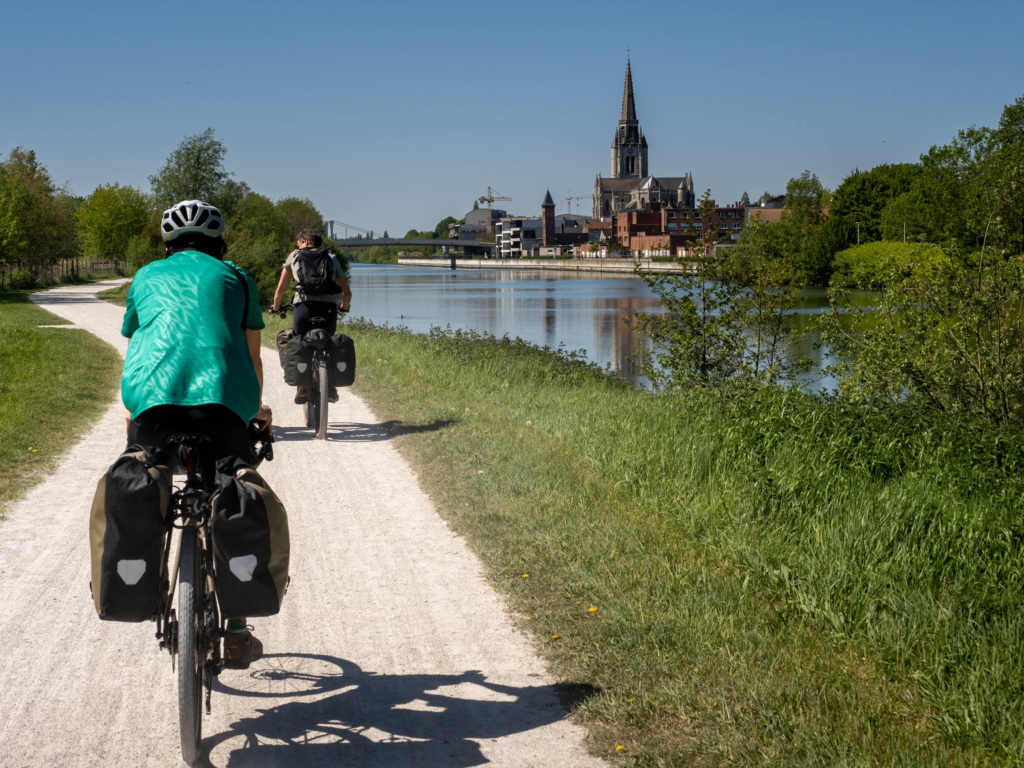
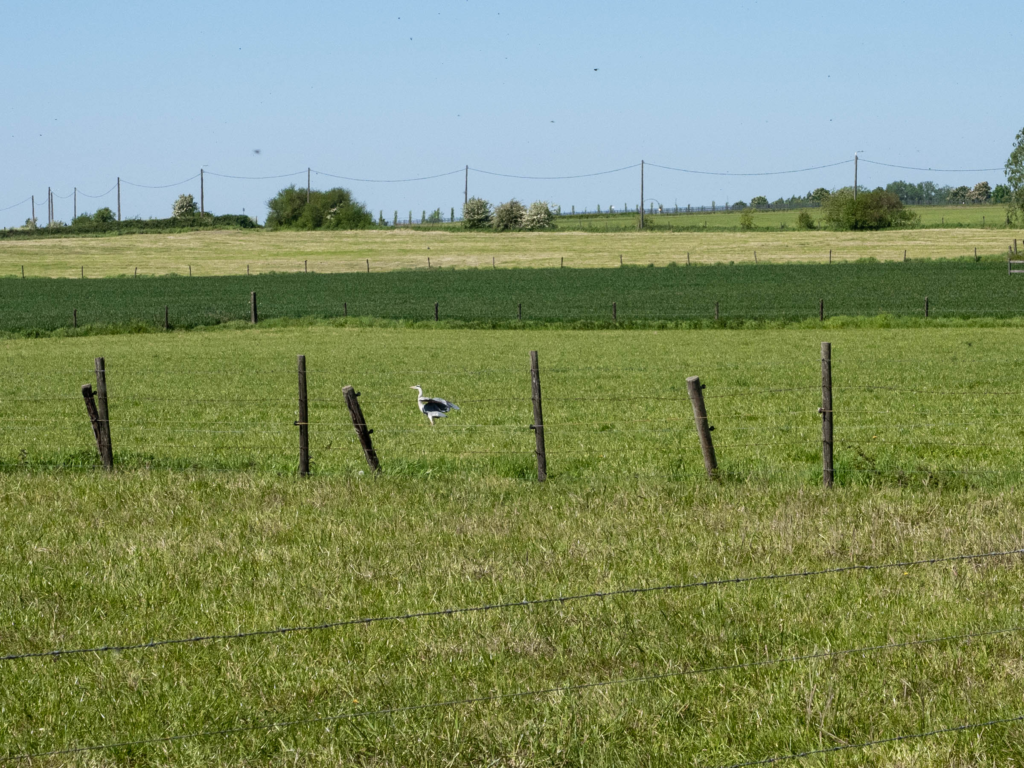
The first kilometers went by like a breeze. The route was flat, and there was barely any traffic on the small local roads. Everything was green, and we even saw a heron, hunting for some food in the fields.
Ypres
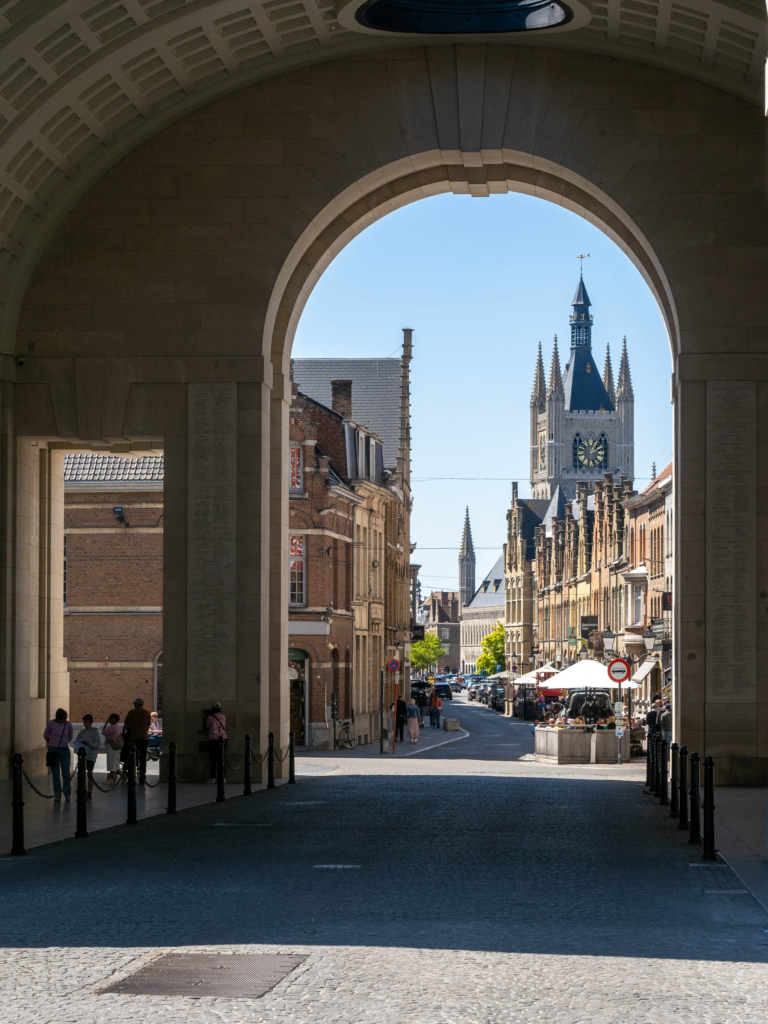
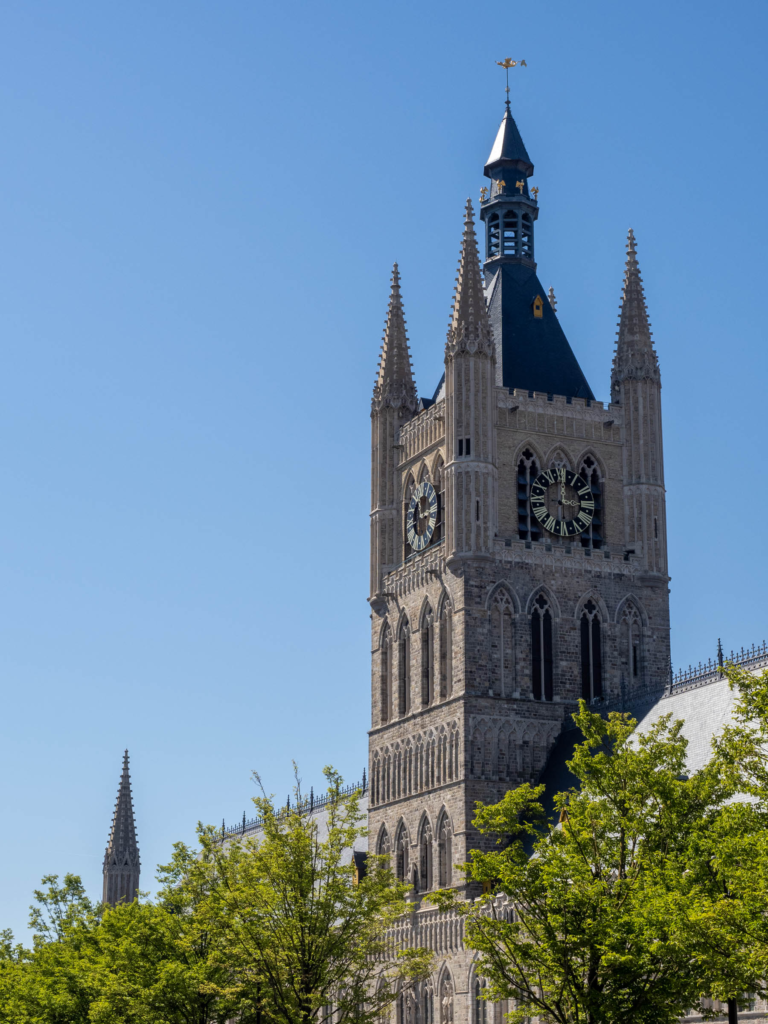
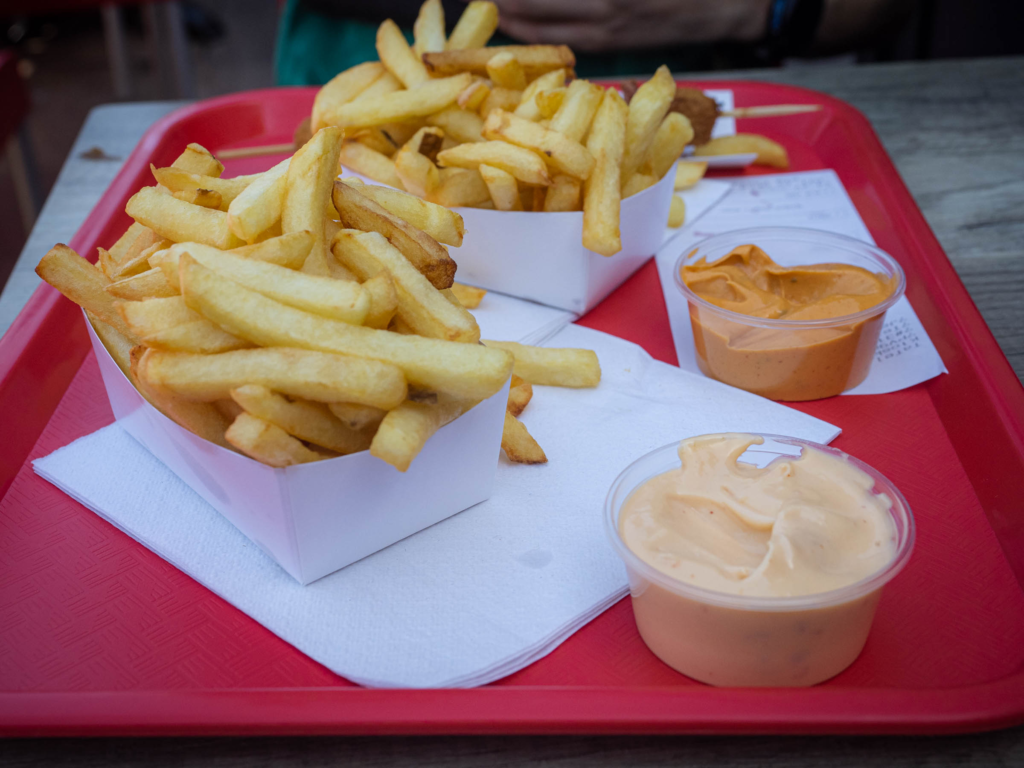
In Ypres, we stopped for the most typical Belgian lunch – fries, and we ate them with the view of the stunning city hall and the majestic St Martin’s Cathedral.
The medieval market square was full of British tourists, mostly on motorbikes. During the First World War, Ypres was a key strategic point for the British forces on the Western Front and, therefore, the city was a witness to several bloody battles. Maybe those bikers came to Ypres to visit the original trenches just a few kilometers outside the city, that even over a hundred years after the war could give them a feeling of what fighting there must’ve felt.
Kemmelberg
While the first 60 km of the day felt like a walk in the park, the final 20 km started with a little challenge, called Kemmelberg.
We saw it from far away. Although Kemmelberg is only 154 m high, it’s the highest point of all of West Flanders and it clearly stands out among the endless flat fields.
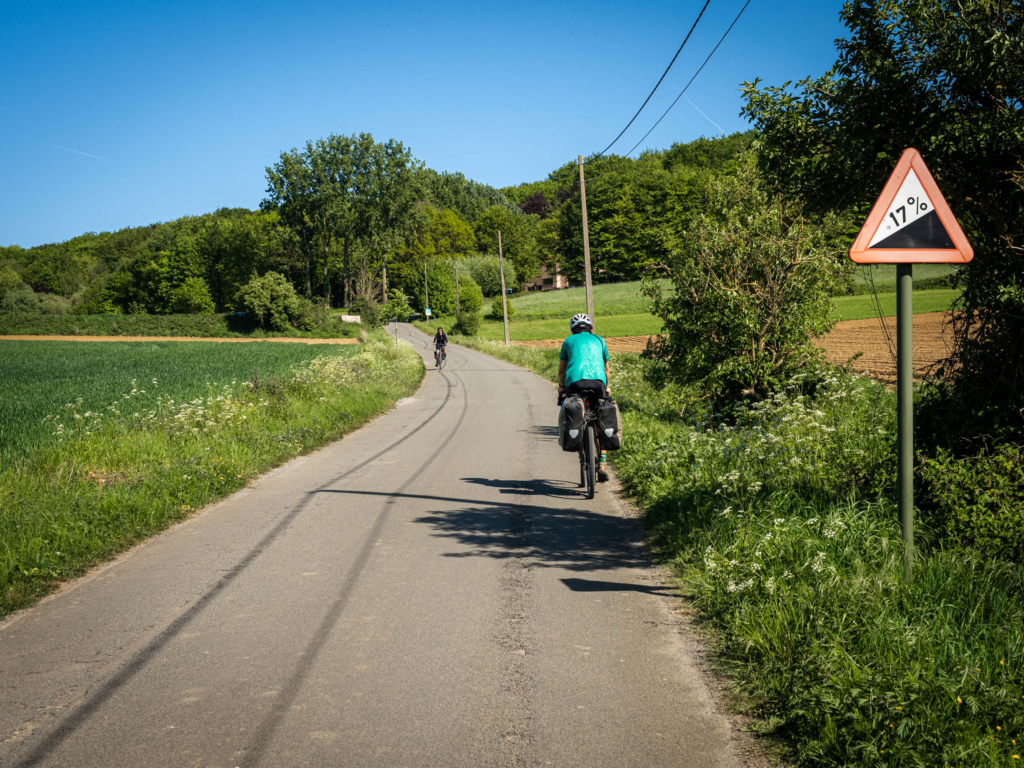
It started with a gentle, asphalted ascent, but quickly the gradient became surprisingly brutal for such a small hill. The cobblestone and the brutal sun didn’t make it easier either. Luckily, the suffering was quite short and we could enjoy a refreshing descent.
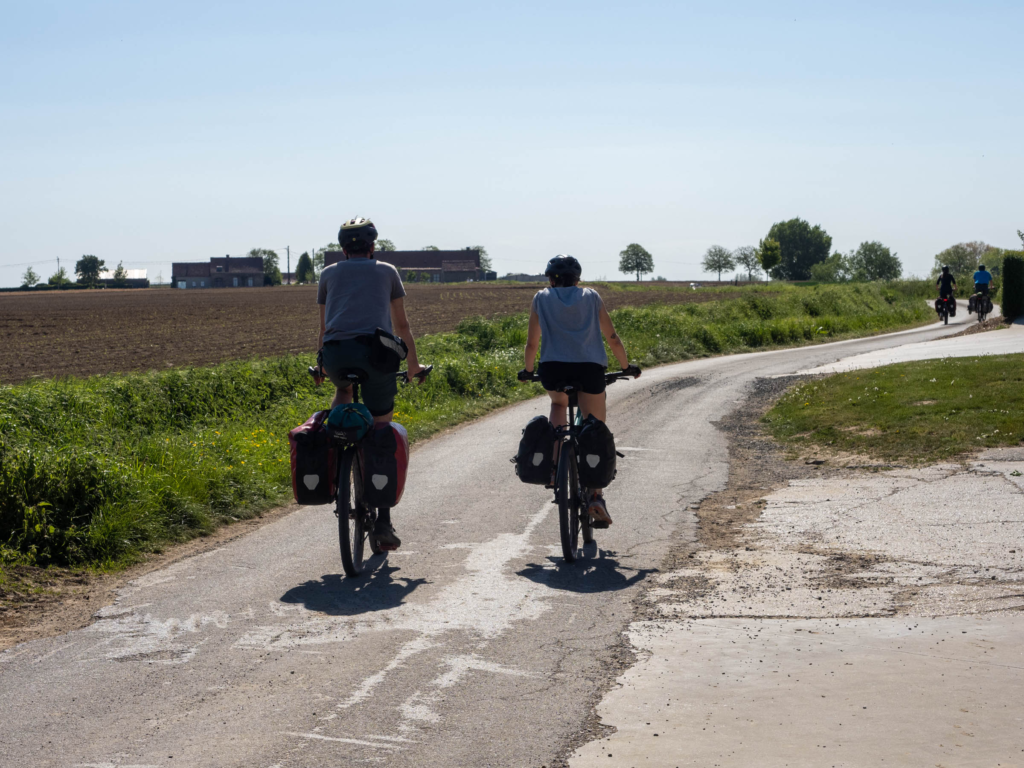
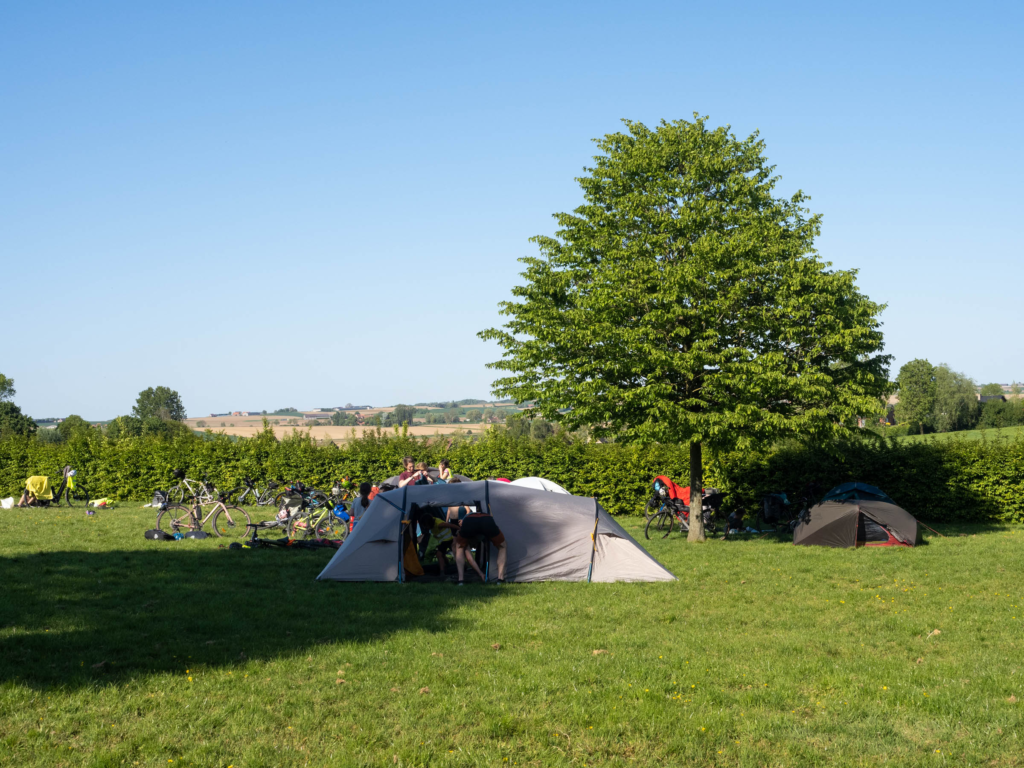
After one final climb (way less spectacular but much more mentally exhausting), we reached our campsite in Nieuwkerke, Domein De Bosgeus. Most of the participants of VeloTour who chose the shorter route today were already there but the meadow was so huge that, even with 40 tents, it still looked half-empty. And the view from the campsite was amazing, with rolling hills and endless fields.
Day 2: From Nieuwkerke to Alveringem (via France)
From the very first kilometer, it was clear – day 2 was going to be quite a bit more challenging than day 1. Up and down, again and again. They didn’t call this region The Land of the Hills (Heuvelland) for no reason.
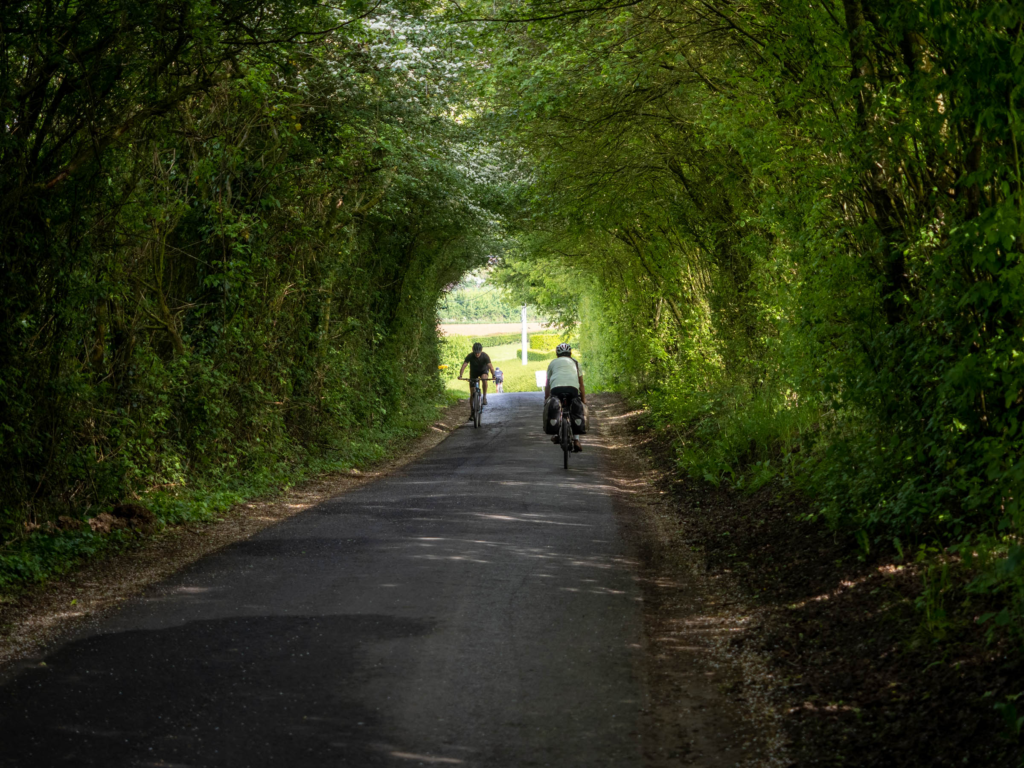
I liked it. Especially the amazing descent from Rodeberg, on a narrow asphalt road with tree canopies forming a tunnel around it. For a descent that’s not in the mountains, this is as beautiful as it gets.
Only after a few kilometers, we crossed the border to France. I wouldn’t have even noticed, if not for the fact, that the road signs were slightly different. The street names were in two languages: in French, and in a local dialect of Flemish, Vlaemsch.
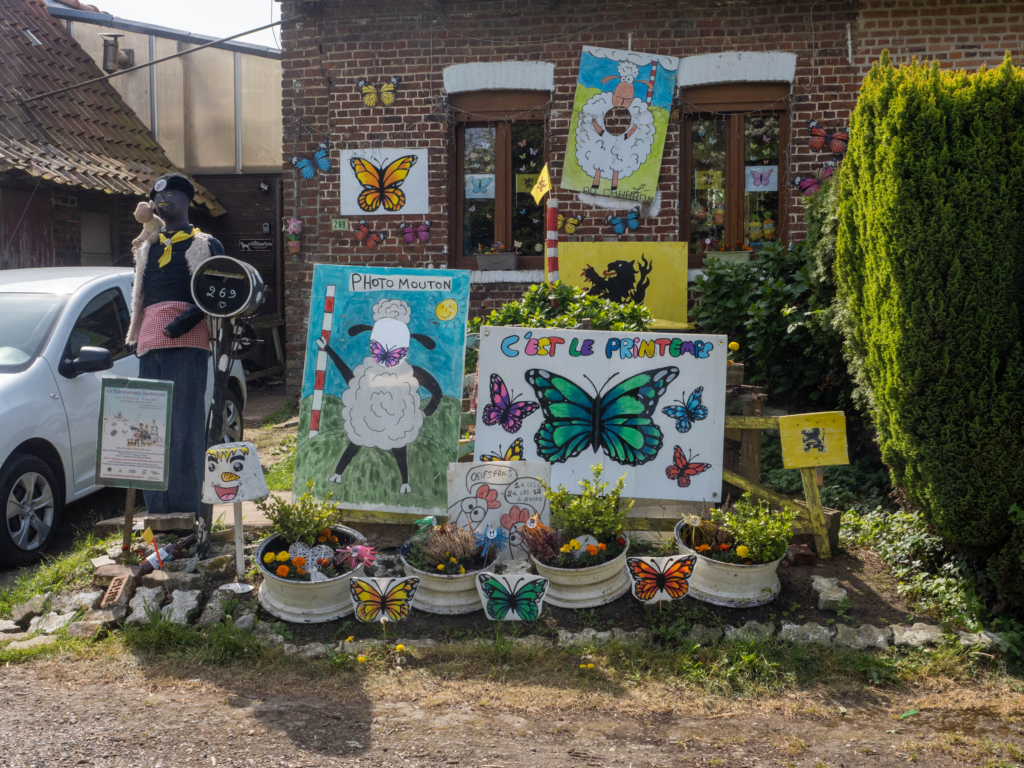
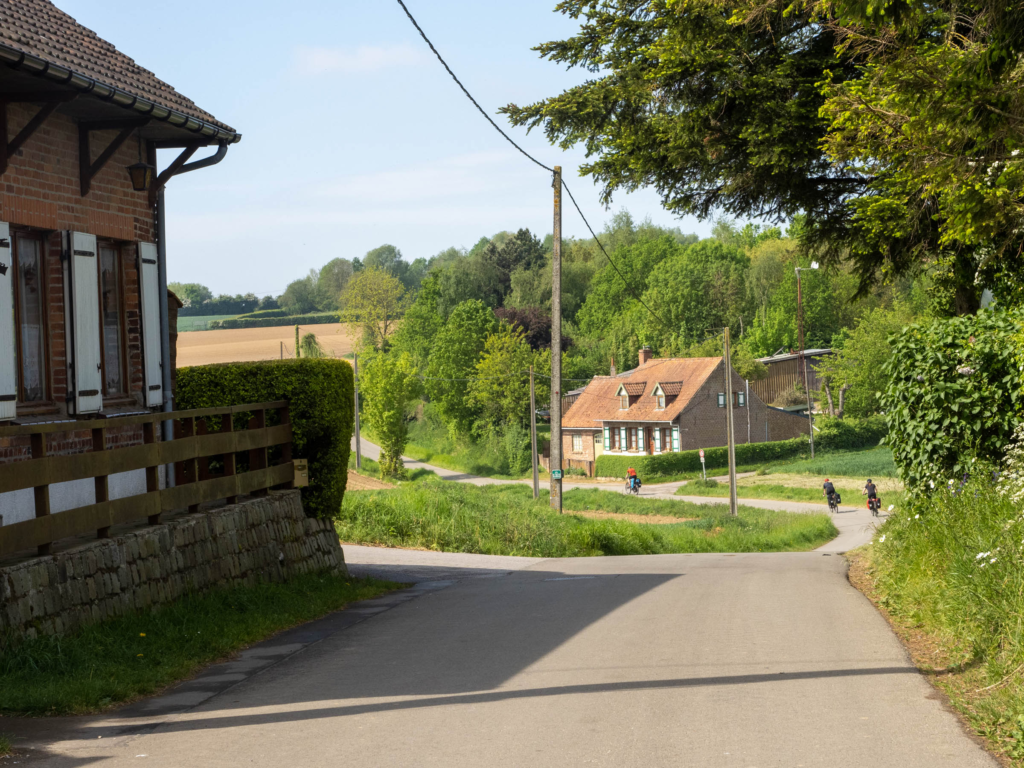
Everything was blooming around us and the quaint French villages looked straight out of a 1970s artsy movie. Red bricks, red roofs, painted shutters. Apart from a few tractors or a lonely old Renault every now and then, we had the narrow, windy roads to ourselves.
Mont des Cats
I was surprised how much cycling in West Flanders could feel like cycling in the mountains. Mont des Cats, another hill on our route, is just 164 m tall, but the climb stretches over 2 km. And, with the gradient reaching 13%, it felt like quite a challenge, especially on a hot day.
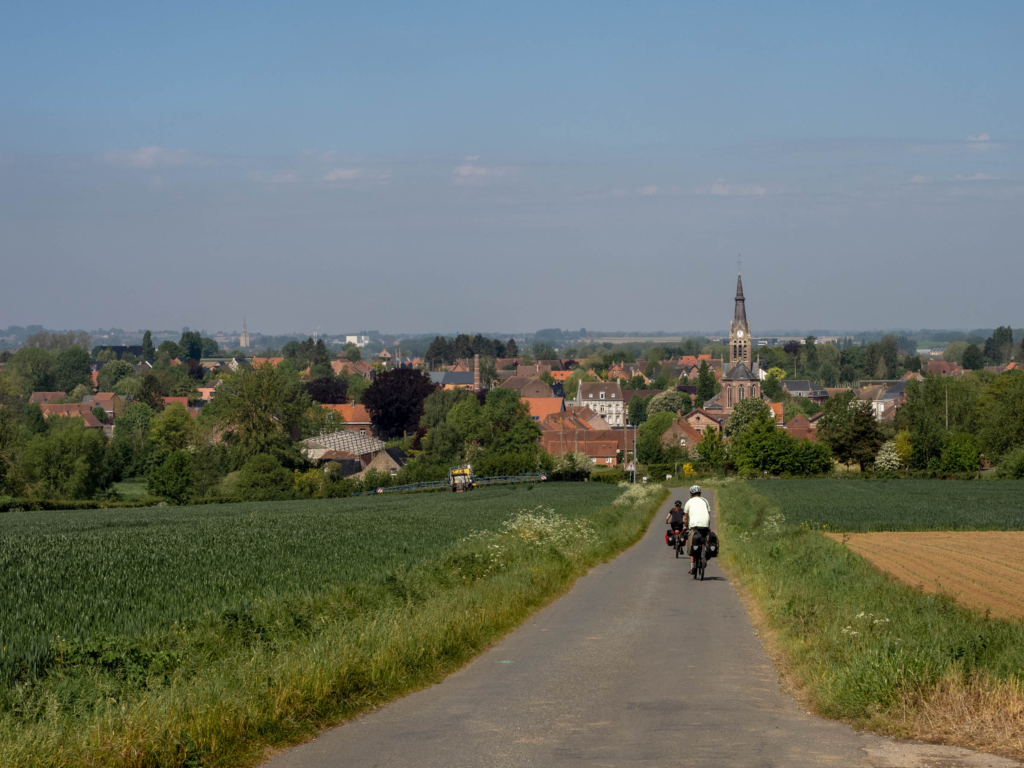
At the top of Mont des Cats, there is a Trappist Abbey, famous for its cheese and beer. But we didn’t stop to taste any of it. Instead, we quickly ate our muesli bars, keen to enjoy the ride down. The asphalt was unfortunately quite bad, with a lot of cracks and bumps but the views were superb: the panorama of Godewaersvelde with a tall church tower looking over the copper roofs and the sweeping fields.
Mont Cassel
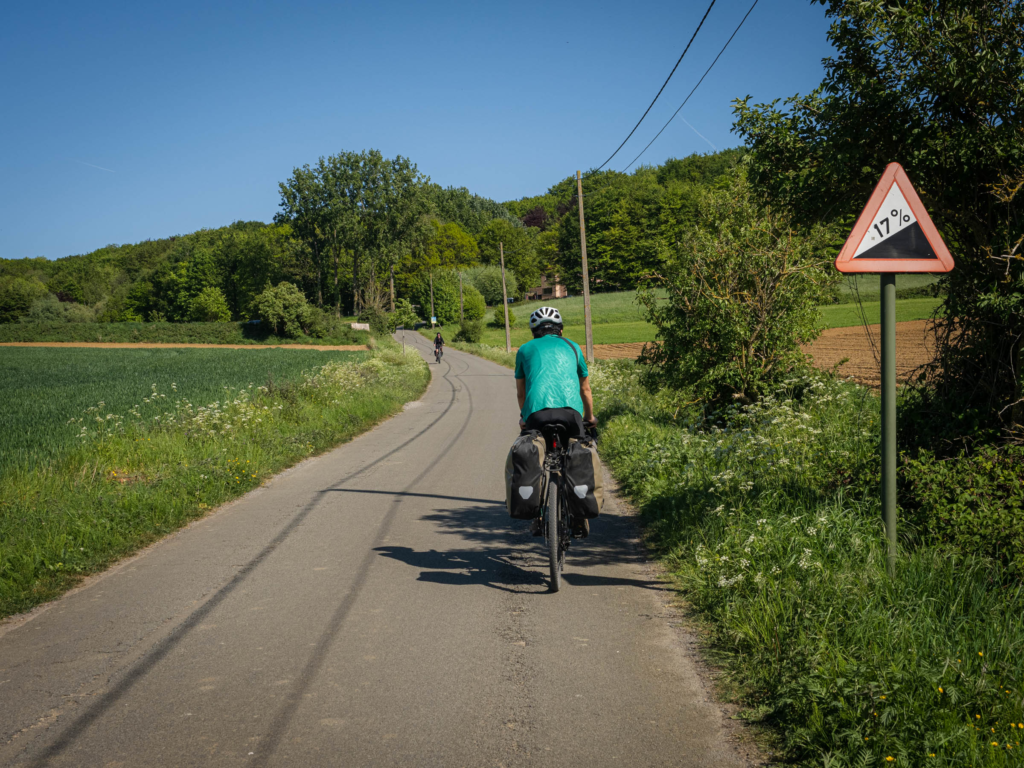
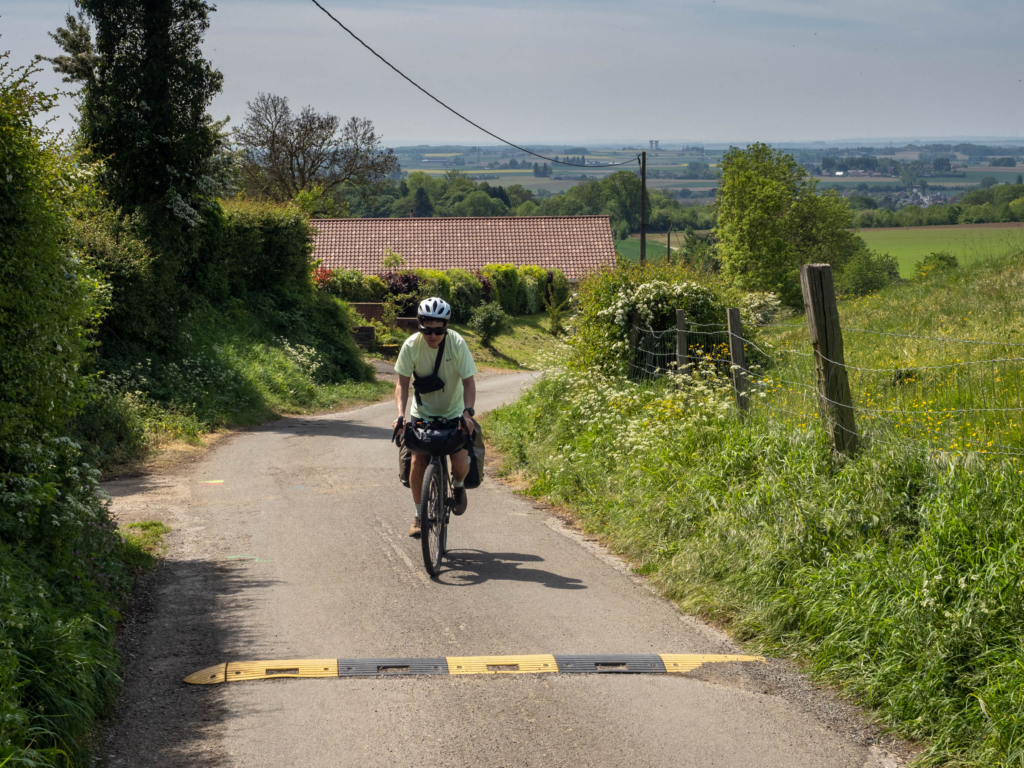
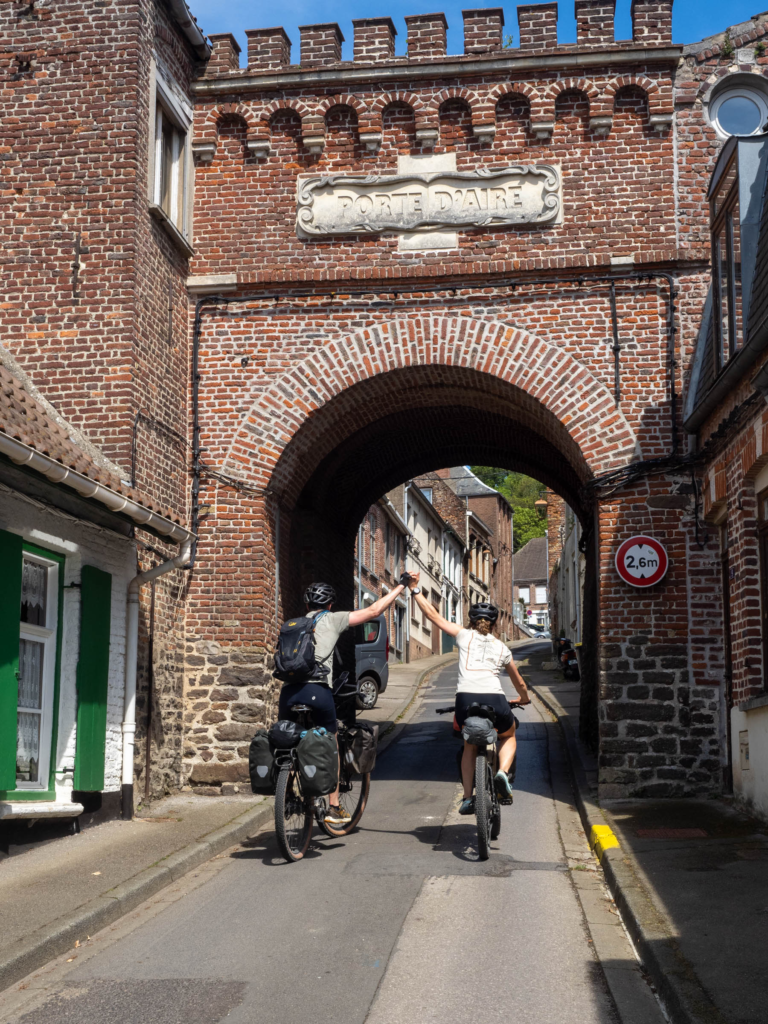
After 20 km of further French countryside idyll, we faced the final challenge of the day – the climb to Mont Cassel. It started gently, and the surrounding trees were giving a nice shade. But the further in, the worse it got. It got steeper and the sun hit harder. The final stretch through the historical city gate (Port d’Aire) made my legs burn with a gradient reaching 17%.
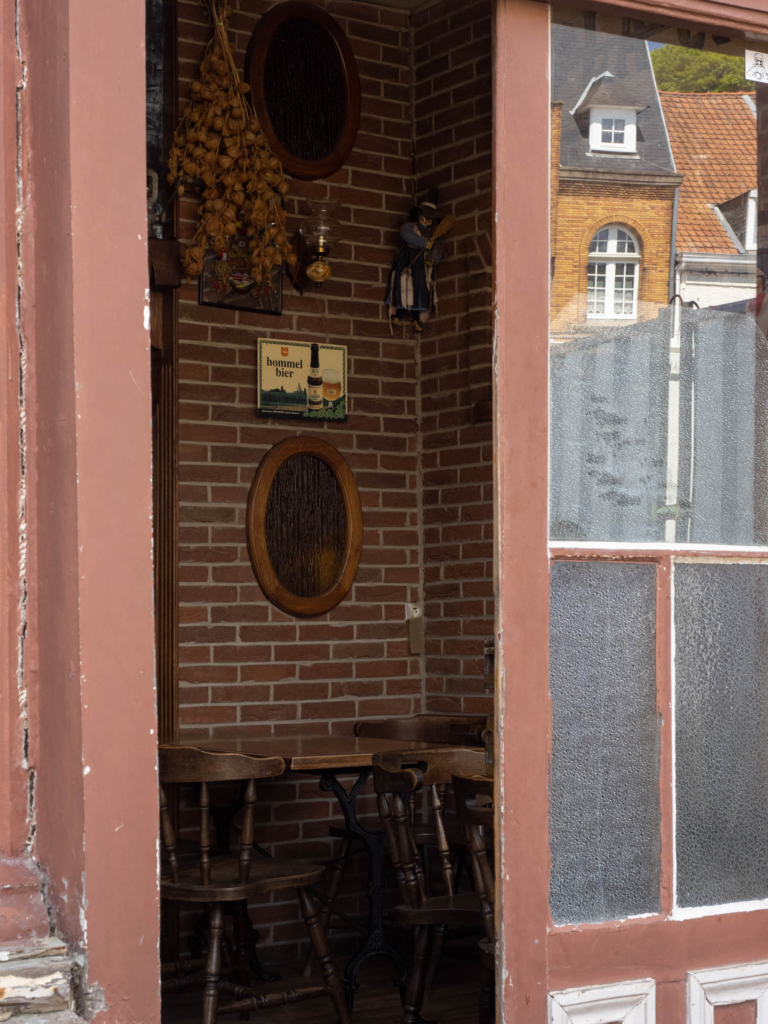
Exhausted, we stopped for a lunch break in a little town of Cassel (or Kassel, in Flemish). We sat on a terrace of a little cafe that looked like its best times were long gone (and inside, it smelled like an attic full of old books, dust and humidity). The capuchino we ordered turned out to be a sweet instant drink – I had completely forgotten that they existed.
The cafe didn’t offer food but the server encouraged us to grab something from a nearby stand – a classic Flemish frituur, looking exactly like the ones you have in Belgium.
Everything else also looked like Belgium, and particularly its Flemish part. The Flemish coat of arms on buildings, the cobbles and brick and sandstone facades – it all looked much more like Poperingen or Damme than the typical towns in northern France.
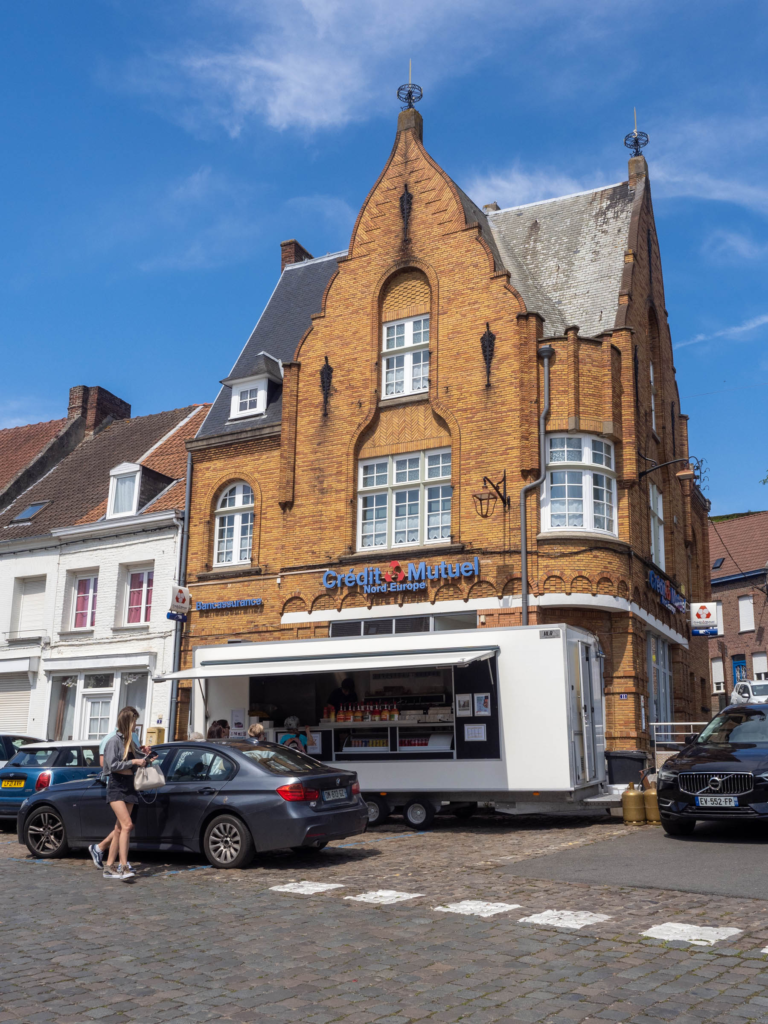
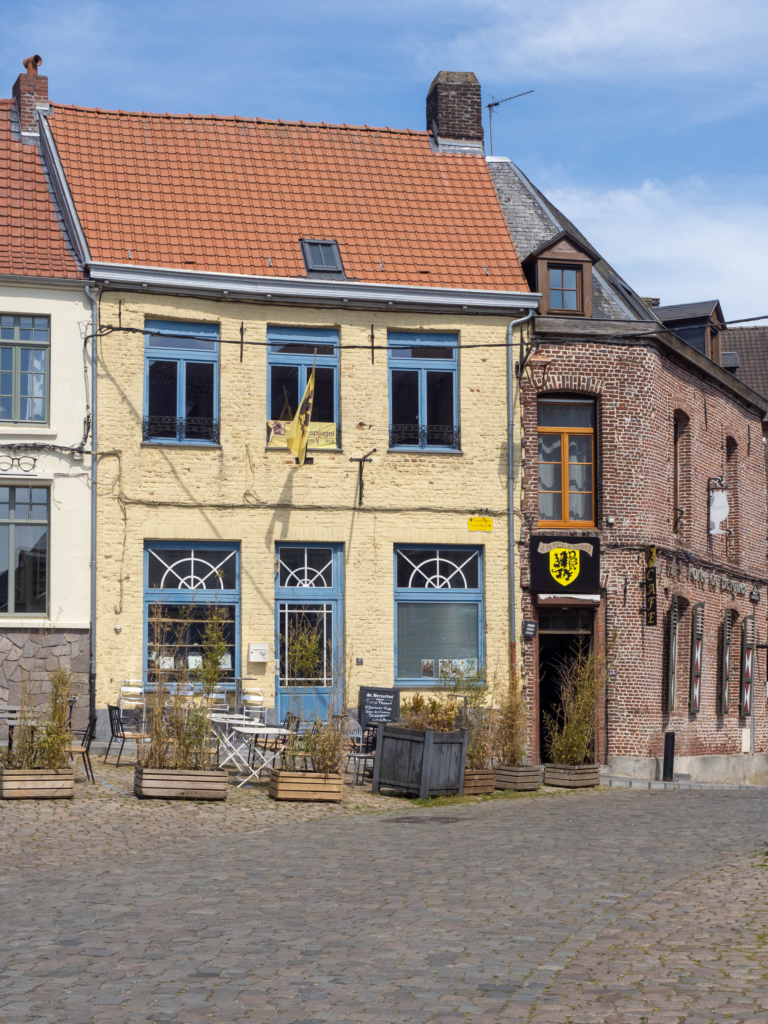
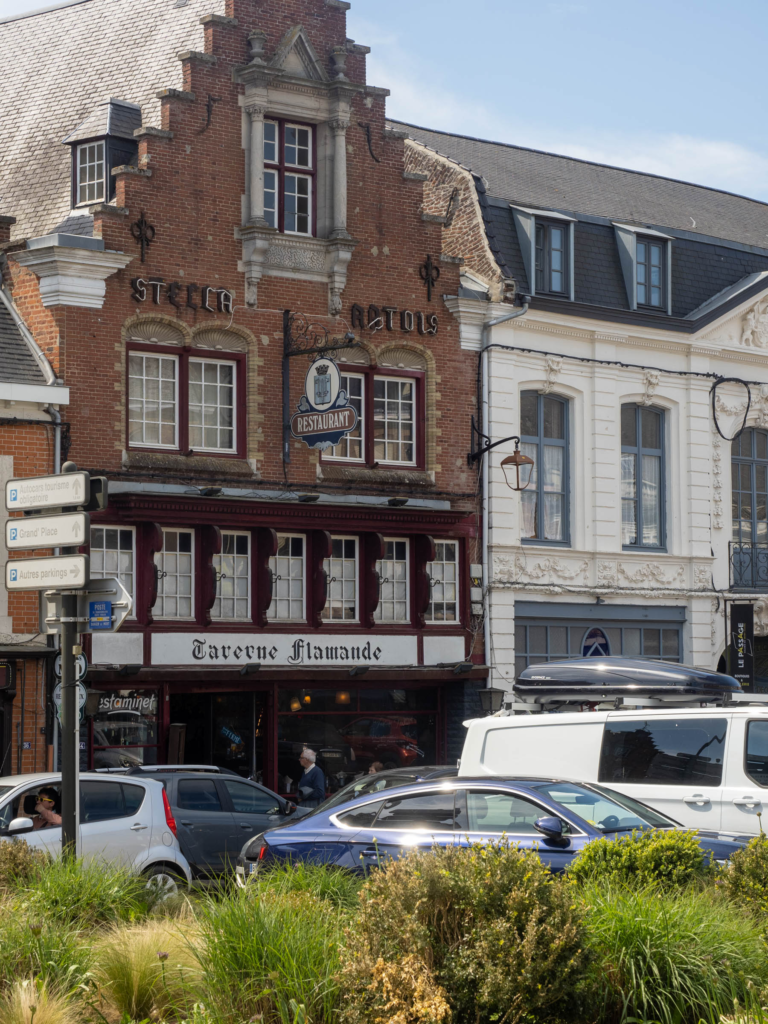
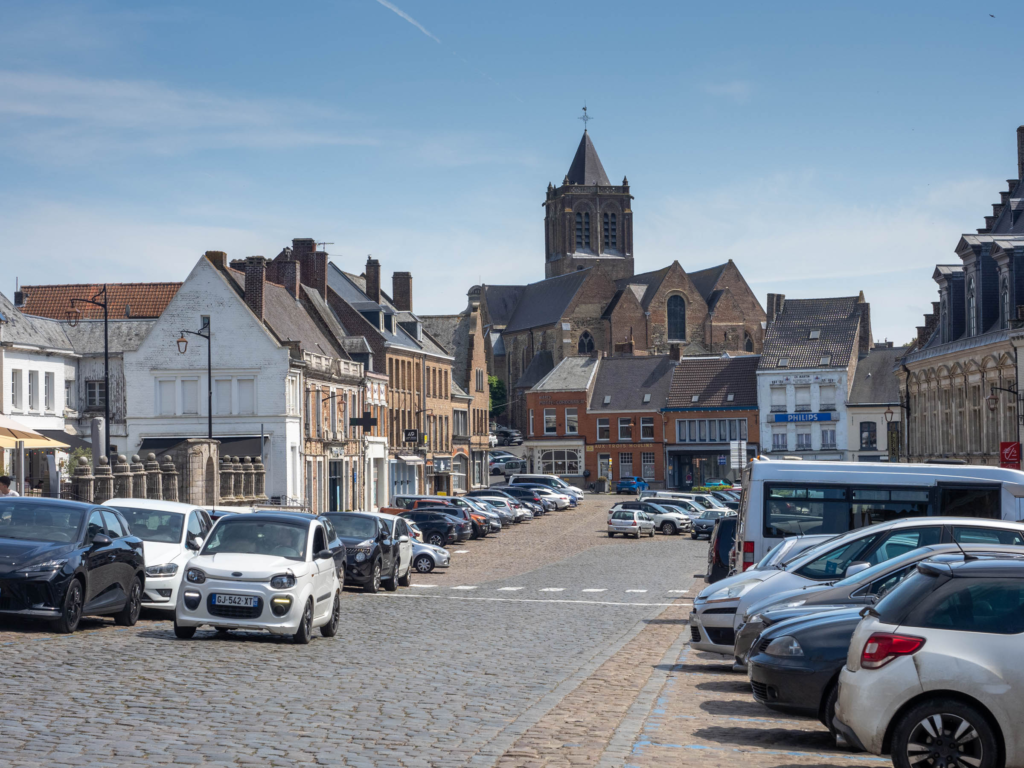
From Cassel, it was only downhill. The sky turned grey and thick clouds were getting thicker, so we pedalled faster, to make sure we didn’t get caught by the rain. After a few kilometers on a little road exactly on the French-Belgian borders, we entered Belgium again. When we rolled onto our campsite on a farm, the air was thick and the trees barely moved – typical silence before the storm.
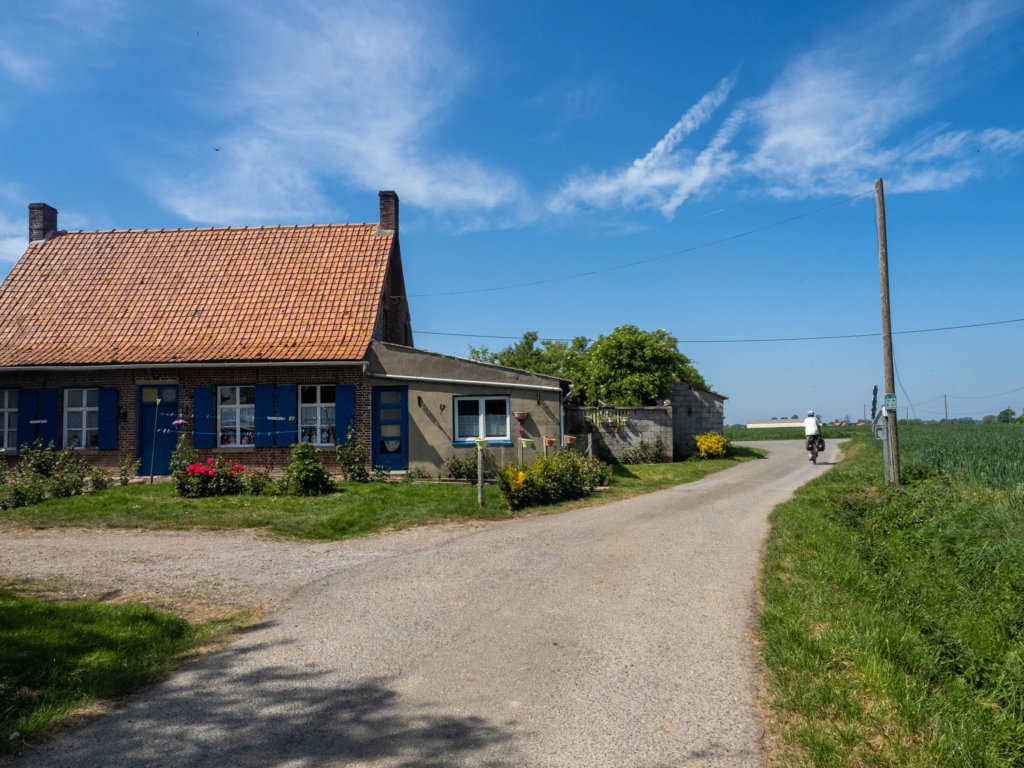
We pitched our tent just in time – a few minutes later, the first drops of rain hit the canvas. But the massive storm, predicted by the weather forecast, never arrived. The evening was warm and clear, so we spent it by the campfire, exchanging stories with other cyclists from VeloTour, and helping kids to roast their marshmallows.
Day 3: From Alveringem to Oostende
We woke up to the sound of the rain. I was impressed that my tent was still waterproof, despite the many patches I used to fix the massive tears it suffered due to an unfortunate incident a long time ago in Albania.
Since we had a long train ride home afterwards (and it was the end of a long weekend, so we expected the trains to be packed later in the afternoon), we chose the shorter route today: 47 km.
Along the Canal de Furnes
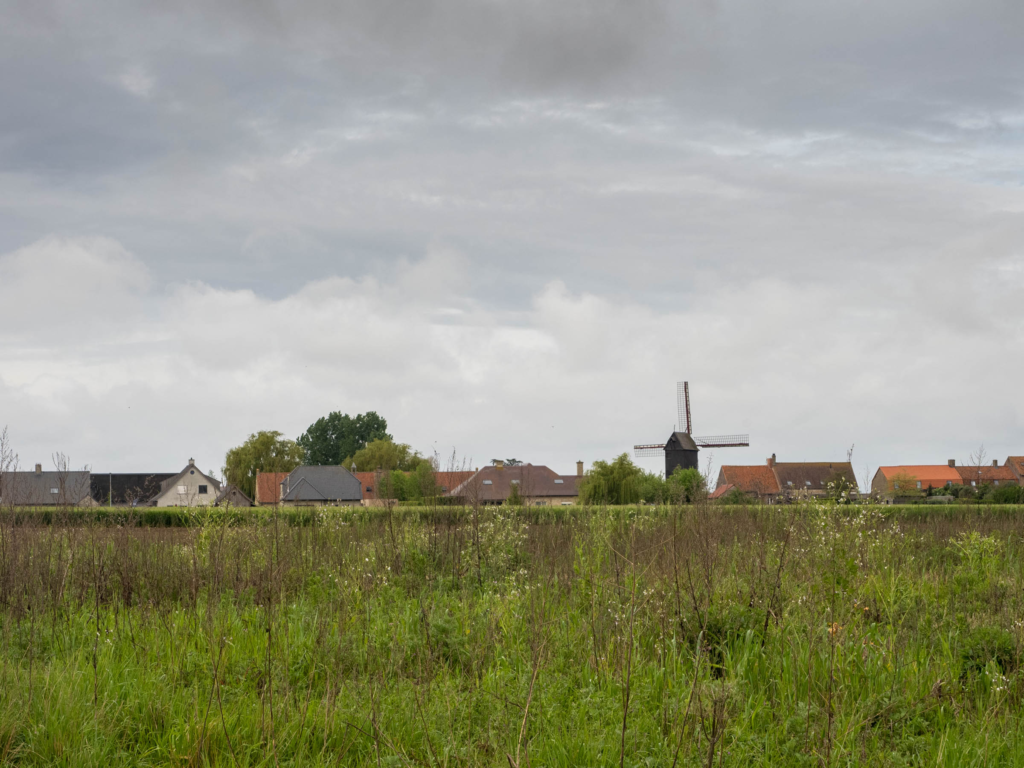
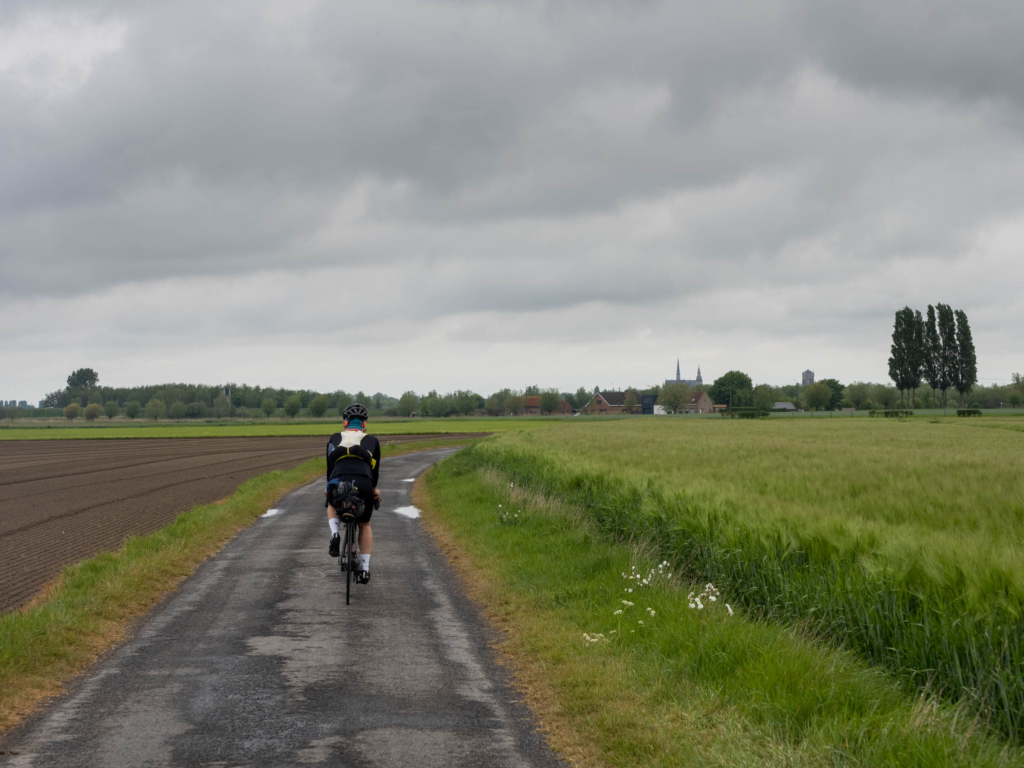
The route was as flat as it gets.
After some kilometers through the farmland, we reached Veurne. The path led us along the Canal de Furnes – a historic waterway that links Veurne with two important ports: Nieuwpoort and Dunkirk.
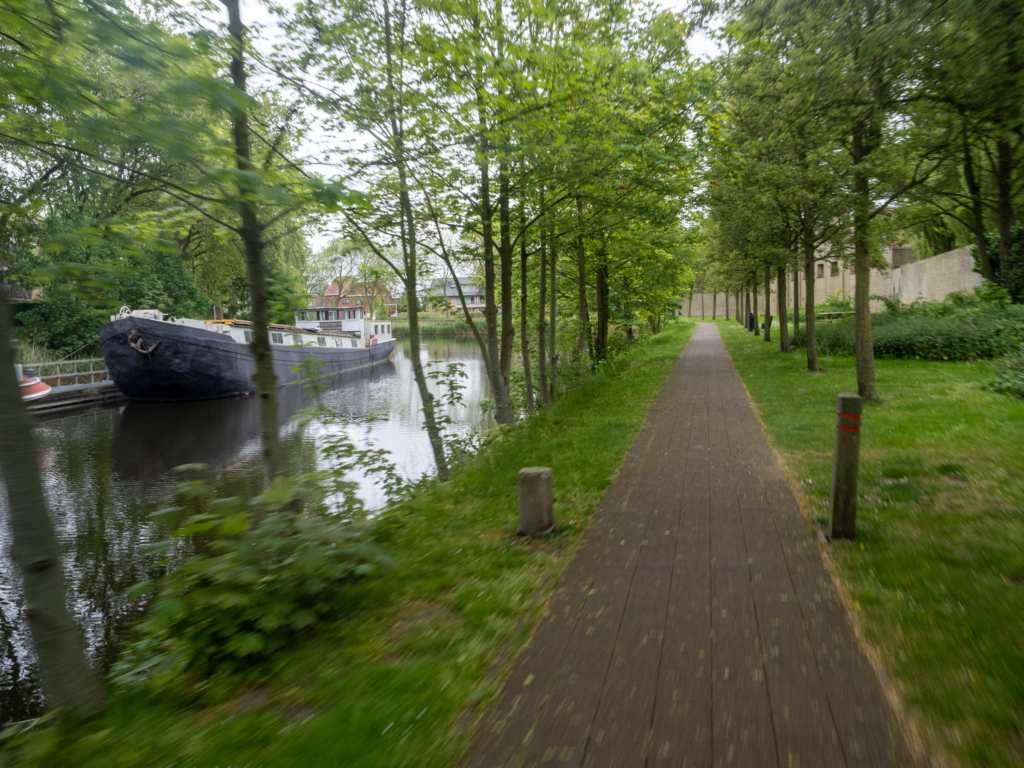
We followed the canal for quite a while. It felt so easy, pedalling on a perfectly flat, wide bike lane, along the water. Kilometers passed by quickly and effortlessly. We only had to slow down once, for quite an unexpected reason.
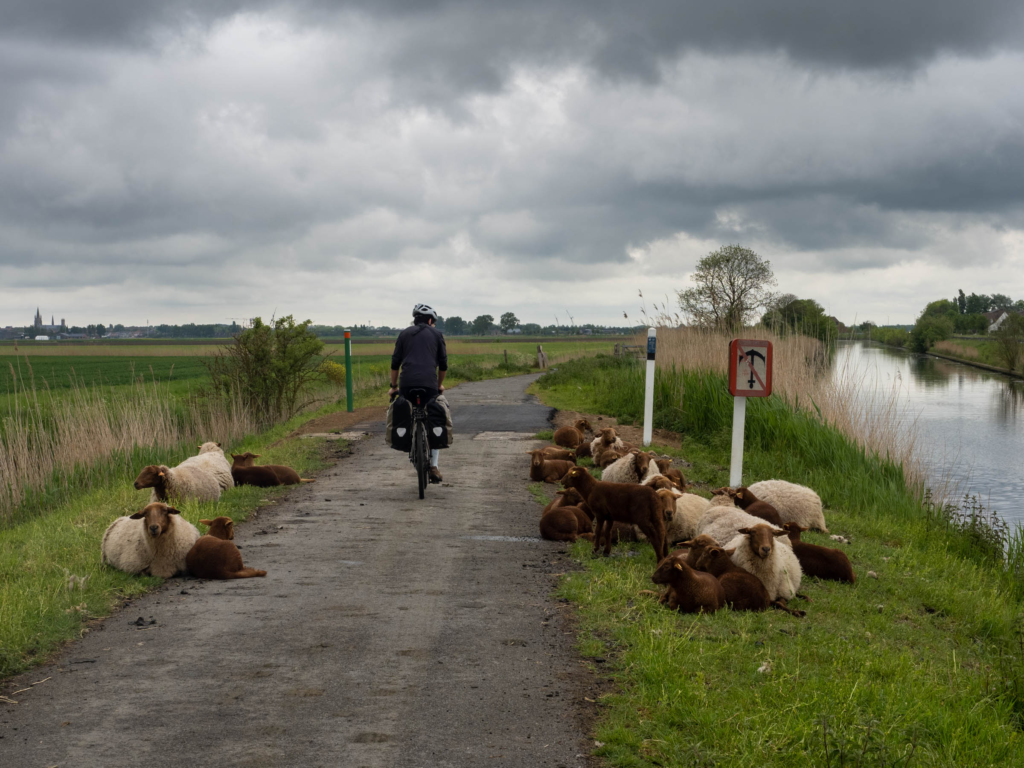
A flock of sheep was grazing on the grass next to the bike lane, and some of them were resting just in the middle of it. The asphalt was also covered in their poop, so we had to navigate this maze if we didn’t want our tires to be completely covered in dung.
Along the Coast
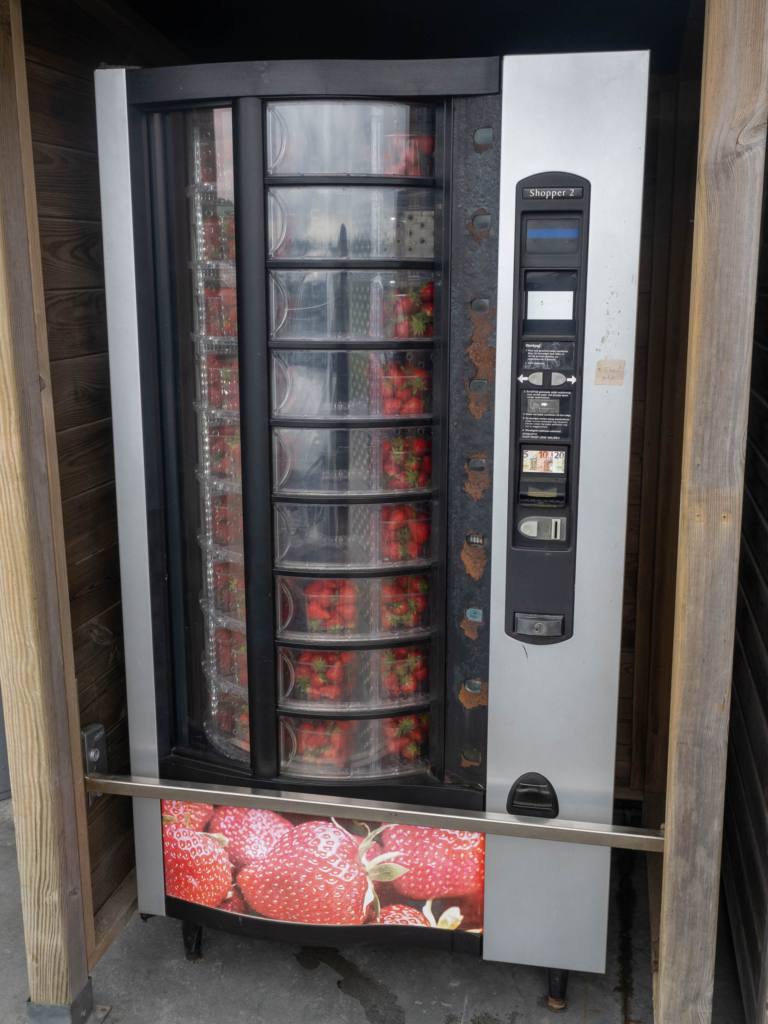
In Nieuwpoort, we stopped by a little local farmshop. They had fresh strawberries and a lot of homemade products. Since we only had a few kilometers left and plenty of space in the panniers, we bought a jar of rhubarb jam (we ate it after we arrived at home and it was delicious!).
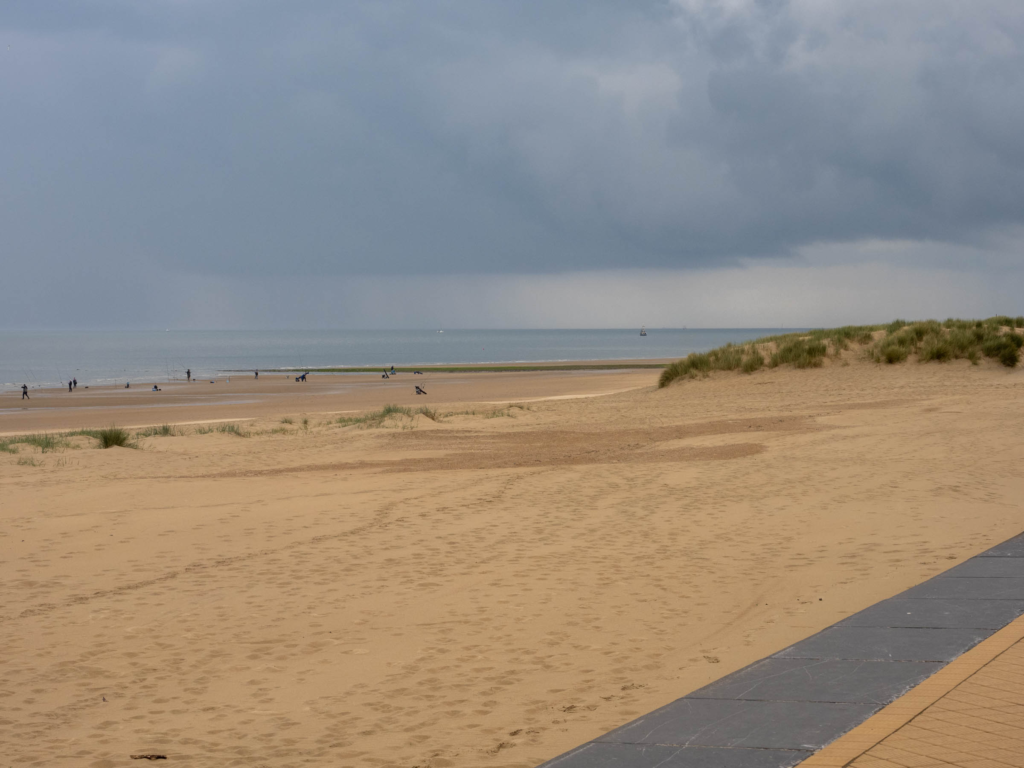
On this cloudy and windy day, the promenade from Westende to Oostende was relatively uncrowded. There were some people walking and kids riding the rental carts, so we had to ride carefully and slalom quite a lot but it wasn’t as bad for a Sunday.
The Royal Galleries in Oostende were covered in scaffoldings and sheets, since they were in renovation. It felt pleasant biking along the sea, which looked particularly dramatic with the heavy clouds.
We made it to the train station just on time – when our train left the platform, we saw rain droplets dancing on the window. The ride home was far from relaxing. As I expected, there were plenty of bicycles.It was quite a logistical tetris to arrange them in a way that leaves some space for parents with strollers and people in wheelchairs. We ended up standing for over three hours, but I didn’t even mind – at least I could stretch my legs after these three days of biking.
Cycling in West Flanders – The route
VeloPlannerOther long distance cycling routes in West Flanders
The region of West Flanders has an excellent cycling network. It’s super easy to plan your own route following dedicated cycle paths or quiet secondary roads. But if you’re looking for some ready cycle routes for bicycle touring or bikepacking in West Flanders, here are some of the nieces ones:
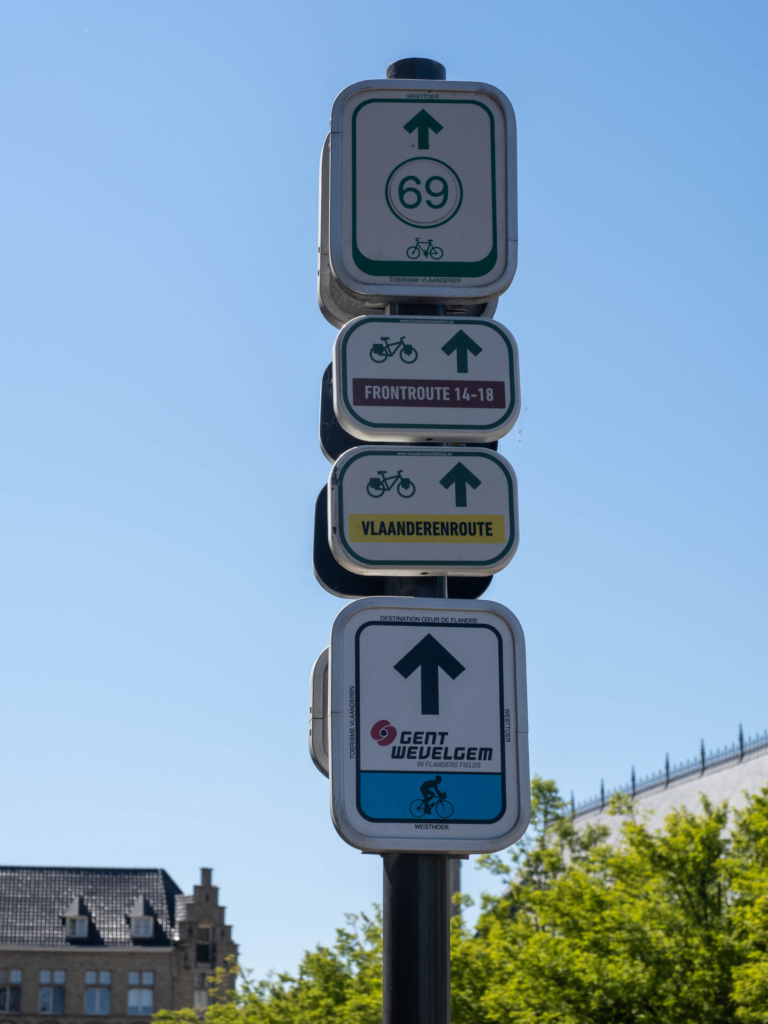
14-18 Western Front Route
This is a perfect cycle route for history enthusiasts. The 14-18 Western Front route is 100 km long, so it can easily be ridden on a weekend and you’ll still have plenty of time to explore what makes this route special: the trenches, bunkers, and cemeteries that tell the story of the Great War.
The Hilly Route (Houvelroute)
The Hilly Route stretches all the way from West to East of Belgium and, as the name itself suggests, it’s pretty hilly (at least for the Flemish standards). Over the course of 460 km, you’ll be climbing over 4100 meters.
The route starts in Poperinge in West Flanders, through charming Flemish towns like Kortrijk and Leuven and the hills of the Flemish Ardennes, to reach the green Gulp Valley at the border with Germany.
VeloPlannerLooking for more information about cycle touring and bikepacking in Belgium? Check out my practical guide!
 Polski
  English