Belgium is one of the best countries in Europe for cycling. With a dense network of cycle paths, thousands of kilometres of signposted routes, good train connections and a perfect blend of historical cities with picturesque countryside, it’s an ideal destination for both beginner bike tourers, experienced backpackers and sporty road cyclists.
I lived in Belgium for 18 months, and currently visit it frequently with my bike (as I live just about 20 km from the Belgian border). In this article, I’ll share everything you need to know about cycling in Belgium: the best cycle routes, smart tips for route planning, accommodation, wild camping rules, and transportation.
Is Belgium good for bicycle touring?
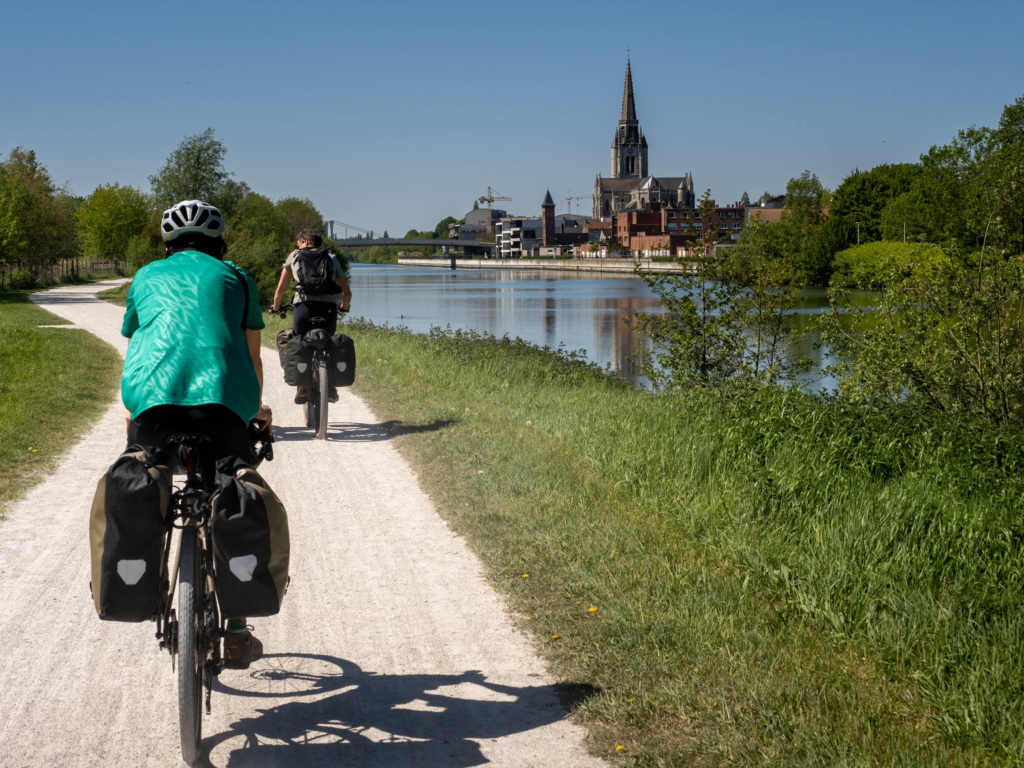
With an extensive network of cycle routes, good cycling infrastructure and a generally cyclist-friendly culture, Belgium is a great destination for cycle touring. Especially those less-experienced, looking for easier routes will love it there.
For such a little country, it offers a great variety of landscapes. From the forested hills of the Ardennes, to the wide Flemish flatlands and beautiful sandy beaches – you can experience it all within just a few days on a bike. The cultural richness and amazing architecture is another reason to visit Belgium – medieval cities, grandiose castles, and amazing museums attract cycle travellers who are looking for more than just beautiful views.
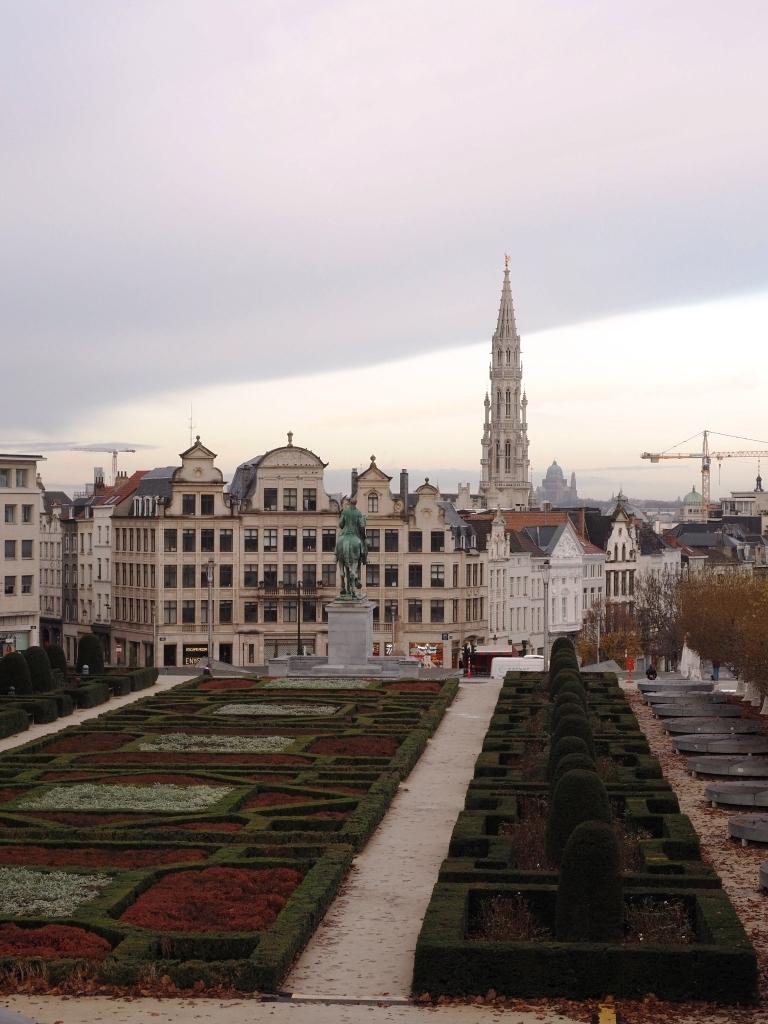
It’s not all sunshine and roses, though. Quite literally. The Belgian weather is quite capricious: within one day, you can experience sunshine, hail, rain, wind and then sunshine again. And on a cloudy day, especially in autumn, everything looks quite depressing.
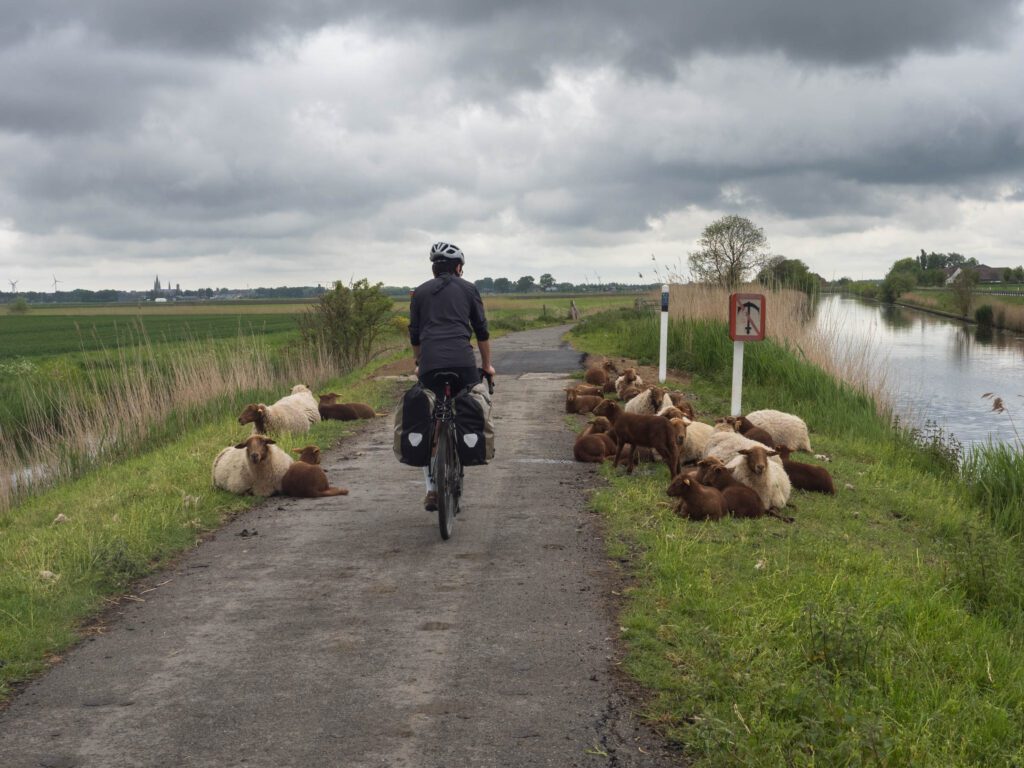
If you love cycling in places with unspoilt nature, Belgium might also be slightly disappointing for you. The country is quite urbanised and there’s not much wilderness left. There are still plenty of forests, beautiful valleys, or moors, but it’s hard to find a place that feels untouched by the human hand.
Another issue is that the accommodation can be quite pricey. Luckily, there are a few ways to organise your bikepacking trip in Belgium on a budget (I’ll get to that later).
Cycling infrastructure in Belgium
Knooppunten
Belgium has one of the most developed networks of bike paths in the world. Especially Flanders (the Dutch-speaking part) is a paradise for cyclists. And the best part is – you don’t even need a GPS for navigation.
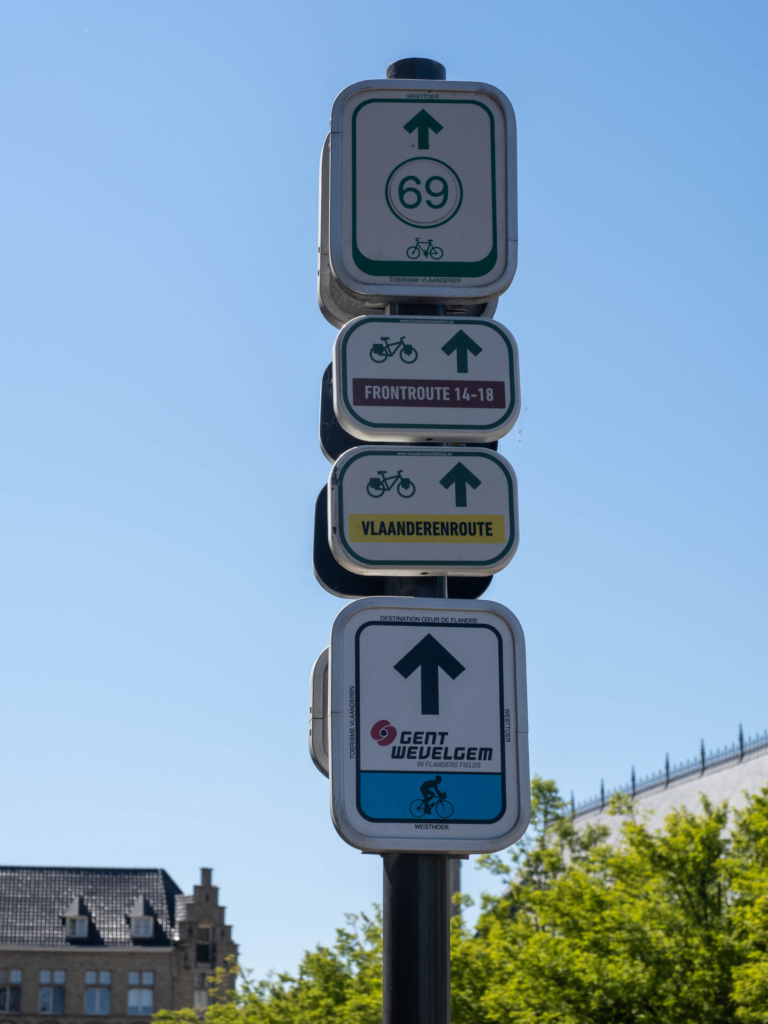
Thanks to a Belgian mining engineer, Hugo Bollen, you can navigate around Belgium (and the Netherlands) using knooppunten (the cycling nods) – a system with numbered signs placed at every crucial intersection.
How do The knoopunten work?
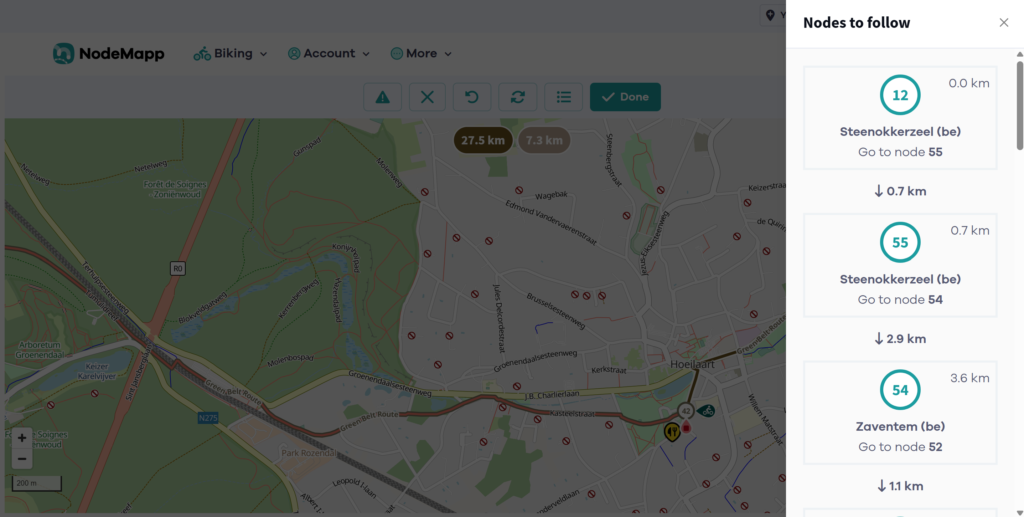
- Before your ride, go to the Bike Nodes Planner. You can find multiple official cycle routes there or create your own (customised routes are only available for premium users). Click the second icon on the right side of the map to see the available official routes and click the one you want to ride.
- Your route will appear on the map, and when you zoom in, you’ll find circles with numbers along it. Click the numbers on the start and the end of the route and then on the icon with a bullet point list.
- You’ll now see the list of nodes to follow. Print them or write them down on a piece of paper (or in a note on your phone). Stick the paper with the number to your handlebar. Now you can navigate phone-freely and take a well-deserved rest from the screen! Just look out for the next number on your list and follow the directions towards it.
RAVeL routes in Wallonia
The RAVel network is a network of routes available exclusively to non-motorised users: cyclists, pedestrians, horse-back riders etc. They connect localities across all of Wallonia (the French-speaking part of Belgium). The RAVel routes often run along canals, rivers or following disused railroads.
Most of the time, they are well signposted and easy to navigate. You can find a map of all RAVeL routes na tej stronie.
Cycling highways
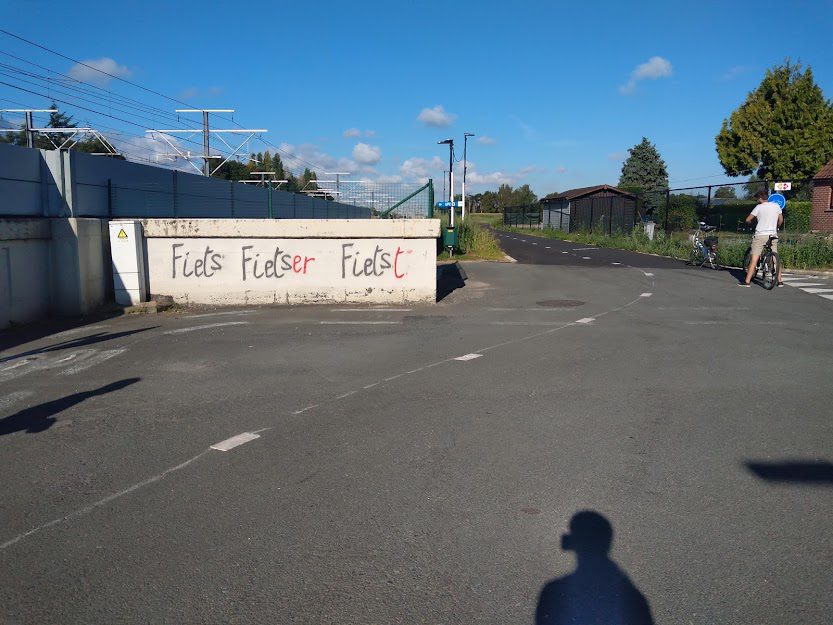
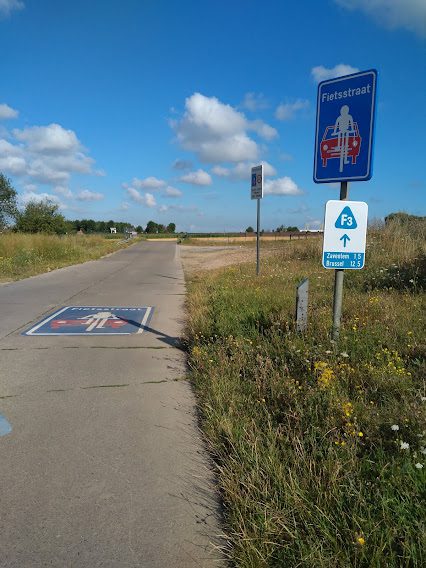
In the Dutch-speaking region of Flanders, you will find a network of Cycle highways (fietssnelwegen in Dutch). They are created to be the fastest way to get from A to B, so they are not always the most scenic ones. The cycle highways are convenient, wide, and for the most part, separated from motorised traffic (sometimes car are allowed but need to give priority to bicycles – this kind of road is called Fietsstraat (a cycle street).
You can find a map of all cycling highways tutaj.
The Best cycling routes in Belgium
The Flanders Route (Vlaanderenroute)
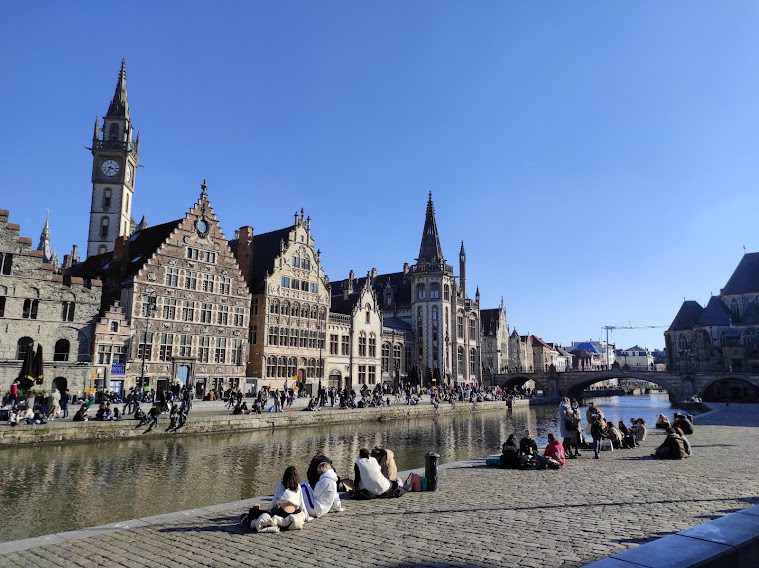
The Flanders Route is 962 km long and a perfect way to explore all corners of the Dutch-speaking part of Belgium. You’ll visit the great Flemish city trio: Brugge, Ghent and Antwerpen, ride along the canals, enjoy the nature in the Hoge Kempen National Park, and conquer some of the classic climbs from Tour de Flanders.
The route runs mostly on quiet local roads and dedicated cycle lanes, and it’s a loop, so you can start it at any point. The logistics are super easy – there are plenty of towns and cities along the way where you can buy food and find accommodation, so you can travel light, with just some spare clothes and the cycling essentials.
VeloPlannerthe Vennbahn
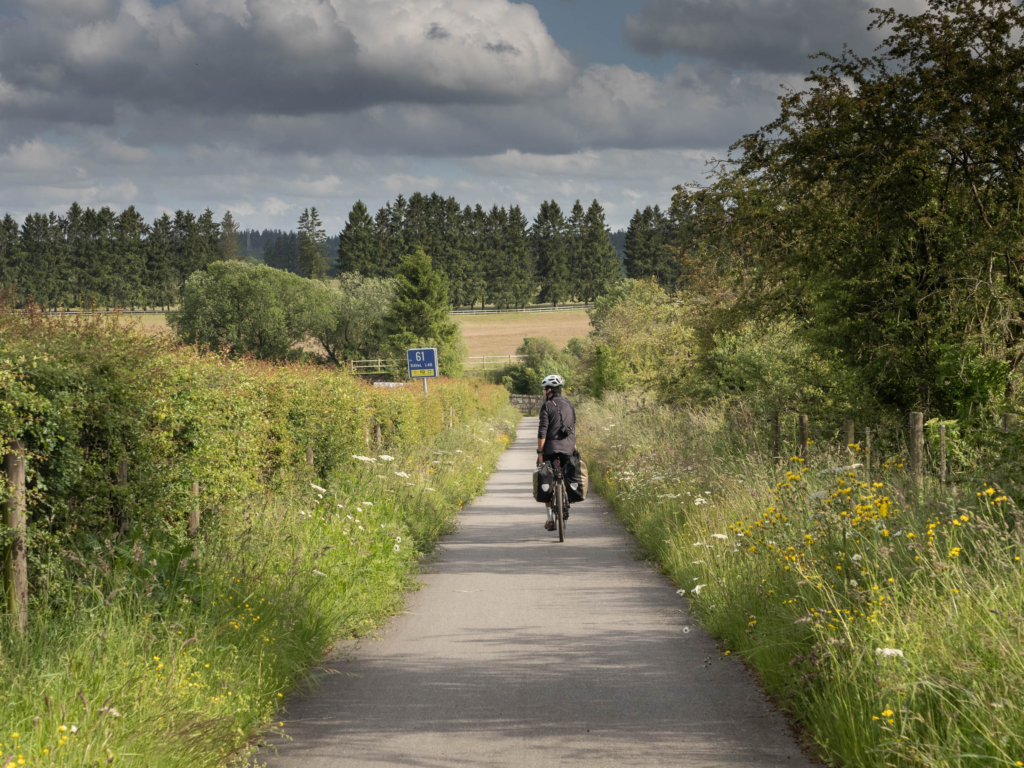
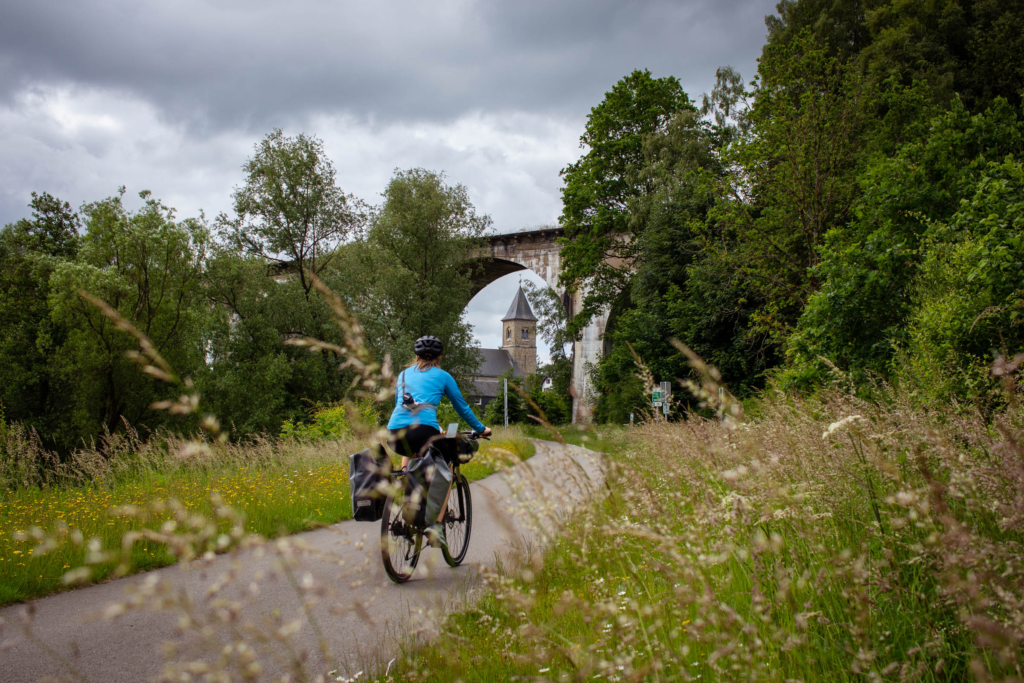
The Vennbahn is a perfect cycle route for a weekend getaway. This cross-border adventure starts in the German city of Aachen (there is a direct train there from Brussels and Liege) and ends in Troisvierges, a town just across the Luxembourgian border.
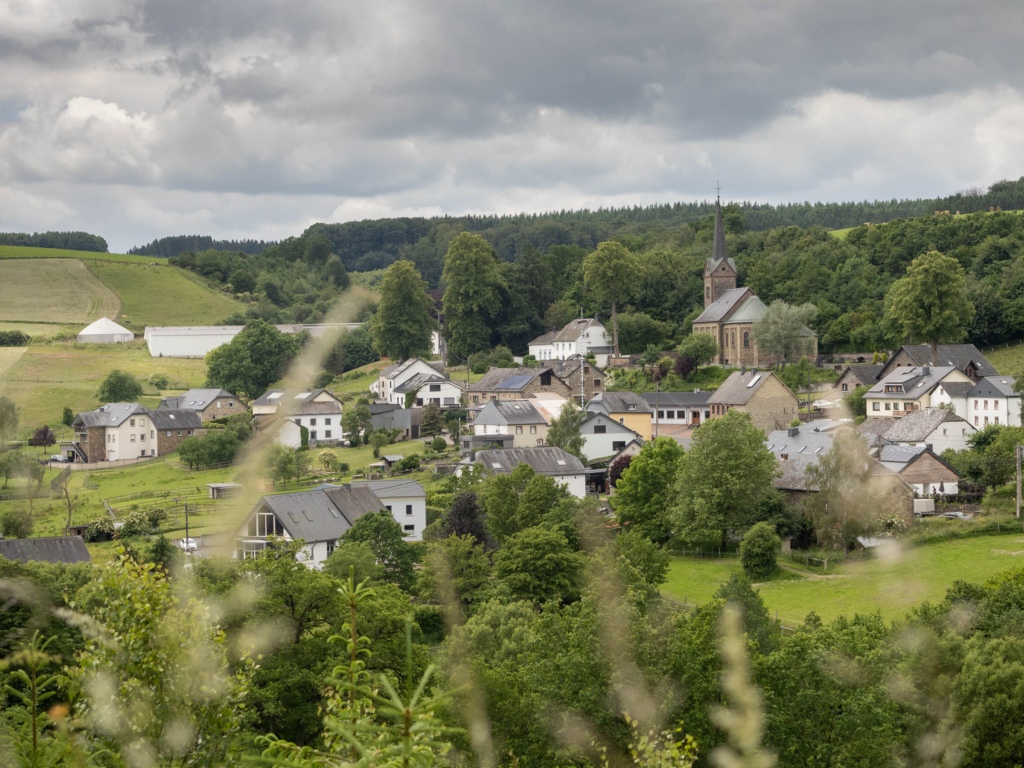
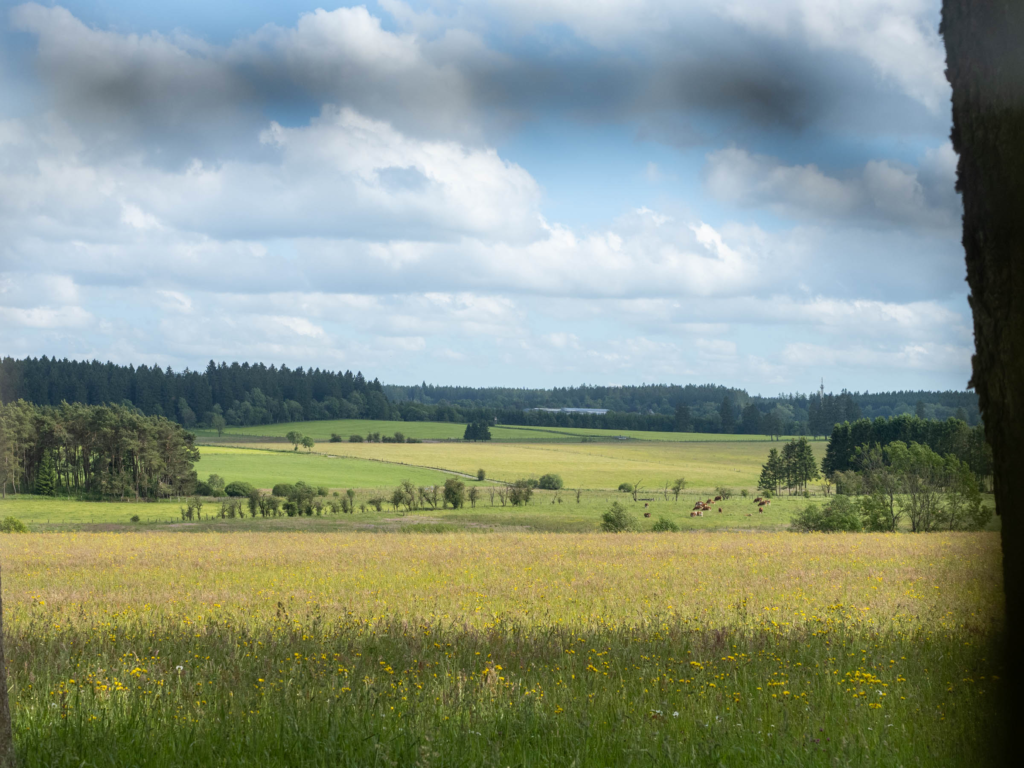
The Vennbahn is just 125 km long and it follows an old railroad. The whole route is seperated from traffic, so it’s a great choice for a family cycle tour. Along the way, you’ll see some of the most beautiful natural landscapes in Belgium – the plateau of the High Fens.
The Meuse Route (EuroVelo 19)
Following the river Meuse (Maas) is one of the best ways to cycle across Belgium. The EuroVelo19 is one of the most scenic cycle routes in Belgium, with a big chunk of it running on traffic-free RAVeL trails.
Cycling along one of the most important rivers in Western Europe, the Meuse Route takes you to dreamy towns like Dinant and Namur, with beautiful castles and historical fortresses. The dramatic rock cliffs and rolling hills of the Ardennes provide a perfect backdrop for your travel pictures.
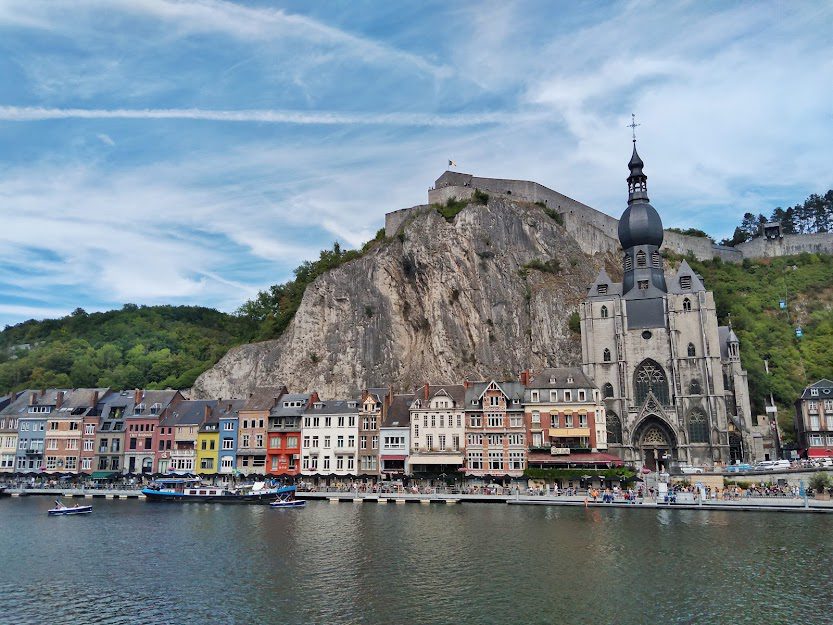
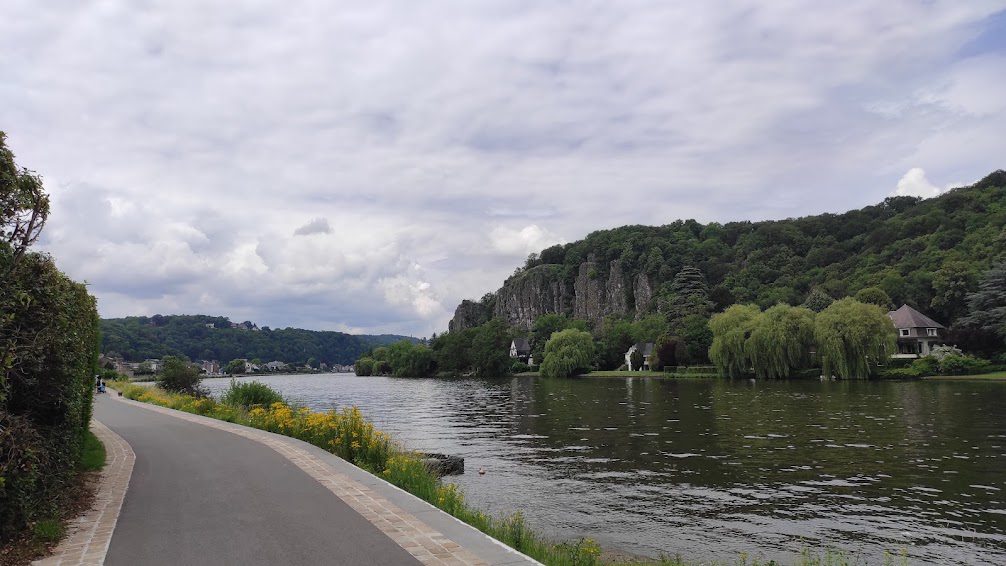
The Belgian section of the Meuse Route is 141 km long. If you’re looking for a longer cycle adventure, you should cycle the entire EuroVelo19, from the French city Langres to the Rhine-Meuse-Secheldt Delta in the Netherlands, where the river flows into the North Sea.
VeloPlannerAround Limburg
Limburg is one of the best regions for cycling in Belgium. It’s green and foresty, but flatter than the Ardennes, and its cycle routes are absolutely fantastic! This region is full of hidden cycling gems: a world-famous path cycling through the water or a stunning ride in the tree canopies cycling through the trees are examples of great cycling infrastructure that makes biking through the landscapes a unique experience.
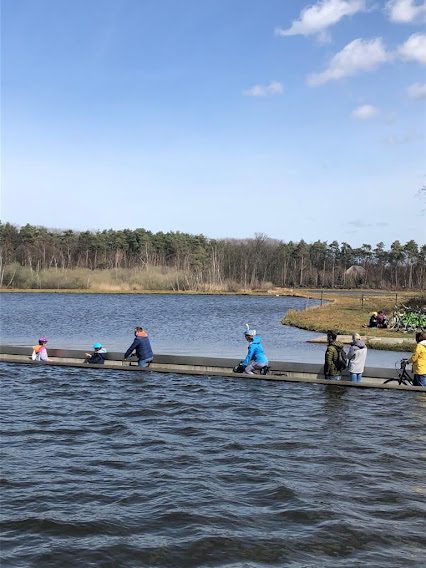
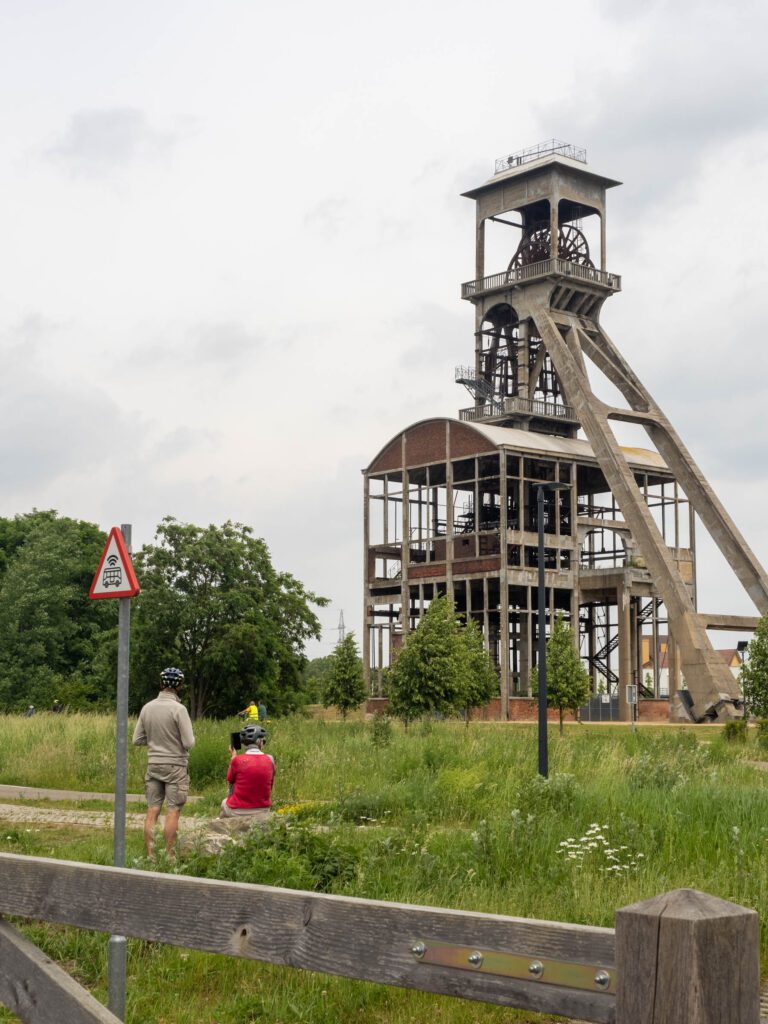
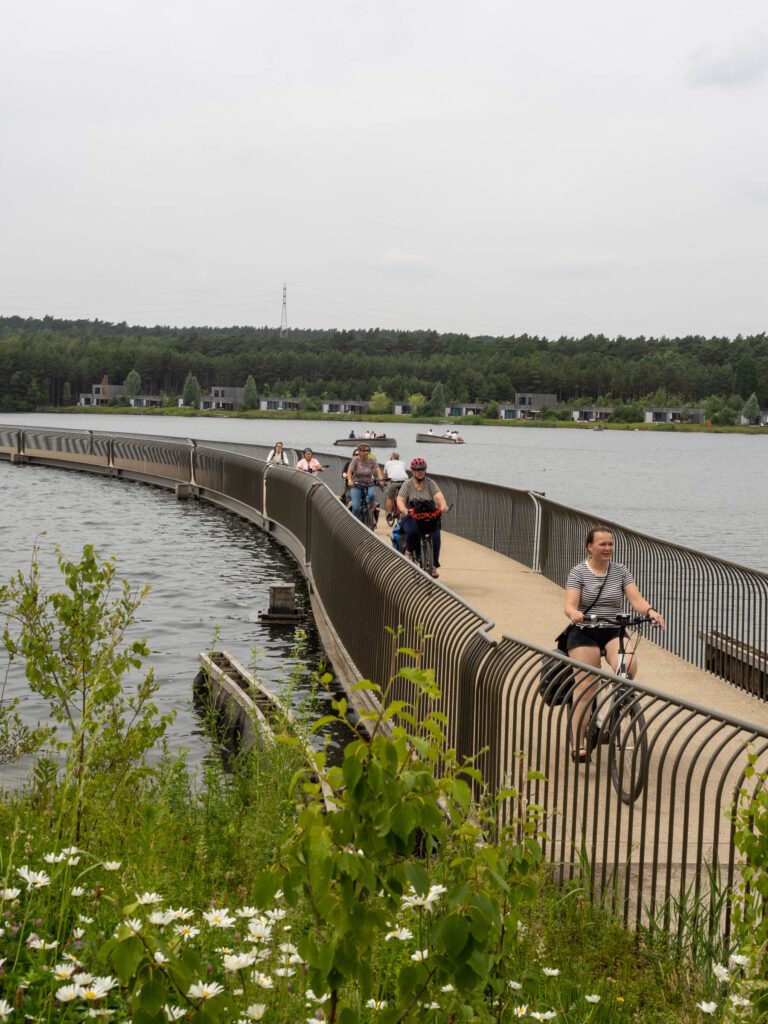
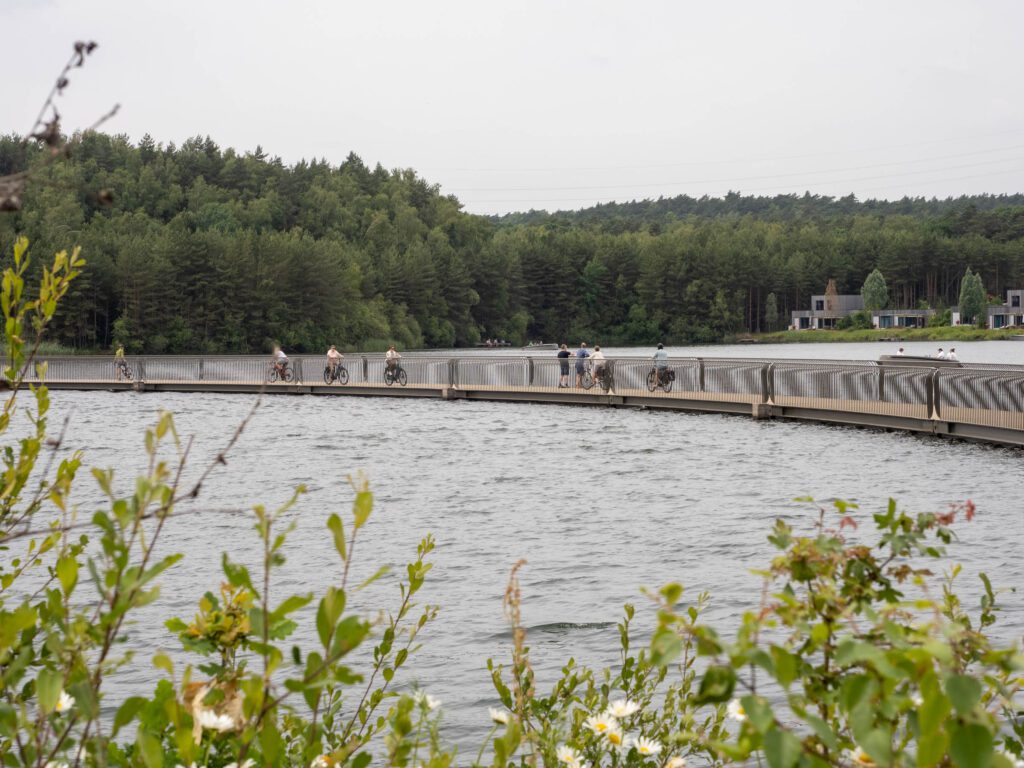
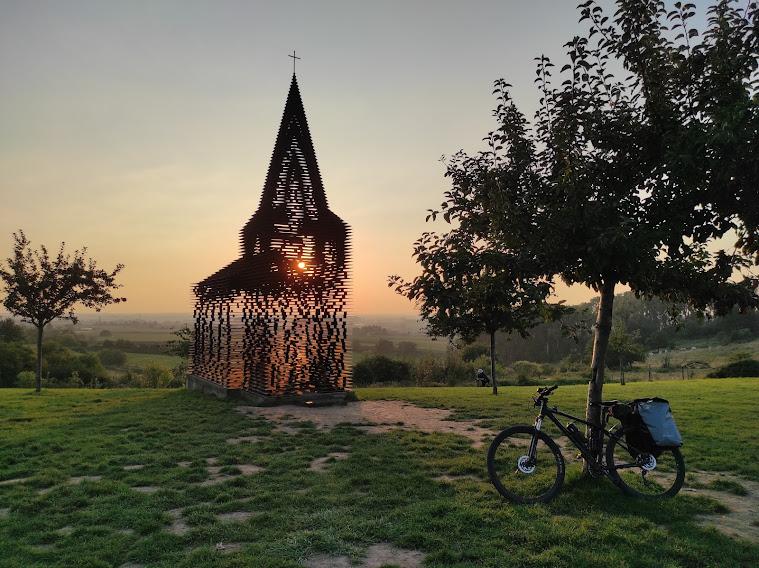
You’ll ride through heathlands, along rivers, past lakes and even through a little Belgian Sahara. Along the route, you’ll also find beautiful architecture: stunning castles, old abbies, and historic churches. One of my favourite landmarks there is Reading between the lines, a piece of modern art in a shape of a church you can look through. You can arrive there for the sunset and then camp on a free campsite 100 meters away.
The Green Belt of Brussels
When I lived in Brussels, my relationship with the city was complicated. Sometimes it felt overwhelming, messy and hectic, other times I loved its laid-backness, diversity and charm. And I definitely loved grabbing my bike and escaping the busy, chaotic streets.
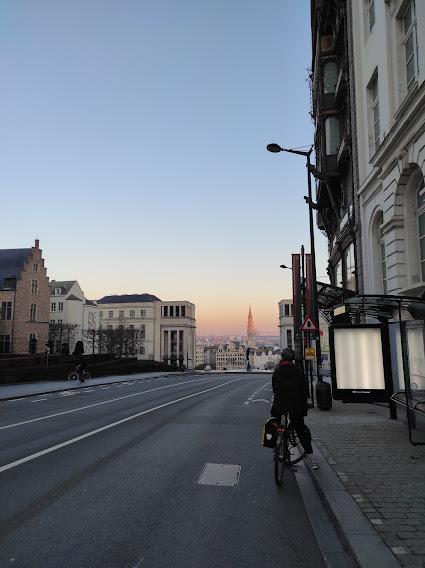
One of the coolest cycling routes around Brussels is the Green Belt (Promenade Verte). If you’re spending more time in the Belgian capital, you should definitely ride it! The loop is 126 km long, so it’s perfect for a long Sunday ride or a relaxed weekend overnighter.
VeloPlannerYou’ll ride through beautiful forests and parks, along canals, through Flemish villages and past picturesque castles. Stop in Grimbergen to visit the famous brewery, and in Meise to enjoy the beautiful botanical garden surrounding the Boechout castle.
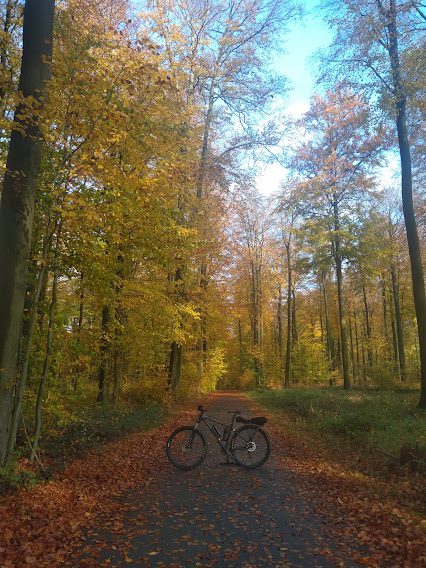
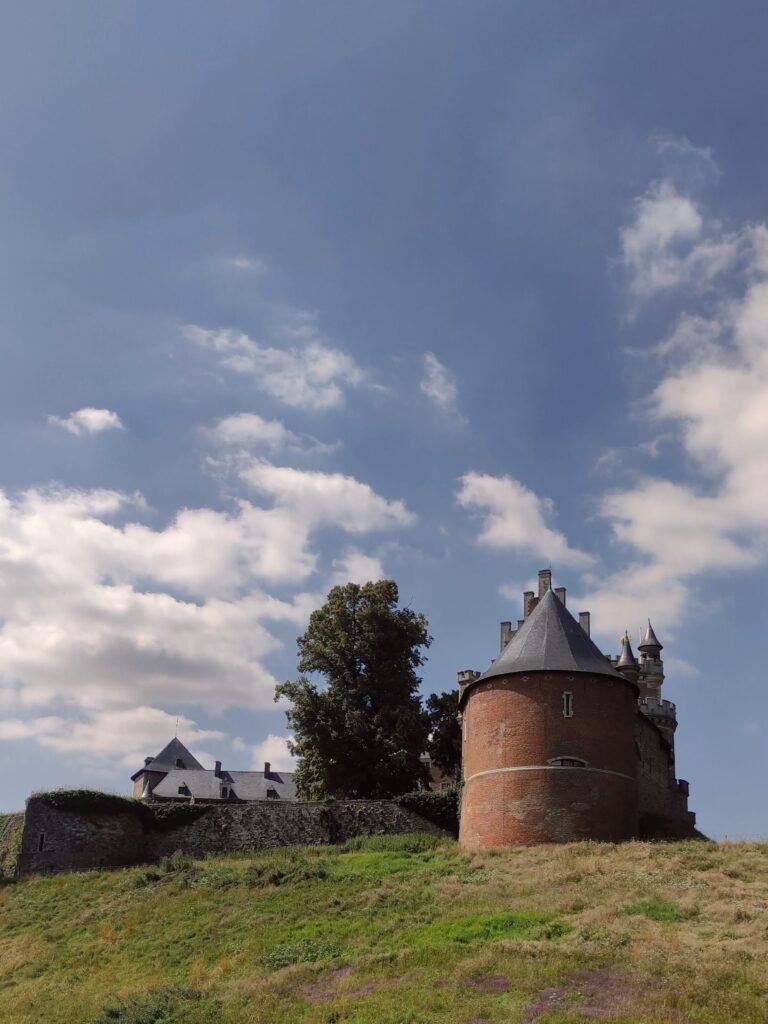

Bikepacking in Belgium
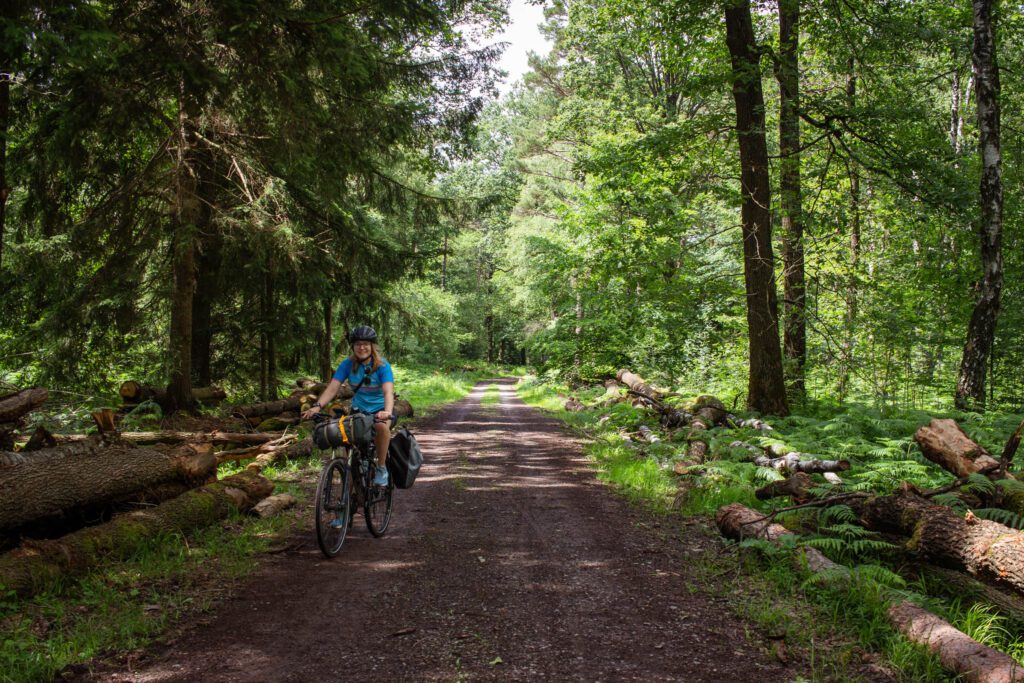
Belgium might not be Scotland, Norwegia, or Kirgistan, where bikepacking means endless empty roads, spectacular mountains, and wild, unspoilt nature. Most likely, bikepacking in Belgium won’t be the adventure of your lifetime. Still, in my opinion this country is great for gravel riding, as long as you know where to go and how to plan your route.
The best regions for a bikepacking adventure in Belgium are the Ardennes, a region with forested, rolling hills, with the highest point reaching 694 m.
GR2 Gravel Routes in Wallonia
The recently launched GR2 project is a network of Gravel Routes in the French-speaking part of Belgium – Wallonia. They combine forest paths, dirt roads and quiet country roads, prioritising cycling in nature and getting to the most charming places in the region.
Currently, there are 14 such routes, each between 200 and 350 km long. Expect plenty of climbs, some hike-a-biking, as well as historical abbeys, cute old towns, and dense forests.
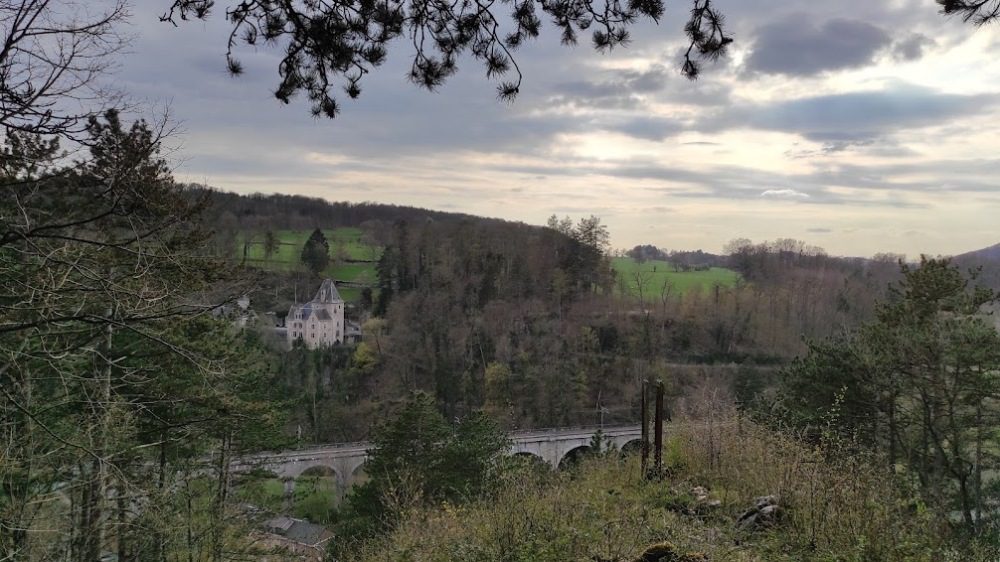
If I were to choose one route, I’d go for the one through the Semois Valley and La Gaume. The area around Buillion and the town itself is one of my absolutely favourite places in Belgium.
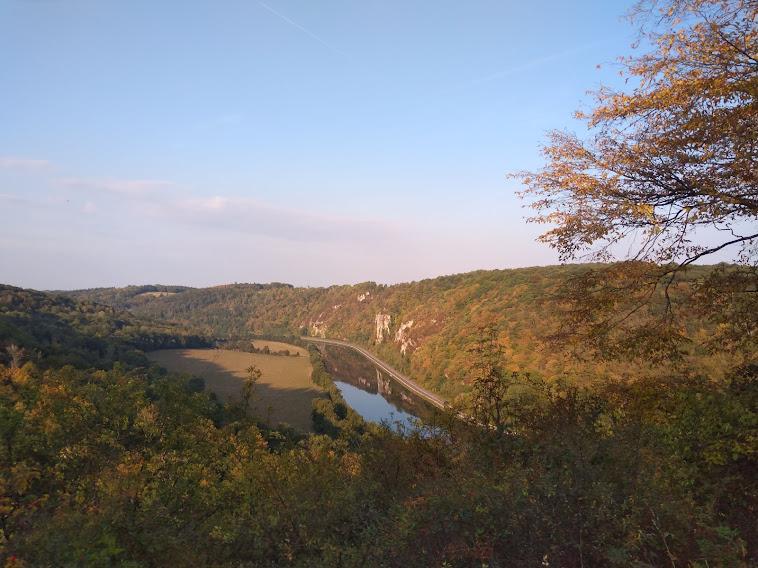
Check out the routes on the official website of Visit Wallonia.
La Condruzienne
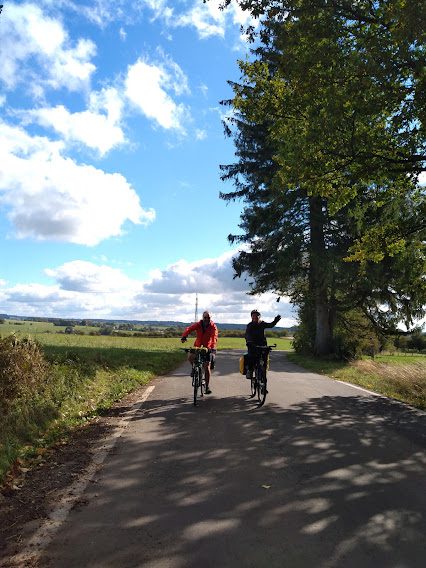
La Condruzienne is another great bikepacking route in Belgium. Over four days and 328 km, you’ll ride through the calmest places in the area between two rivers – La Meuse and La Lesse.
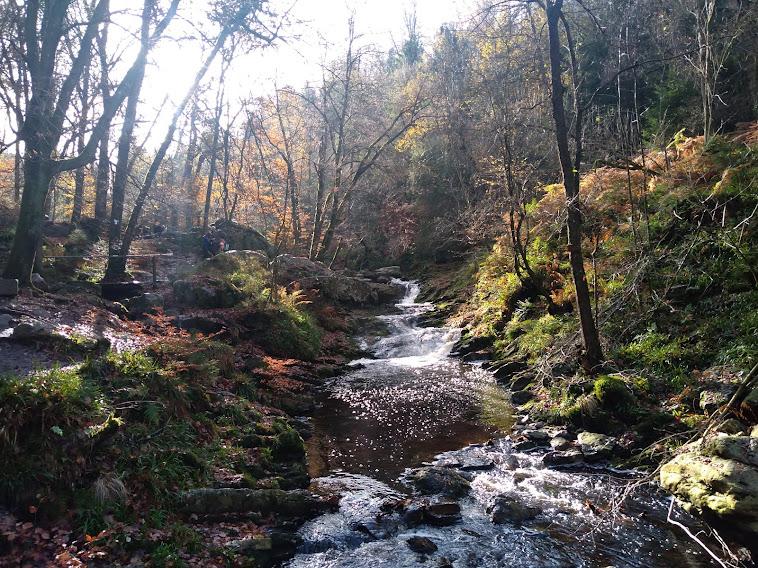
There’ll be plenty of castles, rock formations, and beautiful valleys. It’s not an easy ride – sure, Belgium is not a mountainous country but this area is quite hilly, and you’ll log in over 5600 m of elevation gain.
Check out the detailed route report on bikepacking.com.
Noclegi
If you’re a credit-card bikepacker, you’ll easily find a place to stay when cycling through Belgium. The country is densely populated and there are plenty of hotels, hostels and B&B. However, Belgium, like most Western-European countries, is quite pricey. If you’re on a budget, or simply prefer sleeping in your tent, there are a few great options.
Official campsites
There are plenty of campsites in Belgium, especially in the southern part – Wallonia. The prices for two people in a small tent usually range from 30 to 40 euros per night.
Spanie na dziko
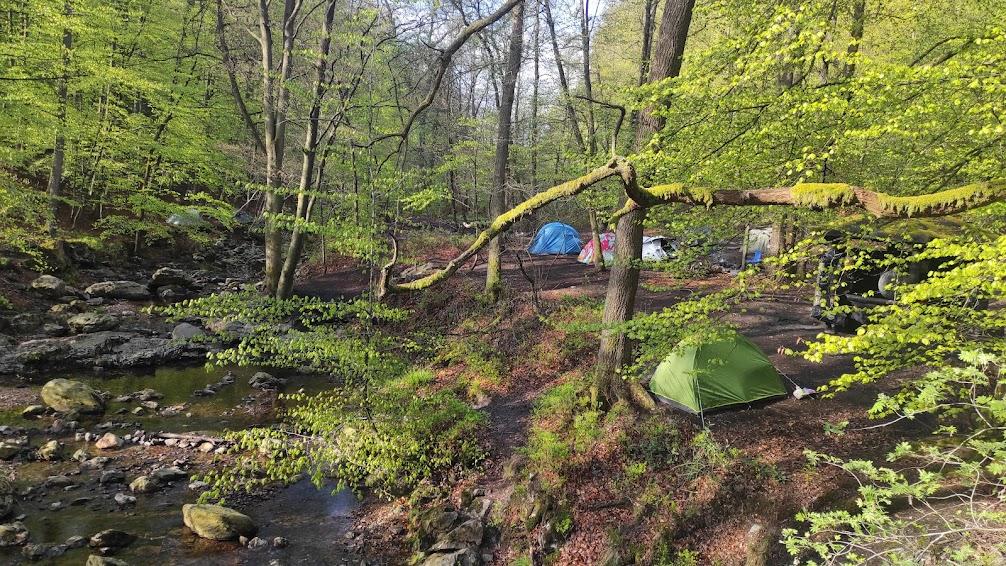
Wild camping in Belgium is illegal. However, there is still a way for you to stay in your tent surrounded by nature for free, without risking a fine. Strefy biwakowe (bivakzone) are small campsites, usually without any facilities (you can count on an outside privy on some of them). Bivouac zones are accessible for non-motorised tourists only and spread all around the country, both in Flanders and Wallonia.
Warto wiedzieć:
- Some camping areas are only open over the summer
- Sometimes a reservation (free of charge) is required (however, from my experience, it is not executed). Best to always check the conditions on bivakzone.be
Welcome to my garden
Belgian are very often willing to participate in citizen non-profit initiatives. Welcome to my garden is one of them. It is like Couchsurfing or Warm Showers, but instead of inviting travellers to their homes, the hosts simply offer them a part of their garden to pitch a tent. Thanks to this platform, you can even camp in the centre of Brussels!
Some hosts, especially in the deep countryside, only have profile descriptions in Dutch or French. Don’t hesitate to use Google Translate and contact them anyway! With over 3500 hosts in Belgium, you should easily find a place to stay and enjoy a truly Belgian experience.
Warm Showers
Warm Showers is popular among Belgians, with over 4800 users. Many of them are actively hosting, so finding a place to stay with fellow cyclists should never be difficult.
Bicycles on Belgian trains
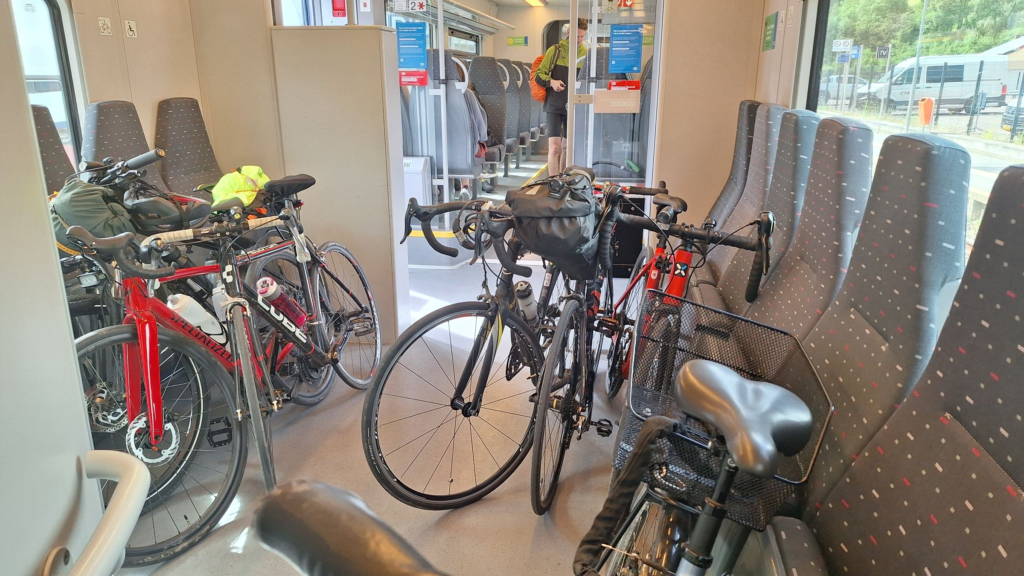
Belgia ma dobrze rozwiniętą sieć kolejową, a rower można przewieźć pociągiem do dowolnego miejsca w Belgii Koleje Belgijskie allow e-bikes, tandem bikes, trailers and segways. The bike supplement costs 3 euros on the weekend and during off-peak hours (before 6.01 am, between 9am and 4 pm and after 6 pm from Monday to Friday). A regular bike supplement costs 5 euros (you can purchase it online or in the ticket machines at the station). There are no tickets sold on board, so always make sure to buy them before boarding the train to avoid a high fine.
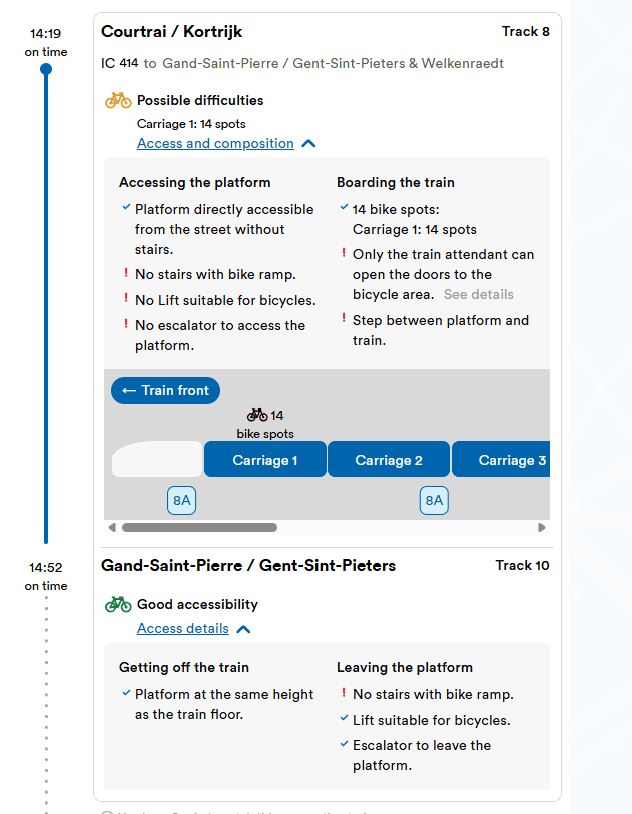
I recomend using the Planer Rowerowy—an online service for checking how many bike spaces the train offers and how accessible the platform is with the bike.
Wsiadanie i wysiadanie z rowerem jest zabronione na stacjach Bruksela Centralna, Bruksela Kongres i Bruksela Chapelle..
Bike rental in Belgium
- Brussels: Coureur Brussels (gravel), Bike-packer (trekking, gravel, e-bike)
- Brugge: Steer Shop (road, gravel, city)
- Leuven: Gravel Bike-Rent (gravel)
- Bertem (near Leuven): The Shelter (gravel, MTB, e-bike)
- Antwerp: Bikepacking Belgium (touring, gravel, tandem, children bikes), Cyclant (trekking, gravel)
- Oudenaarde (East Flanders): Centrum Ronde Van Vlaanderen (road, gravel)
- Sint-Truiden: Go4cycling (road)
- Londerzeel (near Brussels): Gravelbike.be (gravel)
- Zonhoven (near Hasselt): Bike&Trail (MTB, gravel, e-bike)
- Hasselt: Vous le Vous (e-bike)
- Saint-Hubert: Escape Bike (e-bike)
- Dinant: Moss’Bikes (MTB)
- Liege: KAMEO Bikes (gravel, MTB, trekking, e-bike), CCT Bike Rental (gravel, trekking, road, e-bike)
Useful Resources
RAVel – an official website of network of bicycle paths in Wallonia with a route planner
Bivakzone – free campsites in Belgium
Knoppunten – a route planner usinge the system of Knoppunten
Fietssnelwegen – a website about cycling highways
Cycling in Flanders – a more sporty side of cycling, including information about the most famous climbs from the big cycling races
Visit Limburg – information about the best cycling routes in Limburg
Looking for insurance for your cycling trip in Belgium? Check out Bezpieczny Powrót – travel insurance that covers bicycle touring and mountain biking.
Have you done bike tours in Belgium and can recommend some cool routes/places to visit? Let me know in the comments!
 Polski
  English
Odnośnik zwrotny: Wild camping in Europe - where is it legal and what to do if it's not - Wobbly Ride
Hello,
Thank you for providing this resource. One idea would be to list/compile bicycle shops that specialize (or at least are sympathetic) to the peculiarities of cycle touring. Most shops I find in Belgium (thus far) are more oriented to racing road bikes, ebikes, and the obligatory city bike.
Hi Terry,
Thanks for your comment. I love this idea! I definitely know your struggle. I will do some research and try to find out the touring friendly shops. If you manage to find some too, let me know 😉
Odnośnik zwrotny: Sakwy na wyprawy rowerowe - Crosso Dry czy Ortlieb?
Hi Joanna,
I came across this blog post while researching for a Belgian bike trip I am planning for this July. I will be all over Belgium (or as much as I can in 3 weeks), and attending a 3-day festival in Boom.
I’m trying to find a safe place to lock up my bike either in Antwerp or in Boom for 3 days (maybe a secure bike garage, or hotel storage). Do you know of anything like this that would work?
Thanks!
Hi Seth,
sorry for my late reply, I haven’t noticed your comment earlier.
Sounds like a cool plan, combining a bike trip with the festival in Boom! I cannot think about a place to store your bike myself but maybe someone from this facebook group could help? https://www.facebook.com/groups/282358379522642
Maybe it’s also worth asking someone from WarmShowers or Welcome to My Garden?
Have fun in Belgium and safe travels!
Odnośnik zwrotny: Inspiration til cykelture rundt i Europa – Med tog fra Danmark til udlandet