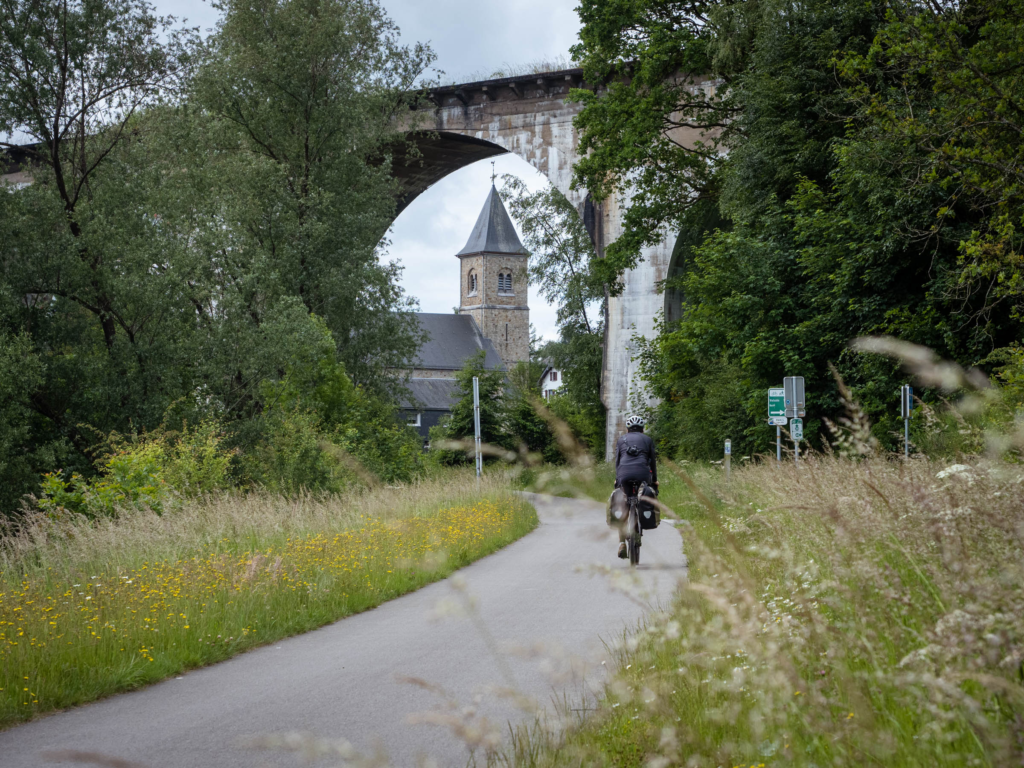
Since I moved to the Dutch province of Limburg, I’ve been spoiled as a cyclist. To me, having multiple of Europe’s most famous cycle routes practically at my doorstep is the ultimate luxury no money can buy. Less than one hour by train, and I am at the start of some of the greatest long distance cycling routes in Belgia, Germany, and the Netherlands. And, with the Vennbahn starting just 20 km from my home, this unique cross-border trail was at the very top of my cycling bucket list.
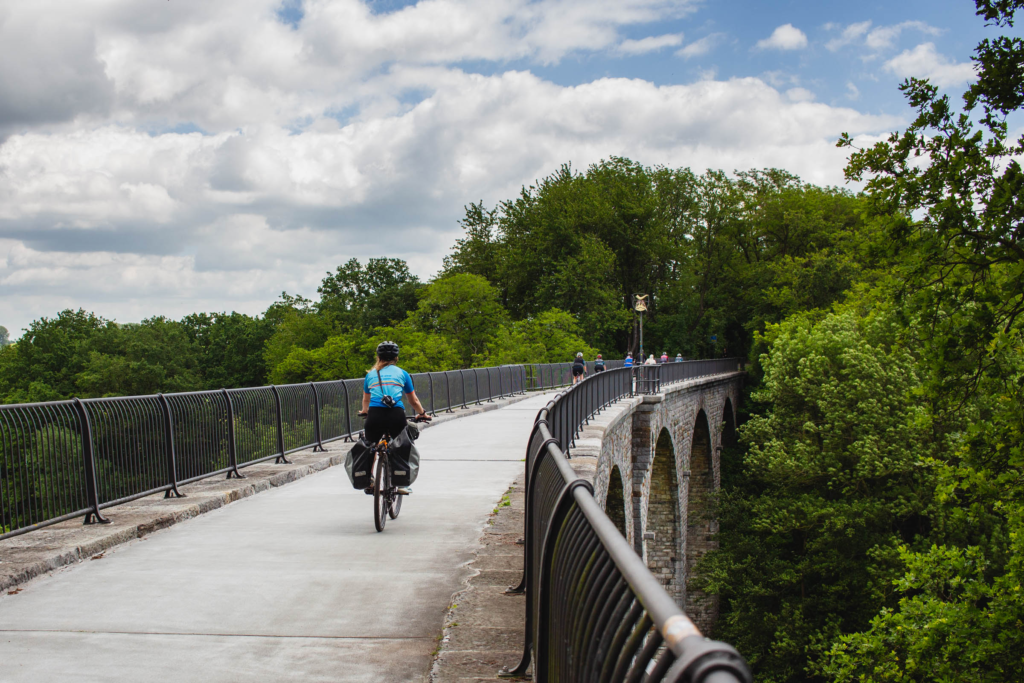
This 125-km-long cycle adventure connects three countries (Germany, Belgium and Luxemburg), and is one of Europe’s longest rail trails that was transformed into a cycling route. I wouldn’t call the Vennbahn the most scenic or the most exciting cycle route I’ve ridden but there’s something that makes it quite special: it follows one of Europe’s strangest borders.
VeloPlannerThe fascinating history of the Vennbahn
In 1882s, the Prussian Kaiser Wilhelm I decided to build a railway that would carry the coal and iron ore from the mines around Aachen to the steel industry in Luxembourg (which was a part of the German Customs Union). The line, crossing the High Fenns (Hohe Venn in German) began to operate in 1889 and became one of the most important industrial arteries in this part of Europe.
One of the weirdest borders in Europe
But things got complicated as the First World War broke out. The borders changed and Germany had to cede some territory (including part of the Vennbahn) to Belgium. Part of the railroad was thus in Germany, part of it in Belgium.
To simplify operations, an international commission decided that the whole track of the Vennbahn would belong to Belgium – which resulted in creating six exclaves within Germany. Just look how weird this border looks at the map. There’s the “normal” Belgian-German border, and here the narrow strip of land, within Germany, that is formally part of Belgium.
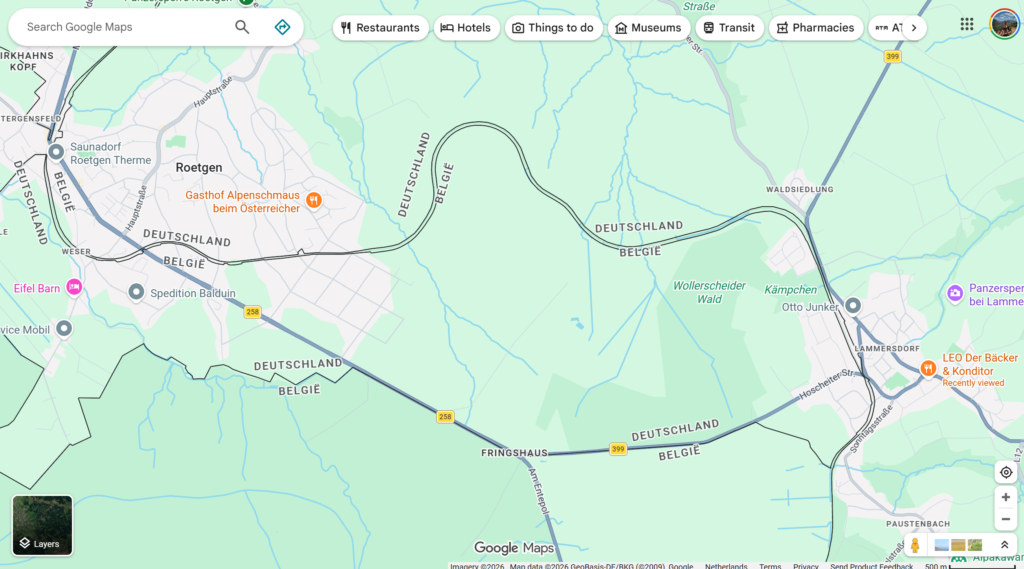
Today, with the Schengen zone, the weird border situation is barely visible. You might notice the road signs changing style but besides that, only your phone constantly beeping with messages welcoming you to a new country, reminds you of this curiosity.
Railroad into cycle way
After the war, the customs regulations between the countries affected the transport on the Vennbahn. At the same time, new, faster and more efficient routes came to life and the traffic on the route through the Fens gradually decreased.
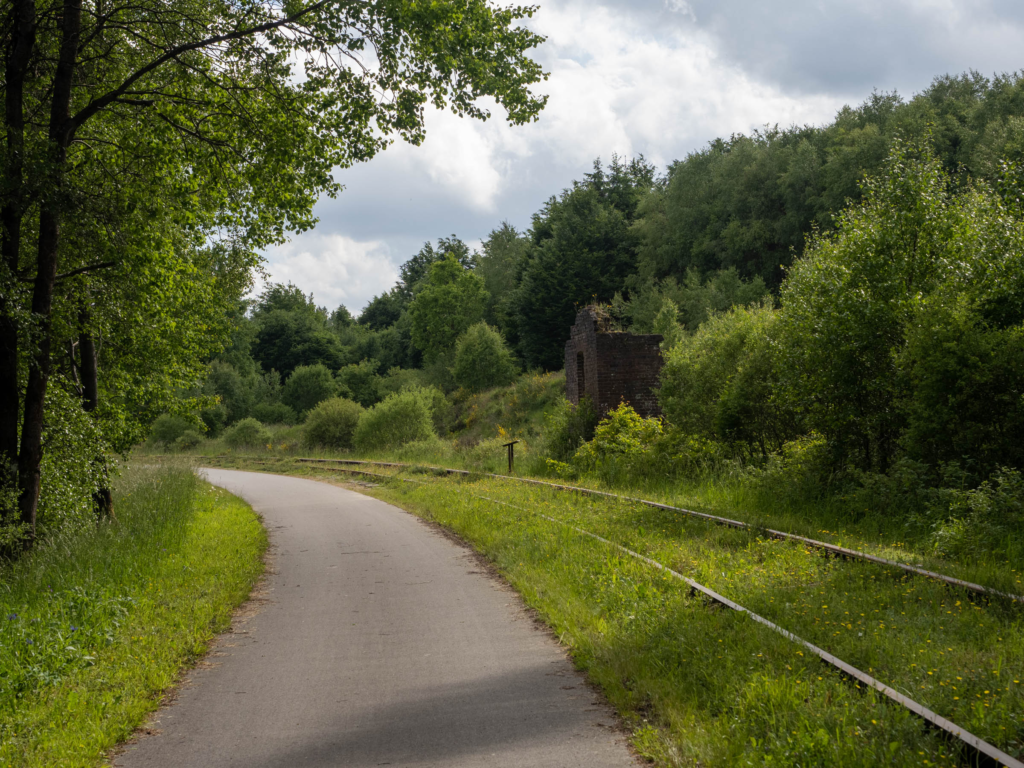
In the 1980s, the last train rolled through the Vennbahn, leaving behind abandoned stations and empty tracks.
After an unsuccessful attempt to reanimate the disused railway and turn it into a tourist attraction, the local tourism boards got another idea: the Vennbahn could become a cycle route!
It was a perfect use of an old railway – the embankments, viaducts, and tunnels would make it way easier to cycle through the hilly Ardennes. And the Vennbahn passed through some of the most charming natural areas in Belgium, so a separated cycle path would make for a perfect slow nature escape.
In 2013, the new Vennbahn cycle route was ready and it quickly became one of the most popular cycle adventures in this part of Europe.
Cycling the Vennbahn – stages and highlights
The official Vennbahn website divides the route into six sections. Unless you’re going to stop at every monument or enjoy extra activities along the way, you can easily do it in two, max three days. We rode it in two days (adding an extra 20 km to the start in Aachen), with one overnight stop near Lake Robertville.
Aachen
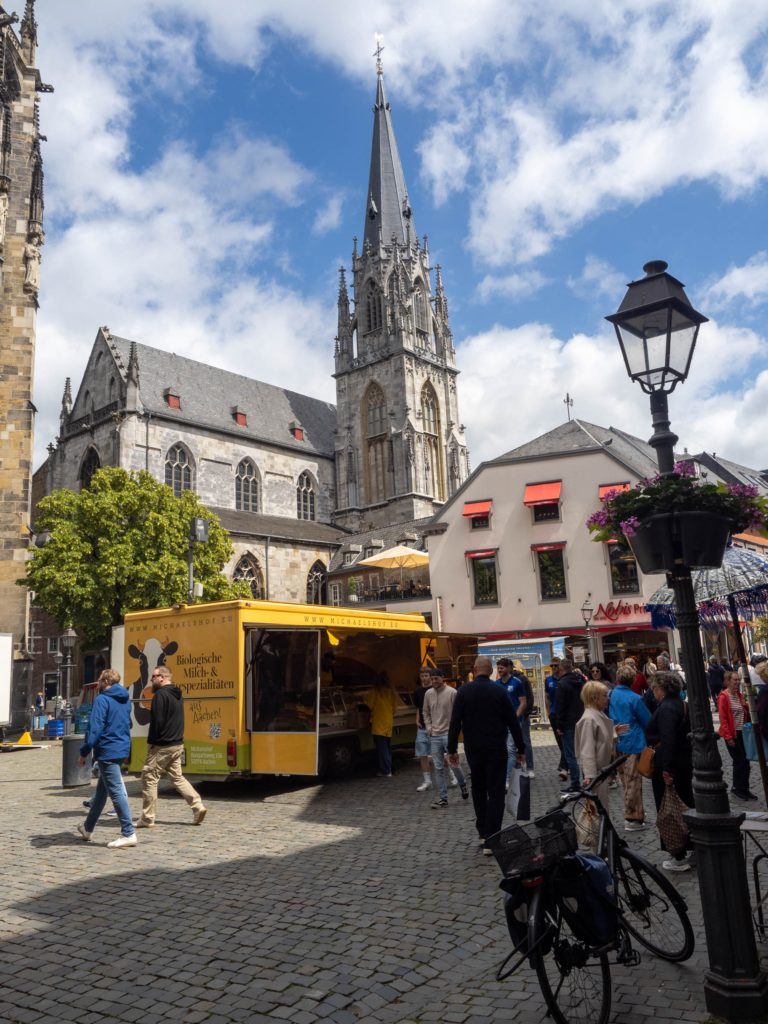
The ride starts in Aachen, Germany’s westernmost city. Before hitting the road, we spent some time wandering around the center and sipping a coffee with the view of the Aachen cathedral (it’s one of the oldest cathedrals in Europe, built in the year 805). The city is very charming, with cobbled medieval streets and surprisingly good cycling infrastructure.
Soon after leaving the city behind, the route enters the forests of the Eifel and starts climbing. Thanks to the railway embankment, the gradient is very gentle and it barely feels like a climb.
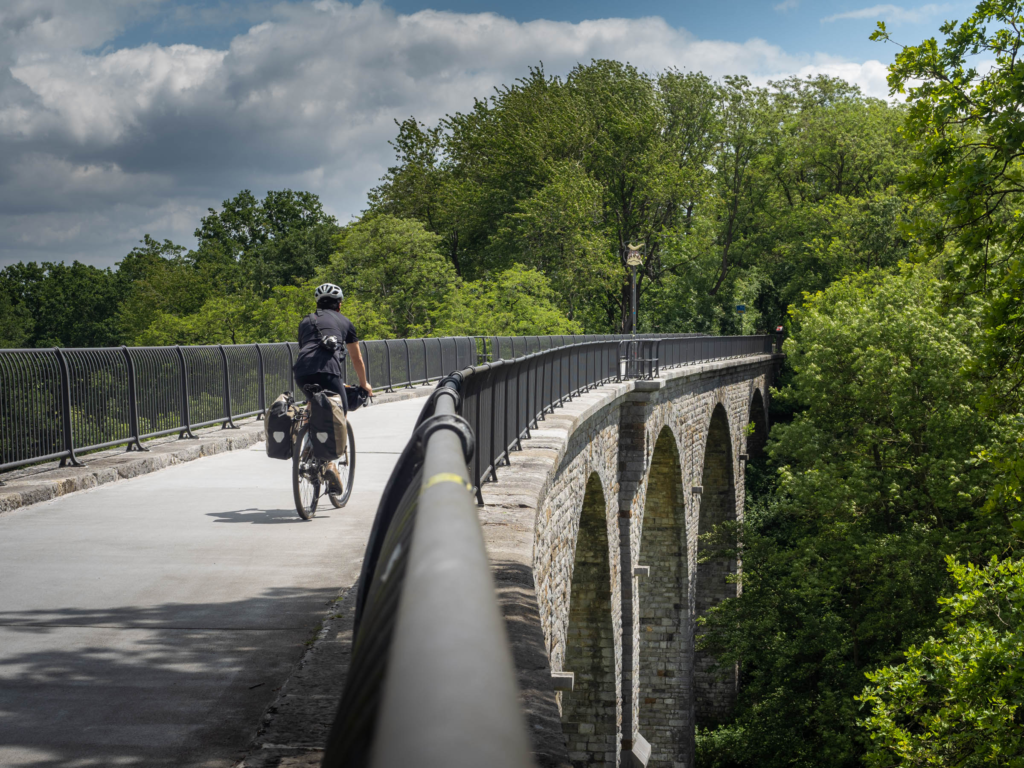
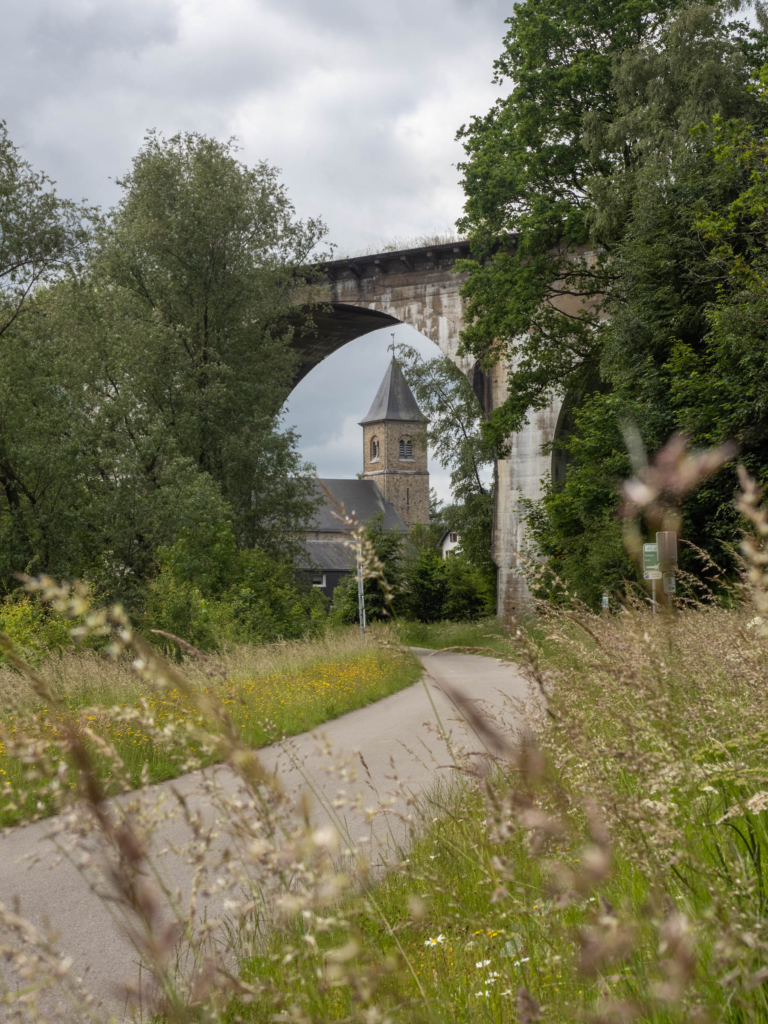
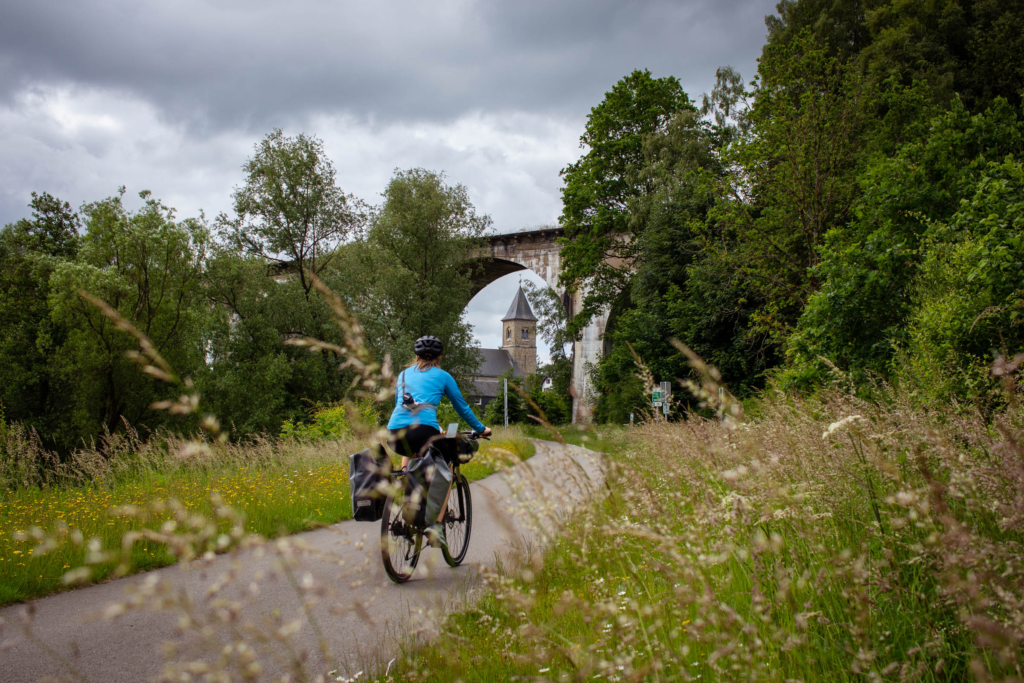
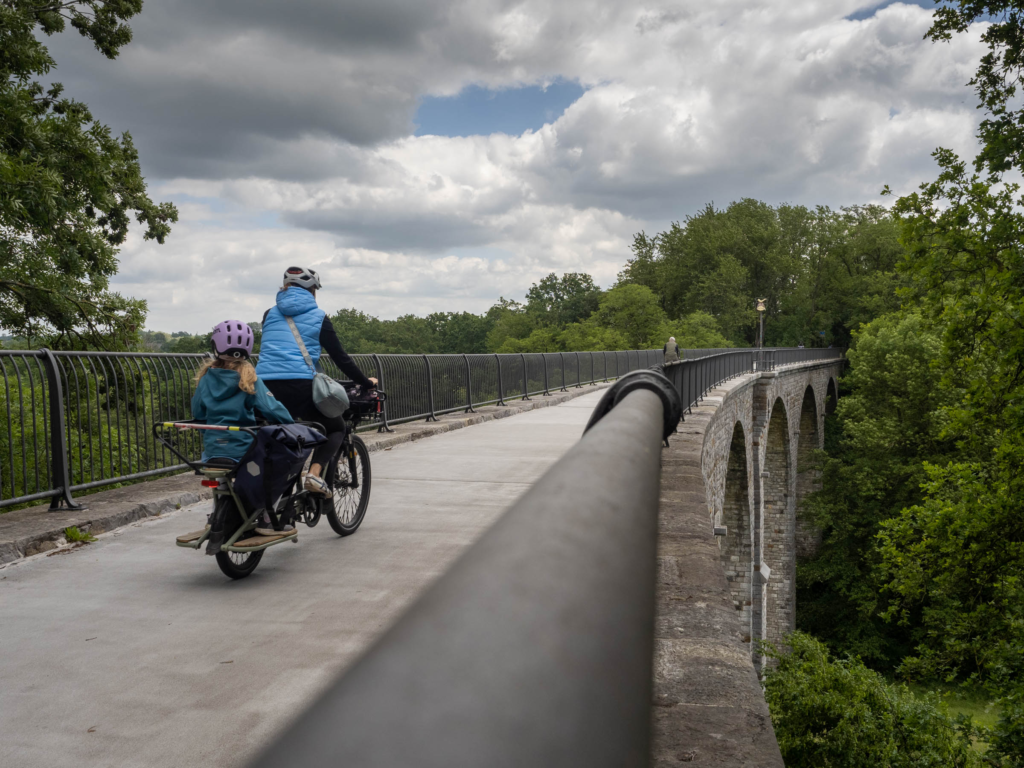
One of the first reminders of the Vennbahn’s past is the Rollefbach Viaduct. A century ago, the tall stone arches carried trains loaded with coal and iron ore across the valley. Today, it’s mostly cyclists and walkers.
Raeren
A little over 20 kilometres from Aachen, we crossed into Belgium for the first time. The street names and signs, however, were still in German. This part of Belgium, known as the East Cantons or Ostbelgien, has a predominantly German-speaking population.
In Raeren, you can make a little detour (2,5 km off the Vennbahn) to visit its medieval castle and the local pottery museum.
Through the Belgian enclave
A few kilometres later, we crossed back into Germany. Or at least that’s what the map suggested.
In reality, things are more complicated. As long as you stay on the Vennbahn itself, you are technically still on Belgian territory. The former railway line belongs to Belgium, creating one of the strangest borders in Europe. The cycle path runs like a narrow Belgian corridor between pieces of Germany.
Luckily, thanks to the Schengen area, the weird border is just an interesting anecdote and in practice, it’s almost invisible. Almost, because my phone kept pinging me with new messages informing me that I just entered a new country.
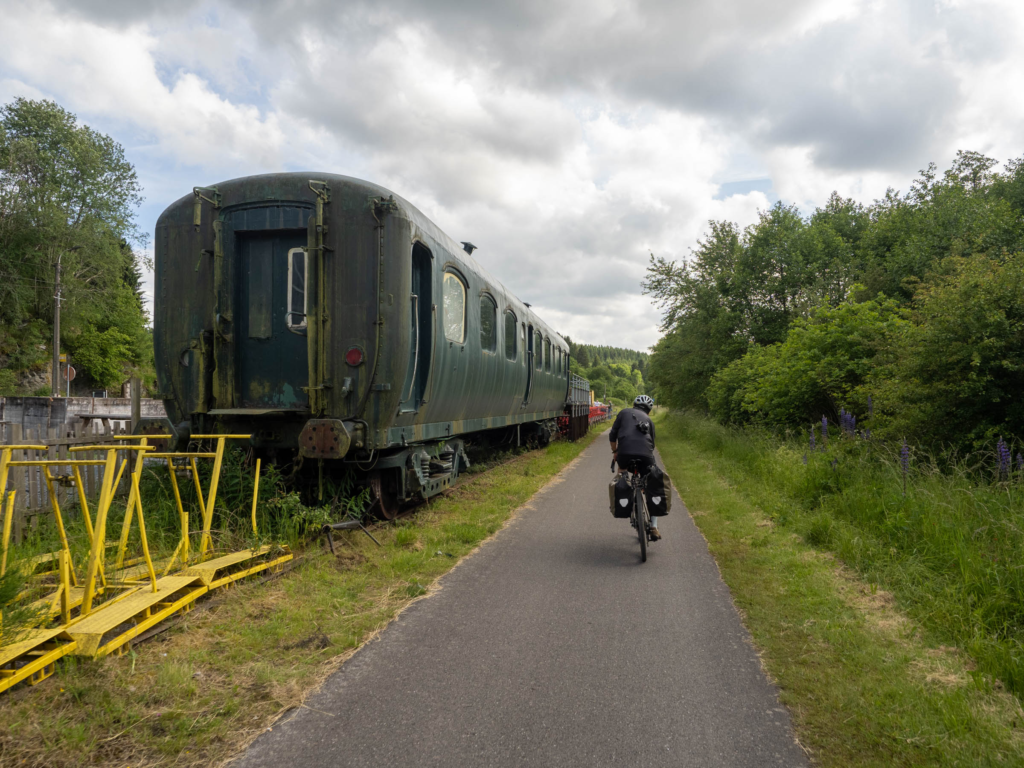
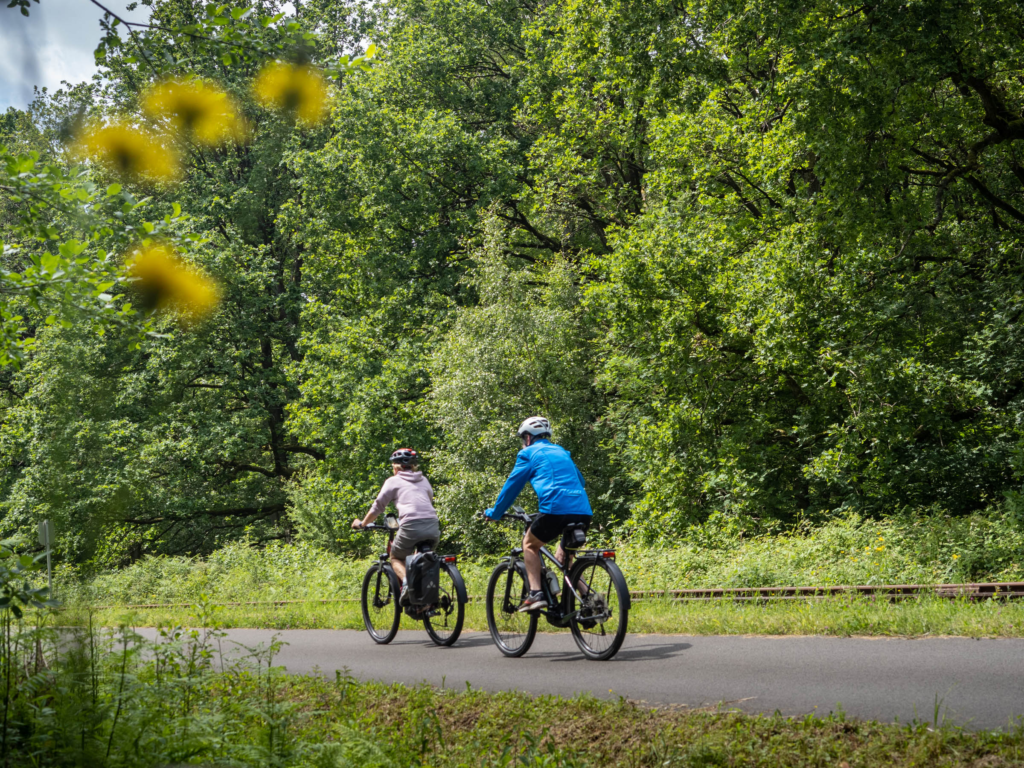
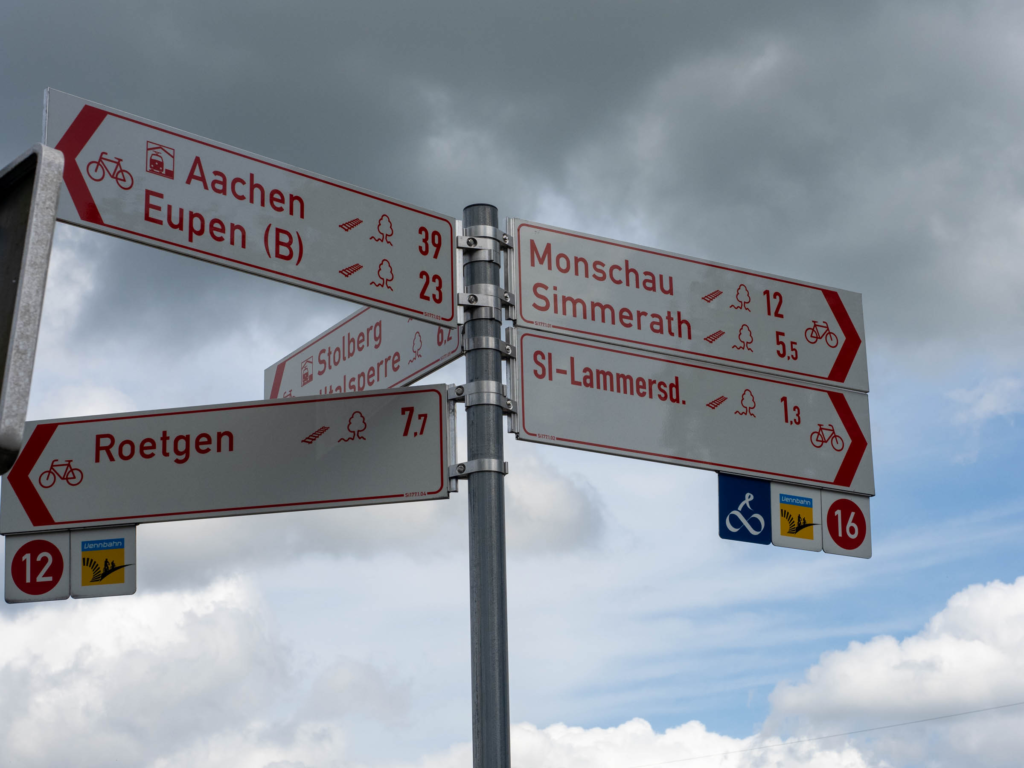
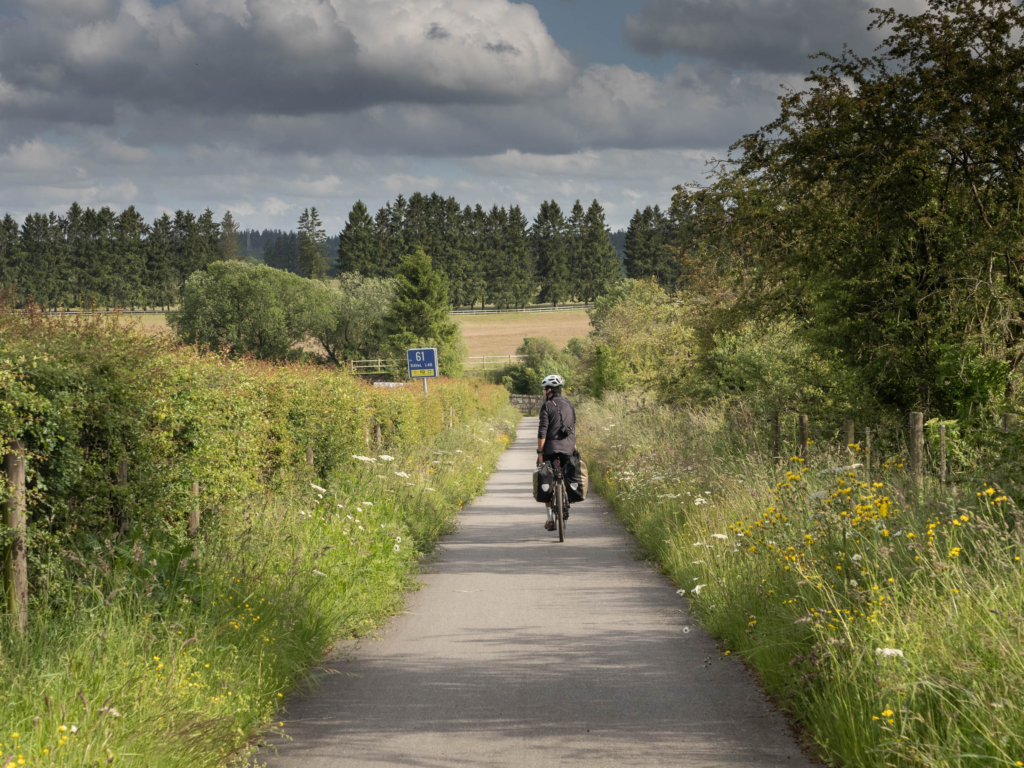
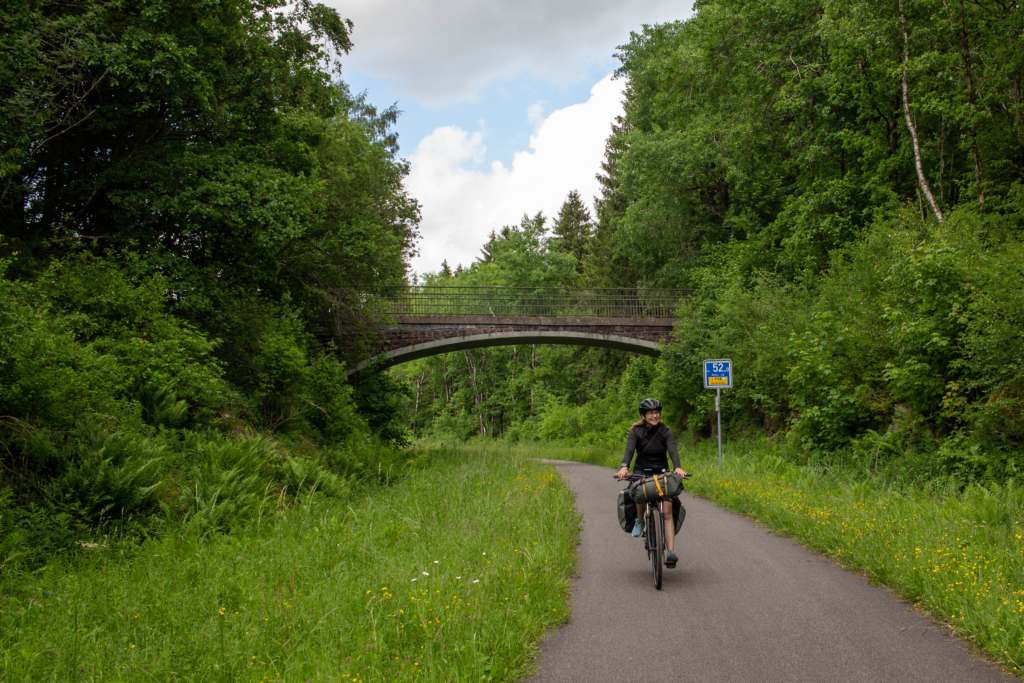
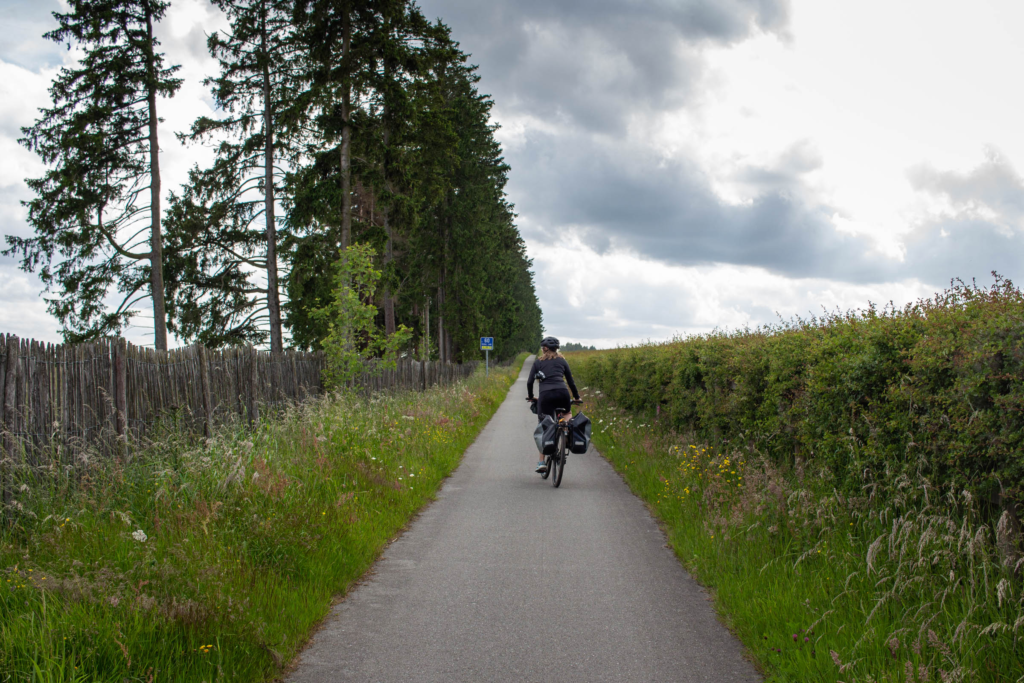
The higher we climbed, the hillier and raw the landscape became. We passed by a few rest stops, arranged in old train carts. Navigating the route was effortless. There were plenty of signs, so I could practically switch off my navigation app. There was also a sign showing the distance from Aachen every half kilometer – seeing the progress was a great motivation booster.
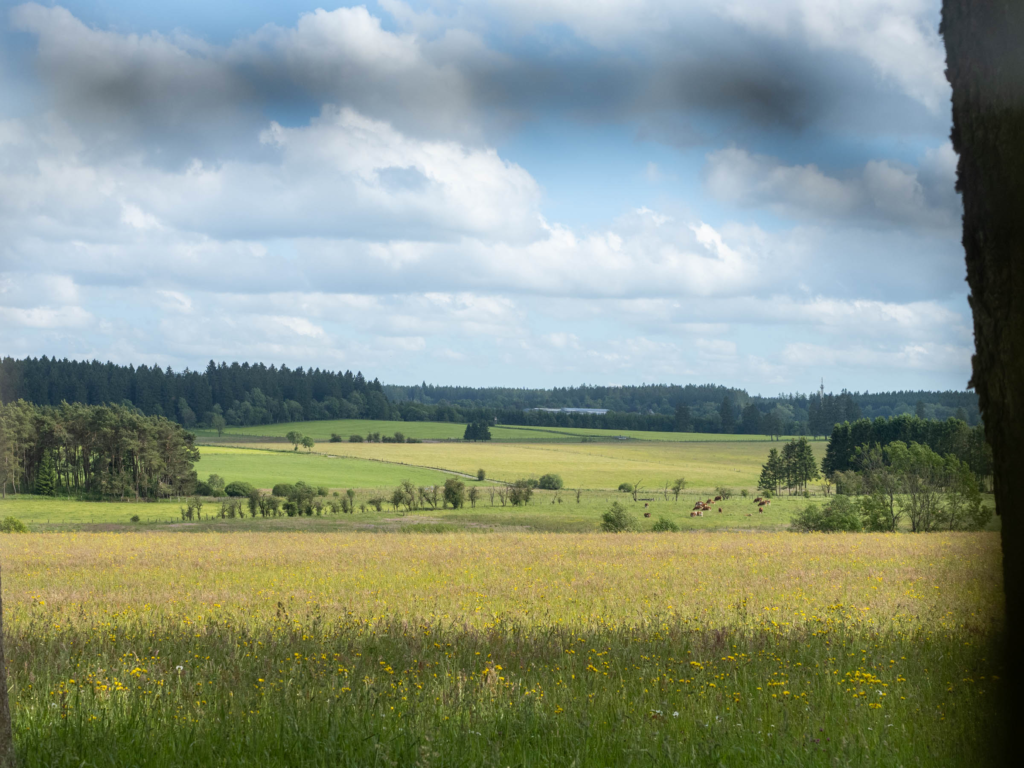
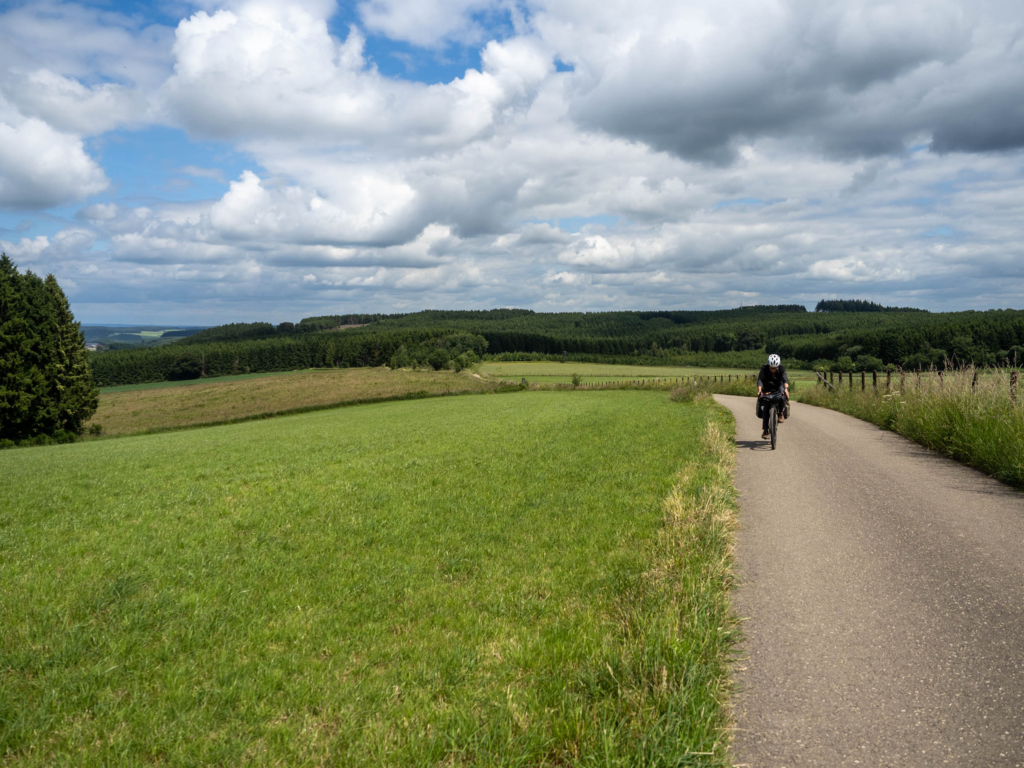
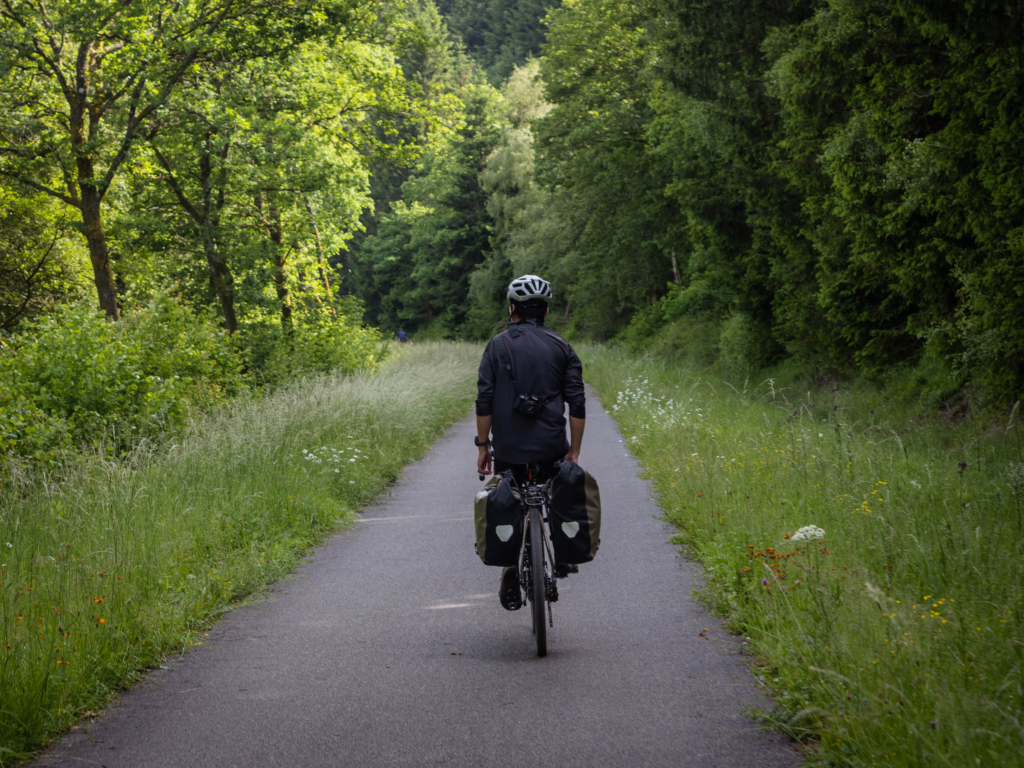
We biked through forests and small gorges with rocks hiding behind thick moss and long-spreading ferns. The gradient was still gentle but the headwind grew with every kilometer, making it feel a strenuous and tiresome battle. Eventually, we reached the High Fens plateau. The moors with long grass dancing in the wind, cows grazing in the distance, charming Walloon villages – it all looks even more beautiful as we no longer have to fight for every kilometer.
Camping La Plage
For the night, we left the Vennbahn and headed towards Camping La Plage on Lake Robertville.
It was full of life, with families barbecuing, friend groups playing ball and the owner’s old border collie playing fetch with himself, letting a tennis ball roll down the stairs.
A blackboard next to the reception listed an impressive selection of pasta dishes. After a day of cycling, that sounded excellent. Unfortunately, dinner had to be reserved in advance.
The auberge in the village wasn’t any more helpful. No reservation, no food.
The nearest shop was too far away to justify another ride and the takeaway pizza on the other side of the lake ignored our calls. So we returned to the tent and ate whatever food we still had in our panniers: peaches, pastry from Lidl and chocolate. Enough to stop the stomach from growling.
Through the hills and villages
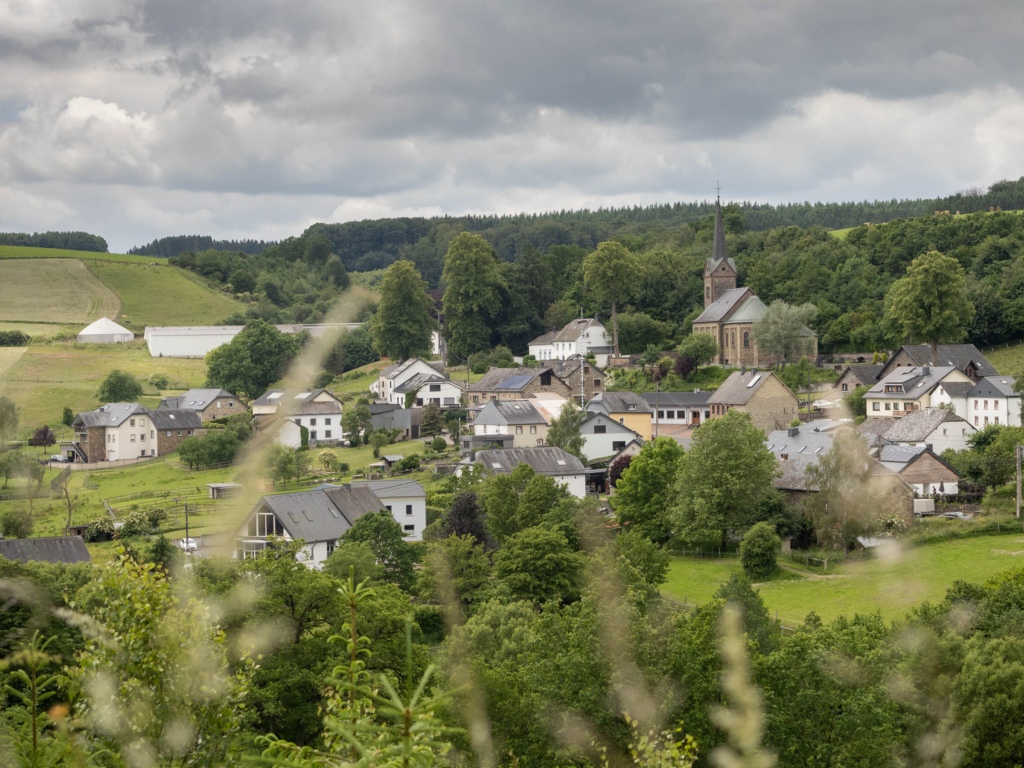
The next morning, we made a short detour to Waimes for breakfast: a delicious but slightly overpriced baguette with cheese from a local bakery. We got a little preview of what cycling in this region would be without the Vennbahn – the road was constantly going up and down, through endless hills. Back on the trail, cycling was easy and smooth again.
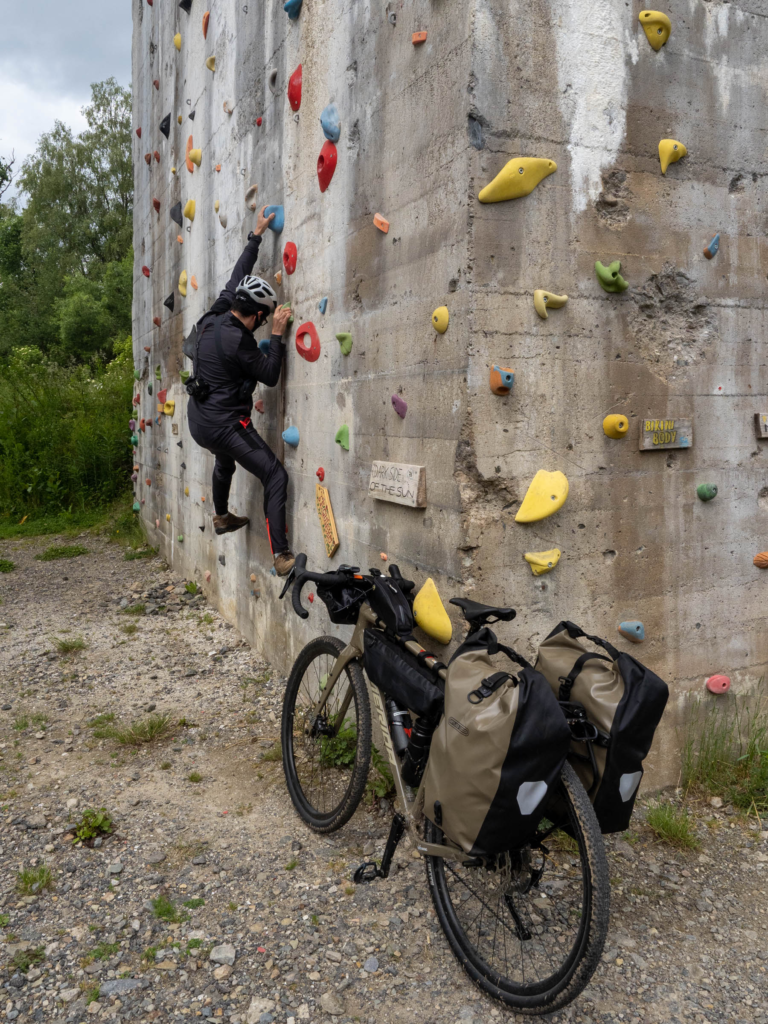
A little later, we stopped at one of the more unusual sights along the route: the viaduct in Born that’s been turned into a climbing wall. The 18 m tall arches looked impressive and I wish I could see climbers tackling the tricky passages.
We rolled through St Vith, and for a few hundred meters crossed into Germany once again. After a long gentle descent, it was time for the final ascent leading to the border with Luxembourg.
To Luxembourg
It started innocently. Accompanied by small streams, we barely felt that we’re going uphill. Back in the days, the trains going to Luxembourg would go through a tunnel that runs under the country’s tallest hills: Buurgplatz (559m) and Kneiff (560 m). But this part of the Vennbahn was closed already in the 1960s and the tunnel was left empty for decades.
When the Vennbahn was converted into a cycle route, it turned out that after years of neglect, the tunnel was inhabited by bats. At least 13 different bat species chose the safety of the tunnel as their home. Rather than disturb them, the planners decided to send cyclists around.
That meant that before the border, we had to face a proper climb. We pushed uphill as three red kites soared low right above us, making a loud whistling sound as they were looking for prey.
A sign with the European flag and the name “Luxembourg” welcomed us to the final country on our route. Everything else remained the same: the forests were green and dense, the bike lane smooth and windy. We reached Troisvierges – the final destination on the Vennbahn.
Planning your trip on the Vennbahn
Transport
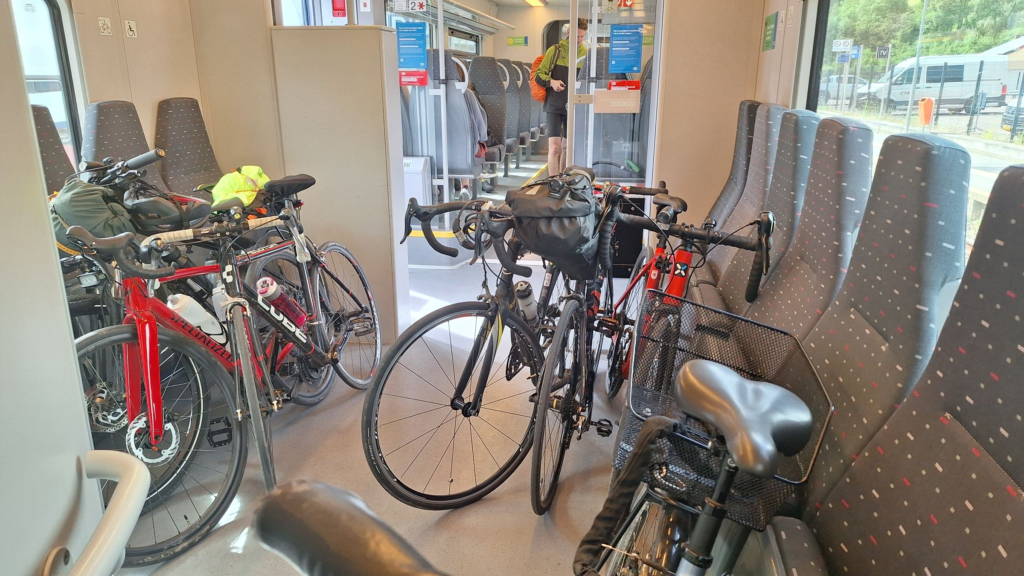
The start and end of the Vennbahn can easily be reached by train. There’s one tricky part, though – taking trains across different European countries is still unnecessarily complicated, especially when travelling with the bike.
To find your connection to Aachen or Troisvierges, you can use the international planner of the Belgian Railway. You’ll have to change trains in Angleur or Liege Guillemins. You can buy the ticket online.
Remember that buying a ticket for your bike is also necessary. To do it, click on Plan & Book i wybierz Bike ticket. You need to do it in a separate step, it cannot be added to your regular ticket. The bike supplement costs 3 euros on a weekend and 5 euros on a weekday.
You can also buy your tickets at the train station.
Important! With multiple languages spoken in different areas along the route, finding the right train can be confusing. When we arrived in Liege Guillemins, we couldn’t find our train to Aachen on the timetable. Luckily, we realised that it was there, but under its French name – Aix-La-Chapelle.
Most people ride the Vennbahn from Aachen to Troisvierges, so on a Sunday afternoon in the high season, the trains can be quite full and there might not be enough space for all the bikes. Take it into consideration and don’t wait until the last train.
Noclegi
Unless you’re able to bike the whole Vennbahn in one day, you’ll need a place to stay. There are plenty of bike-friendly B&Bs and hotels along the route. Booking a place somewhere around Monschau or Waimes allows you to split the ride more or less evenly over two days.
We stayed at the campsite La Plage at Lake Robertville, and paid 22 euros for two people in one tent. There are also a few other campsites in this area, as well as closer to Monschau.
Jedzenie
There are plenty of options to get some food along the Vennbahn: restaurants, food trucks, cafes, bakeries and grocery stores. Sometimes, you need to take a little detour to get to them.
Remember that shops are closed on Sundays in Germany (and some places in Belgium).
Elevation
Thanks to the train embankments, tunnels and bridges, the gradient on the Vennbahn is super mild and even if you’re not used to hills, you shouldn’t have a problem with it.
There is only one major, steeper climb at the end, before crossing the border to Luxemburg. It’s not very long, but its gradient reaches 10%, which can be a little challenging for less-trained cyclists.
Cycling the Vennbahn – FAQ
How long is the Vennbahn?
The Vennbahn is 125 km long, making it a perfect weekend adventure for cyclists from Belgium, Luxembourg, the Netherlands or western Germany.
Should I ride the Vennbahn from Aachen to Troisvierges or from Troisvierges to Aachen?
The original direction goes from Aachen to Troisvierges. The elevation gain this way is slightly higher, though. So, if you want to make it easier for yourself, you might choose riding in the reverse direction. But the scenery is better going from Aachen to Troisvierges.
Can I ride the Vennbahn on a road bike?
99% of the Vennbahn is smooth and perfect asphalt. It’s a perfect route for road cyclists. Any other bike, such as gravel or trekking bike will do great too.
Can I cycle the Vennbahn with children?
The Vennbahn is a family-friendly cycle route. Most of it runs on dedicated cycle paths separated from motorised traffic, and we saw many families with kids along the way. There are also plenty of rest stops and playgrounds next to the trail, perfect for taking a break with your children.
Is the Vennbahn a good cycle route for beginners?
The Vennbahn is a perfect cycle route for beginners. It’s mostly separate from traffic, there are no big climbs and the infrastructure along the way makes planning super easy.
What’s the best time to cycle the Vennbahn?
The best time to cycle the Vennbahn is from late April to late September. In May and June, the greenery is almost overwhelming – the ferns grow taller than a human, the tree canopies are thick, and the meadows are full of little flowers.
In August and September, the heathers of the High Fens turn purple, and the trees start turning yellow, creating a very colorful landscape.
When cycling in this part of Europe, you need to be prepared for all kinds of weather. On the June weekend we rode it, it was quite chilly and windy – I had to wear long sleeves. But a few days later, the region was battling a huge heatwave, with temperatures reaching 35 degrees.
In the High Fenns the temperatures are generally a bit lower than in the surrounding areas. Always check the weather forecast and pack a rain jacket regardless of what it says – it’s Belgium, so you never know.
 Polski
  English