If you’re new to travelling by bicycle and started browsing the internet for information on how to do it, you probably are asking yourself a question: what the heck is the difference between bikepacking and cycle touring? Which one would be best for you? Do you need a special bike to do any of them? What kind of gear do you need?
Relax. I know it might not be the most helpful answer, but it actually doesn’t matter. If you want a simplified overview of what bikepacking and biketouring are, here it is:
| Bikepacking | Biketouring |
|---|---|
| Usually lighter setup | Usually more luggage |
| Often off-road/gravel | Often roads/cycle paths |
| Frame bags | Panniers |
| Focus on riding/adventure | Focus on travel/journey |
| Minimalist gear | More comfort-oriented |
| Gravel/MTB bikes common | Touring bikes common |
But the world isn’t black and white, and it’s not as simple as having two options: bike touring or bikepacking. In reality, there are a whole lot of different shades of gray, and people tend to mix these two styles of bicycle travel.
Both bike touring and bikepacking are multiple-day cycling journeys, adventures where you carry your essentials on the bike and travel from point A to B.
There is no one official definition of bikepacking or bike touring. There are no rules. Different people differentiate those two things using different criteria. So, let’s try to break it down and help you understand the landscape of cycle travel a little better.
Some people say it’s about how and where you carry your luggage.
Many people claim the difference between bike touring and bikepacking is in the setup.
Cycle tourers put their clothes and gear in the panniers, attached to a luggage rack. Sometimes they even pull a trailer, loaded with a bunch of accessories that will allow them to live on the road for months or even years.
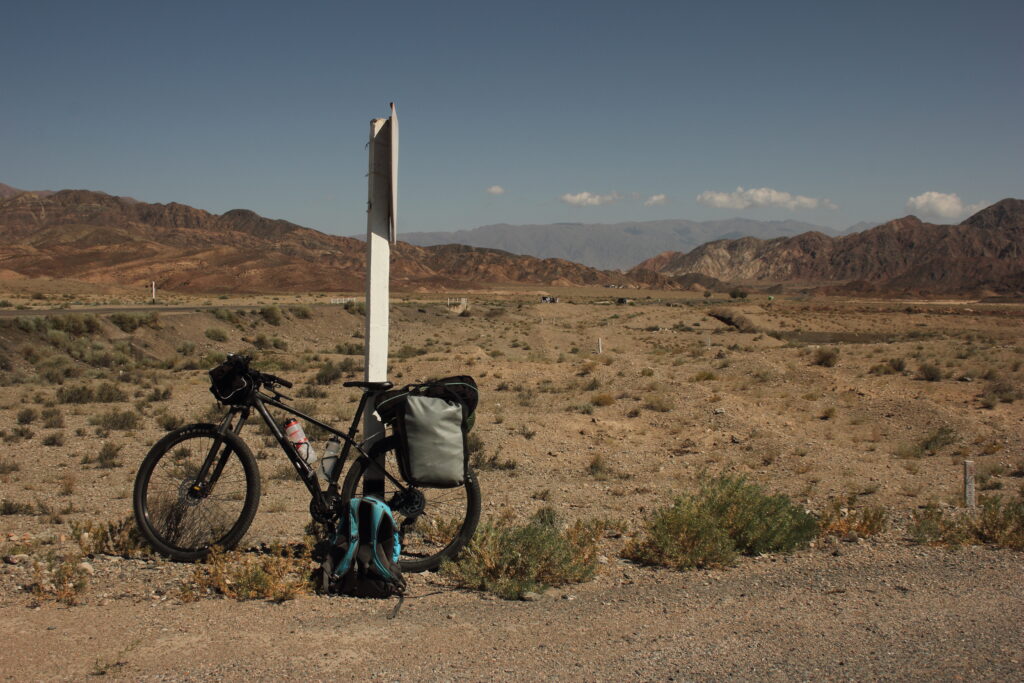
Bikepackers tend to gravitate towards minimalism. A few frame bags, a seat bag, the tent strapped to the handlebar – every gram of their luggage is carefully vetted, to ensure that their bike is as light, maneuverable, and fast as possible.
Some people say it’s about where you ride.
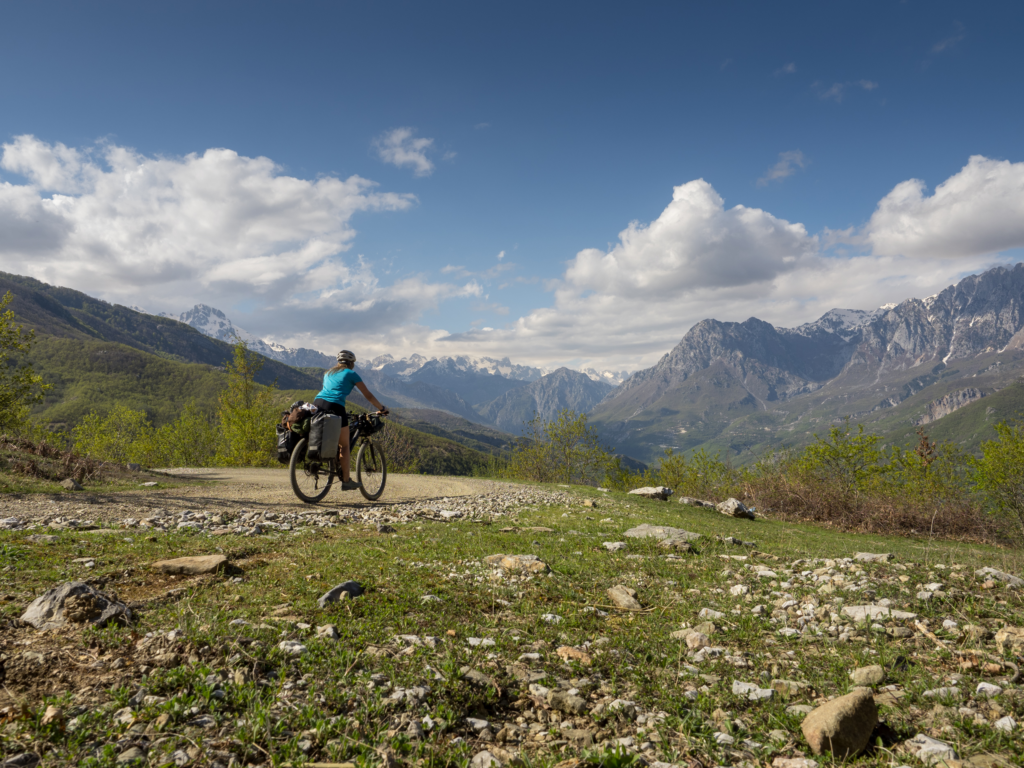
When we talk about bikepacking, we usually think of remote trails, gravel tracks, single tracks, somewhere in the great outdoors. For most people, bikepacking means getting far away from civilisation and camping out in the mountains. It’s all about nature, living wild, and exploring paths most people don’t even know exist. For that reason, they usually choose gravel bikes or hardtail mountain bikes.
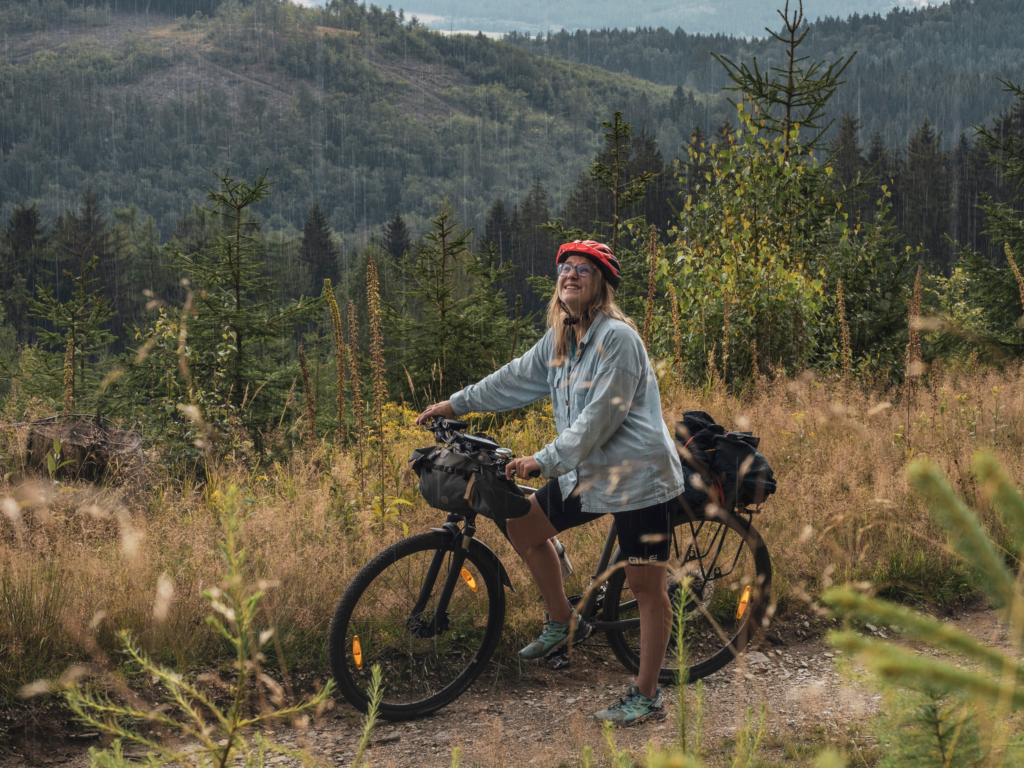
Bike touring, on the other hand, much more often includes asphalt roads and cycle paths. It’s more about getting from point A to B, seeing different aspects of a place: the countryside, the urban areas, everything combined. It’s often done on a touring bike, but generally, people tend to travel on whatever bike they currently have in their garage.
Some people say it’s about your attitude to your bike.
In simplified terms, bikepackers are often people who have a stronger connection to cycling. They might have been avid mountain bikers or professional road cyclists. They love being out on their bike, and the multiple-day adventures are the best way to enjoy even more time cycling.
Many cycle tourers would not even consider themselves cyclists. The bicycle is simply a vehicle they chose because it allows them to experience the world at the perfect pace: slow enough to notice things you miss when driving or taking a train, but faster than walking. The bike is just the means to the destination.
Some people say it’s about priorities and goals.
There’s something you often notice when reading stories or watching videos of bikepackers: challenging yourself and testing your limits seems to be the main focus. They want to go far, go fast, go strong. They love the feeling that type-2-fun gives you: when you’re absolutely exhausted, and the only thing you can think of is to keep pushing and surviving the quest you chose. Bikepacking includes self-supported races, such as the Atlas Mountain Race or the Silk Road Mountain Race, where you aren’t just cycling through some of the toughest places in the world. You also have a limited time to finish.
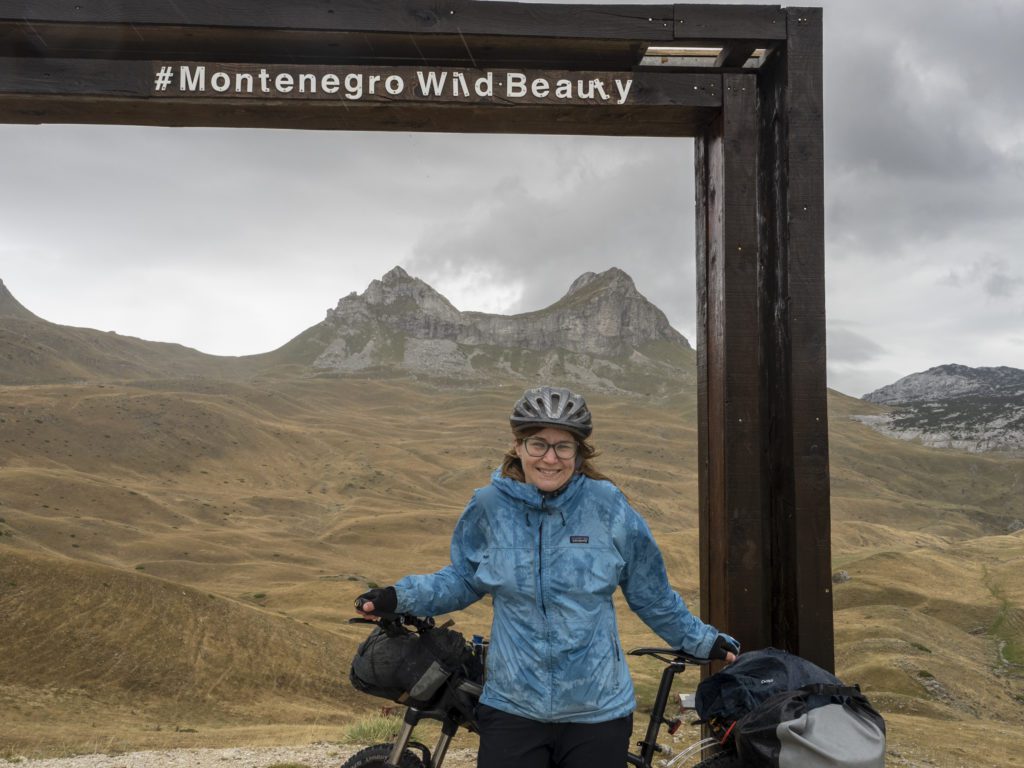
In bike touring, the focus is often more external. You cycle because you want to see a place, learn about its culture, and try something new. It’s about living on the road, not just biking. Of course, the element of challenge and testing your limit is still there, but it usually isn’t the number one priority.
Of course, it’s all just a lot of oversimplifications.
My story is a perfect example showing that bike touring and bikepacking often overlap.
I started travelling by bike because, at that time, I was head over heels in love with cycling. Although I didn’t have a background in road cycling or pro racing, I simply loved long rides and the challenges they brought. I wanted to see if I was strong enough to ride the epic alpine climbs. Seeing a sunset from my bike at a different place each evening sounded like the most beautiful idea.
I ride with (usually quite heavy) panniers, sometimes on-road, sometimes off-road. During my first trip, I started paying more attention to the places I was biking through: the people who lived there, their history, their culture. I no longer wanted to just bike. I felt a strong pull to explore cities along my route, stay with locals, volunteer, learn something new.
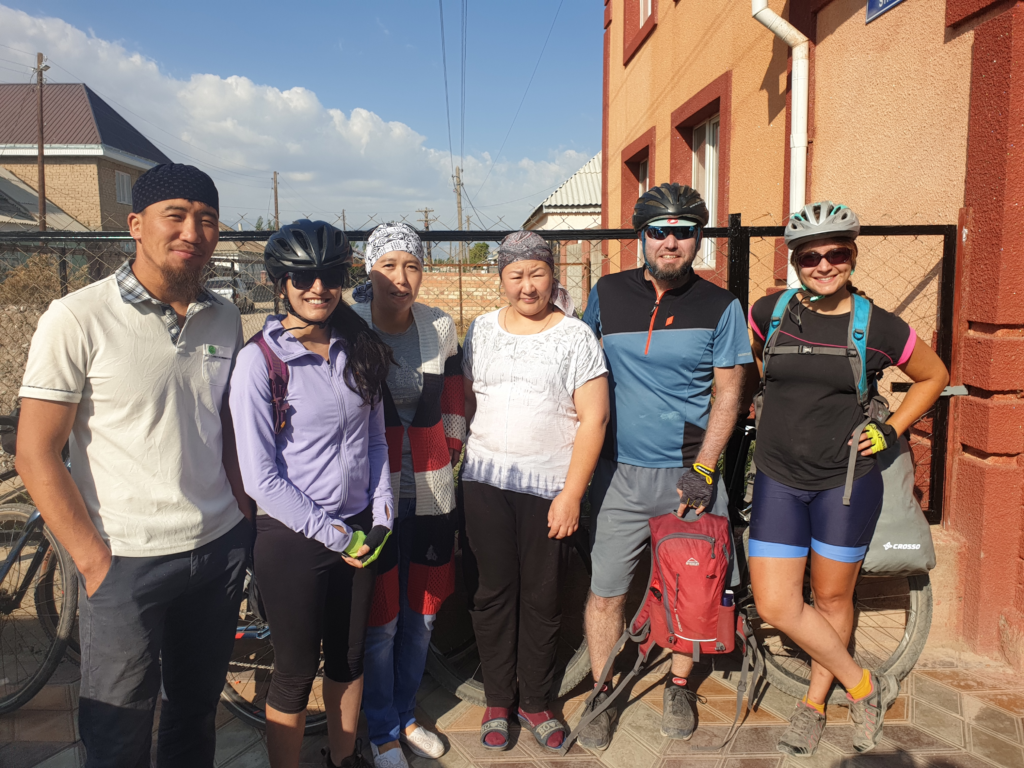
Yet, I still gravitate towards less-travelled gravel tracks instead of established cycle routes. I still feel most alive pedalling for 40 km through the mountains, without seeing a living soul. I still feel this tingling when I realise that my daily route involves a massive climb and when I later prove to myself that I’m strong enough to overcome it.
So, when you’re planning your next adventure on the bike, don’t bother about the labels. Your route might be 30 % rough gravel, sleeping under the stars in the mountains, and 70 % Eurovelo biking, stopping at local castles, museums, and restaurants.
There is no bikepacking or bike touring police. You can call yourself whatever you want. In the end, we’re all just bicycle travellers.
 English
  Polski