
I have mixed feelings about the Green Velo. It’s a terrific long-distance cycle route where you can slow down and experience some of the wildest and least-touristy places in Poland. On the other hand, it sometimes seemed like you had to make a massive detour through washboard tracks without it making any sense and like the millions invested in creating this route could be way better spent improving the route’s surface than building a bunch of sheltered rest points in the most random locations.
Nevertheless, if you’re looking for a way to experience a lesser-known side of Poland, disconnect from the hustle and bustle and experience beautiful nature, fascinating history, cultural diversity and great cuisine, the Green Velo is a great cycle route for you.
Green Velo – stats and facts
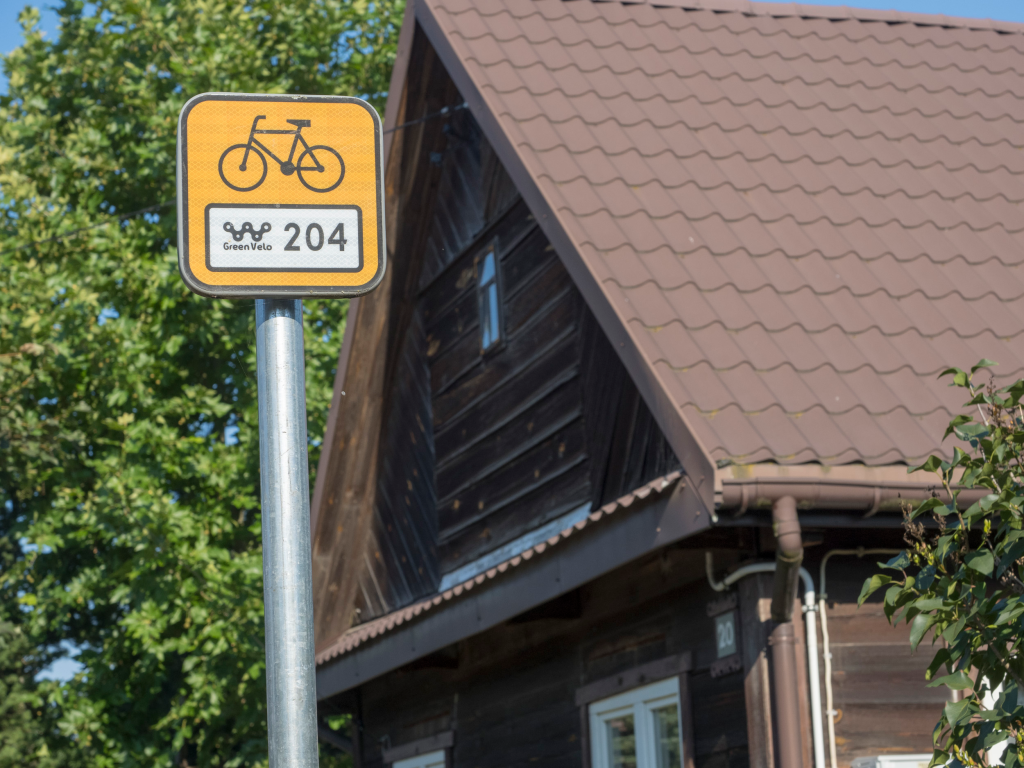
VeloPlannerGreen Velo is Poland’s longest cycle route that is fully and consistently signposted. It runs through five voivodeships in eastern Poland – a region that many tourists omit.
To me – someone who comes from northern Poland – this part of the country has always been a little mysterious and exotic. While the rest of Poland is predominantly catholic and culturally quite homogenous, in the east, you can find Orthodox churches, Tatar mosques and old Jewish cemeteries. You hear different dialects, see villages with houses that look more like straight out of Russia or Belarus.
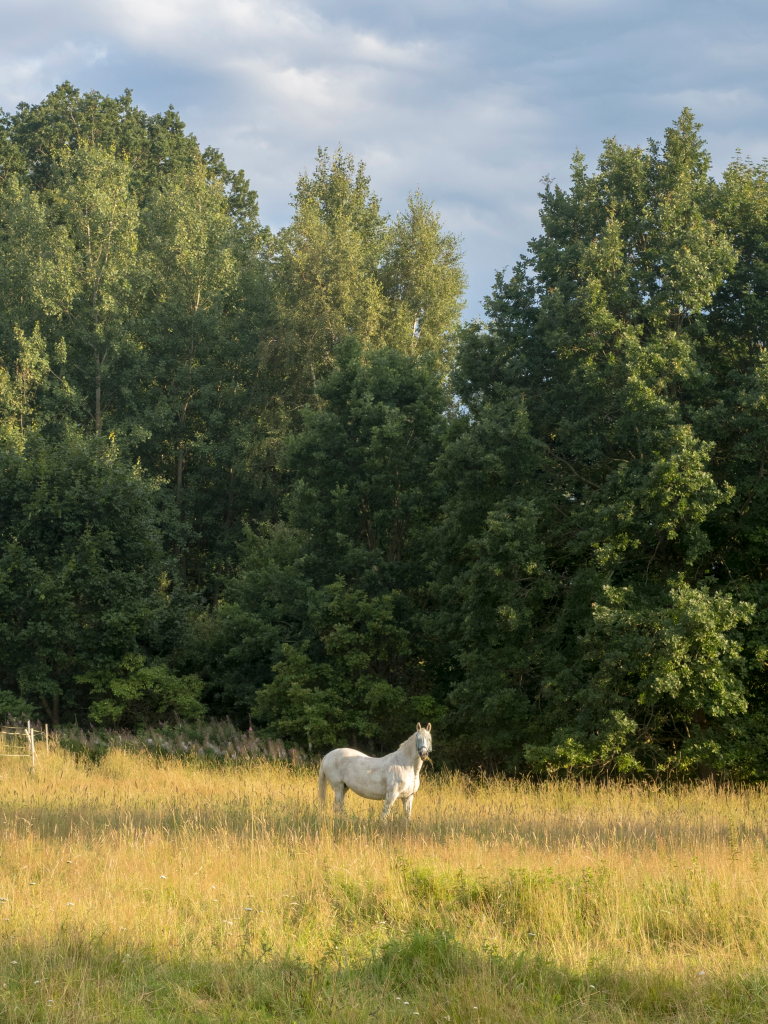
And nature. It is just different there. Białowieża forest – the only primaeval forest left in Europe, Biebrza river – a paradise for birdwatchers, the great Masurian lakes. The “Green” in Green Velo isn’t an accident – the route runs through five national parks and rolling through the rural landscapes of eastern Poland lets your busy brain reset, slow down and reconnect with nature.
Green Velo – regions
The Green Velo route crosses five regions, each with a unique history, culture and nature. Here is a short overview of all of them.
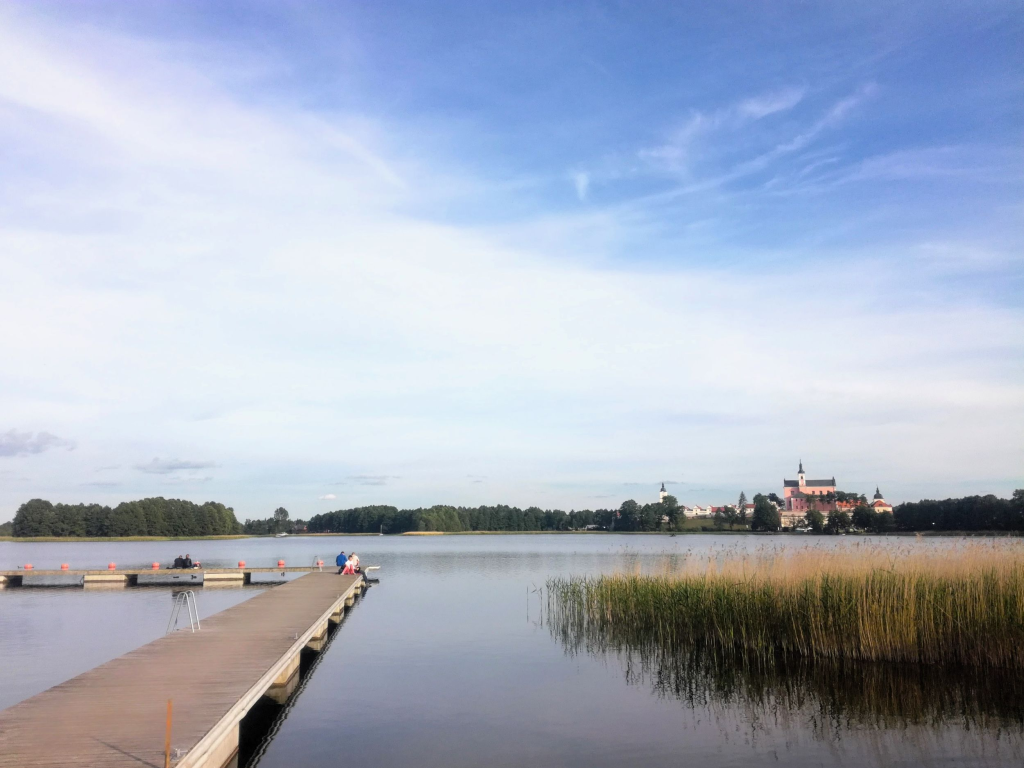
Warmia and Mazury (and Suwałki region)
Warmia and Mazury are also called Poland’ s lake district, and what can be better at the end of a day full of cycling than taking a refreshing dip in a lake?
It’s also quite a fascinating region for history fans. It’s definitely worth making a detour to visit the Wolf’s Lair – Hitler’s military headquarters on the Eastern Front.
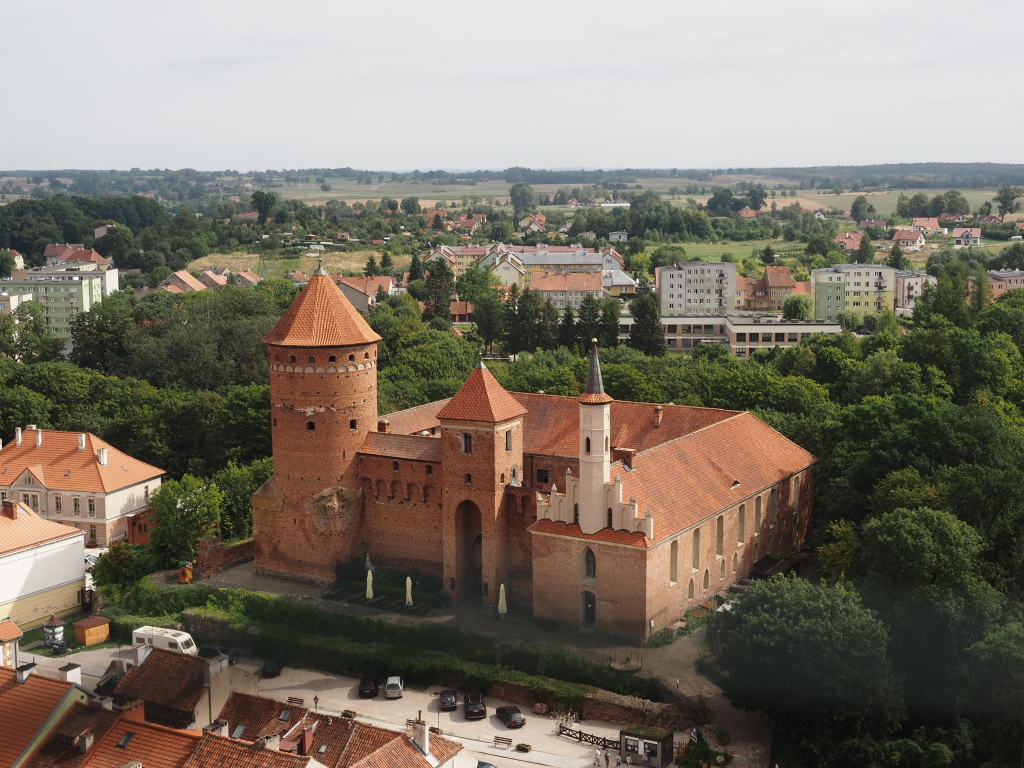
If you’re more into medieval history, you’ll appreciate the gothic cathedral in Frombork, the bishops’ castle in Lidzbark Warmiński and the charming medieval town of Reszel.
Podlasie
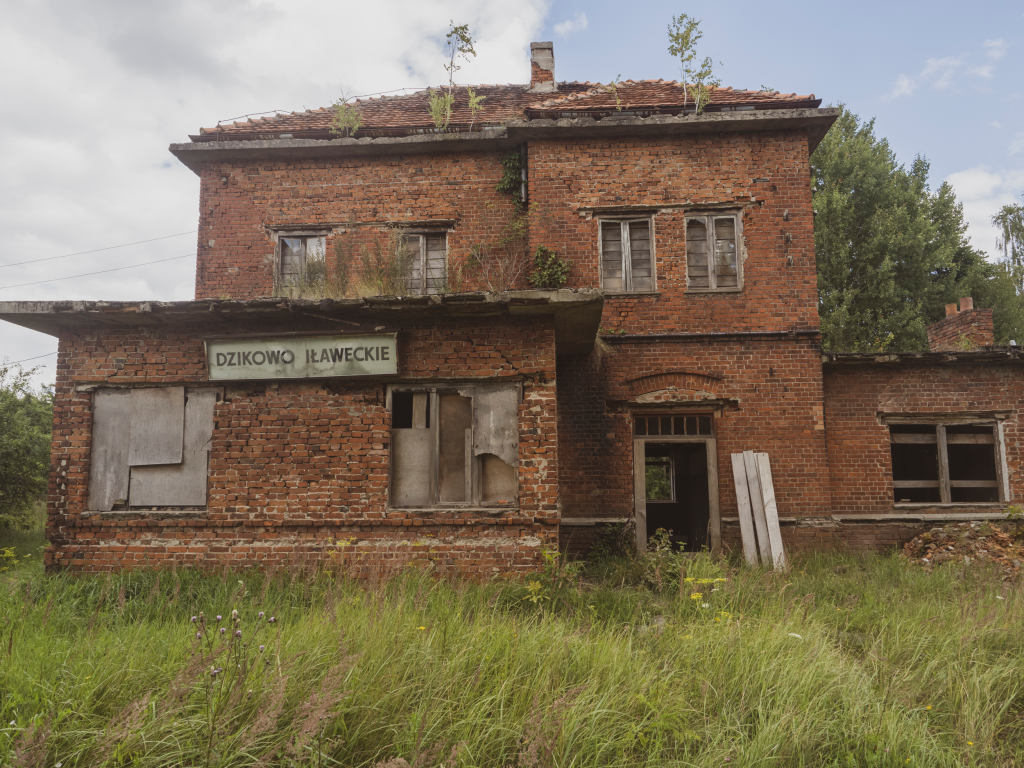
Probably the most colourful, and at the same time the most underrated region of Poland, is Podlasie. Take some time to explore the primaeval Białowieża forest (if you’re lucky, you might even spot an European bison!), which is one of the few “real”, natural forests in Europe.
Take a detour from the Green Velo trail and learn about the unique culture of the Polish Tatars in Kruszyniany, or explore the colourful Land of Open Shutters with fairytale-like wooden architecture and vibrant Orthodox Churches.
Lubelskie
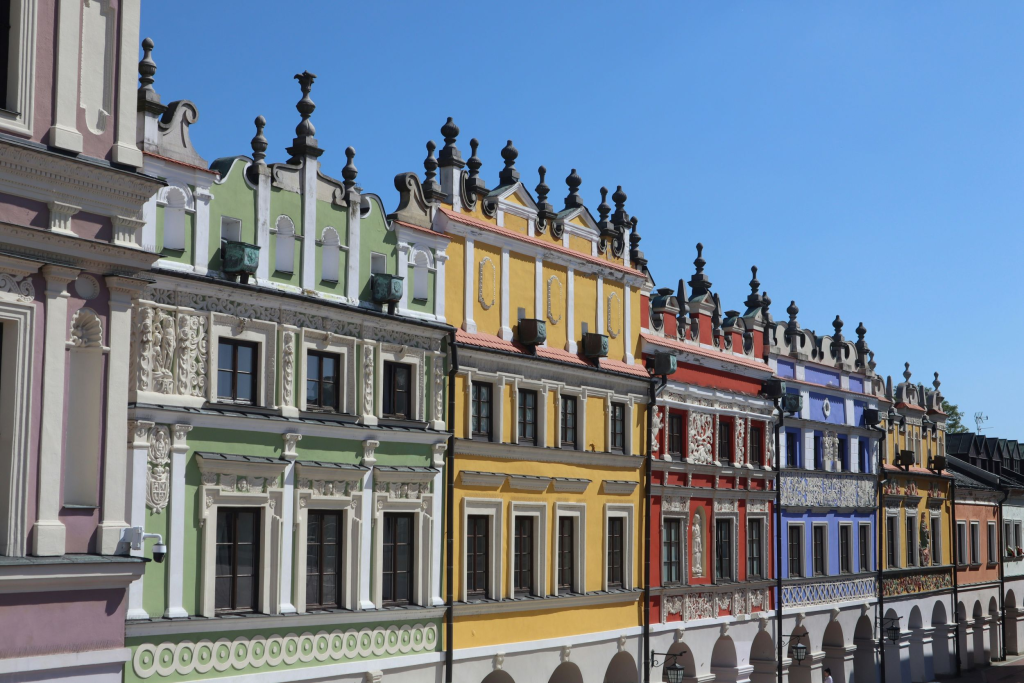
One of the highlights along Green Velo in the Lubuskie region is Zamość – a perfect Renaissance city. In smaller towns along the route, you’ll also find plenty of little gems, such as Jewish cemeteries, wooden churches (Catholic and Orthodox) and palaces, testimony to the rich and multicultural history of the region.
Podkarpacie
If you like your bike routes a bit more hilly, Podkarpacie is the region where the real fun begins. The Green Velo route leads through the Carpathian Plateau, following the unruly meandering San River. It’s worth spending some time in the historically multicultural city of Przemyśl. Enthusiasts of military history will also enjoy exploring fortresses built in the 19th century by the Austro-Hungarian Empire.
Świętokrzyskie
Świętokrzyskie is another charming and hilly region of Poland. Unfortunately, the Green Velo trail skips some of the most interesting places in the region and can be a little boring at times.
Some of the highlights along the route include the ruins of Krzywotopór Castle and the main square in Sandomierz – Poland’s “little Rome” (like its Italian big brother, Sandomierz is located on seven hills). You’ll also enjoy cycling through cute apple orchards and green fields.
Cycling the Green Velo – what bike to choose and what surface to expect
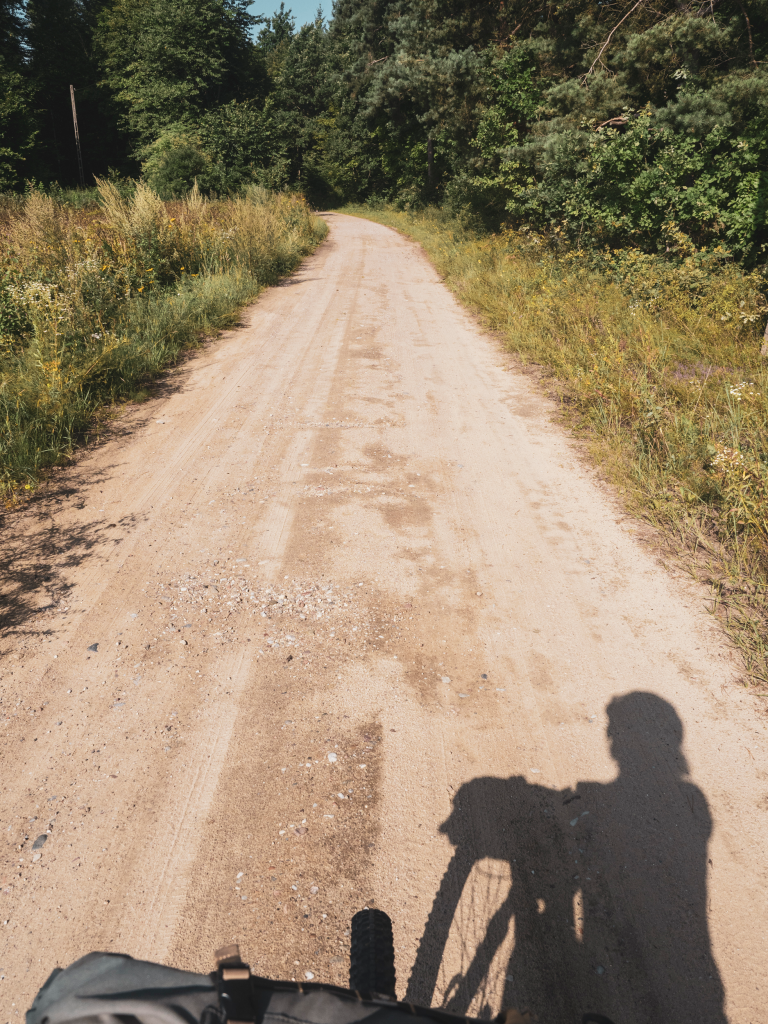
Don’t expect smooth tarmac and don’t hope to cycle Green Velo on thin road tyres.
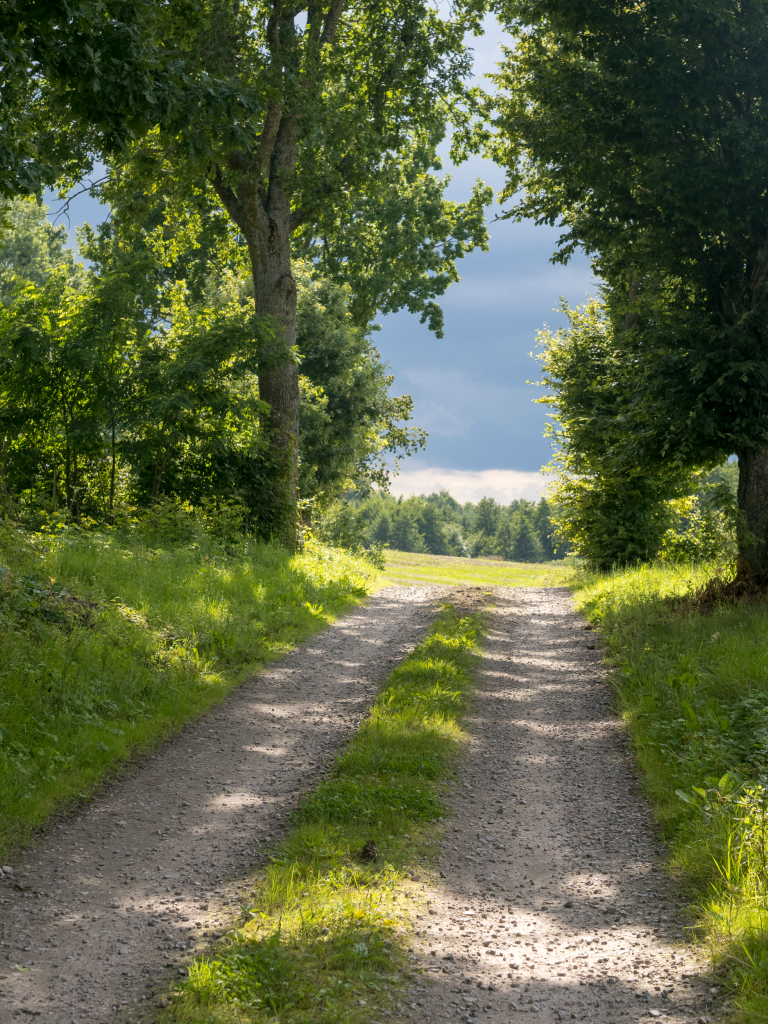
There will be a fair share of forest dirt tracks, often bumpy and uneven. Many public roads, for example in the Warmia region, are quite narrow, bumpy and full of potholes. A gravel bike, mountain bike or a touring bike with wider tyres will be the best choice.
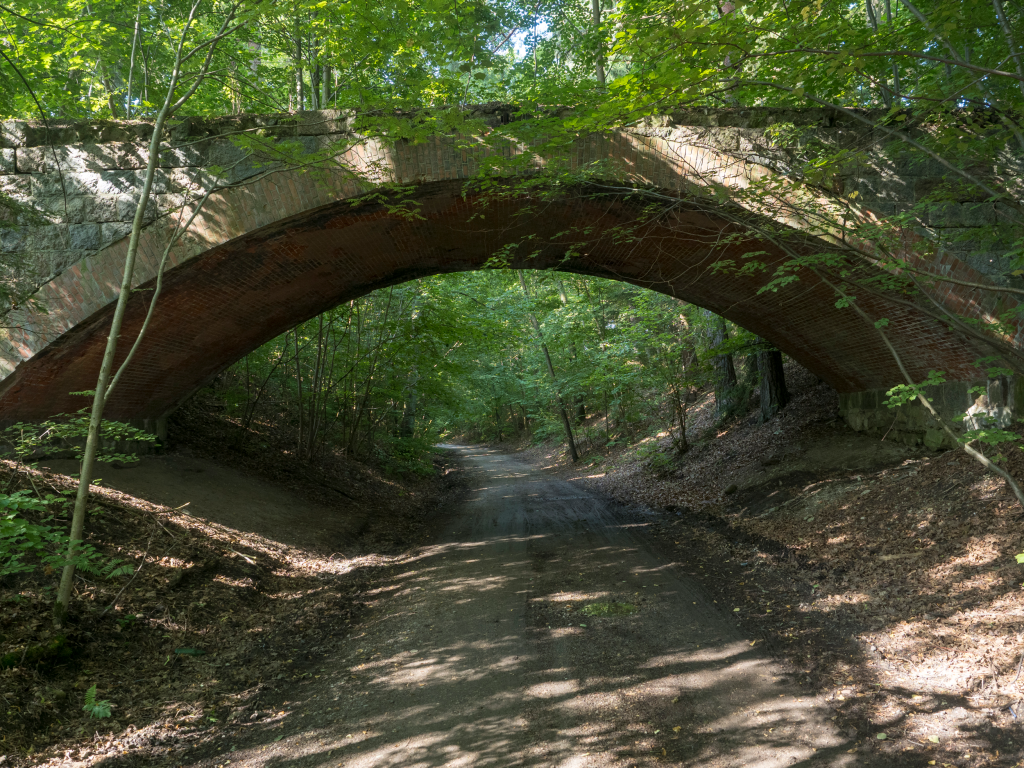
While the Green Velo leads you to some of the wildest and most beautiful places in Eastern Poland, it certainly isn’t a masterpiece of cycling infrastructure. Decent, separated cycle lanes are a rarity, and many times the official route leads you through some picturesque but neglected dirt roads, where it’s hard to maintain a reasonable tempo.
Cycling Green Velo with kids is possible, but there are some sections where you have to share the roads with cars (usually with little traffic).
Accommodation
You can use the official Green Velo Map to find bicycle-friendly places to stay along the way. The tourism infrastructure is quite well developed, and you shouldn’t have a problem finding a guesthouse or hotel. During the peak summer season or the holidays (like 1-3 May), it’s best to reserve your accommodation beforehand, especially if you’re travelling in a bigger group. Many of guesthouses also allow cyclists to pitch a tent in their gardens.
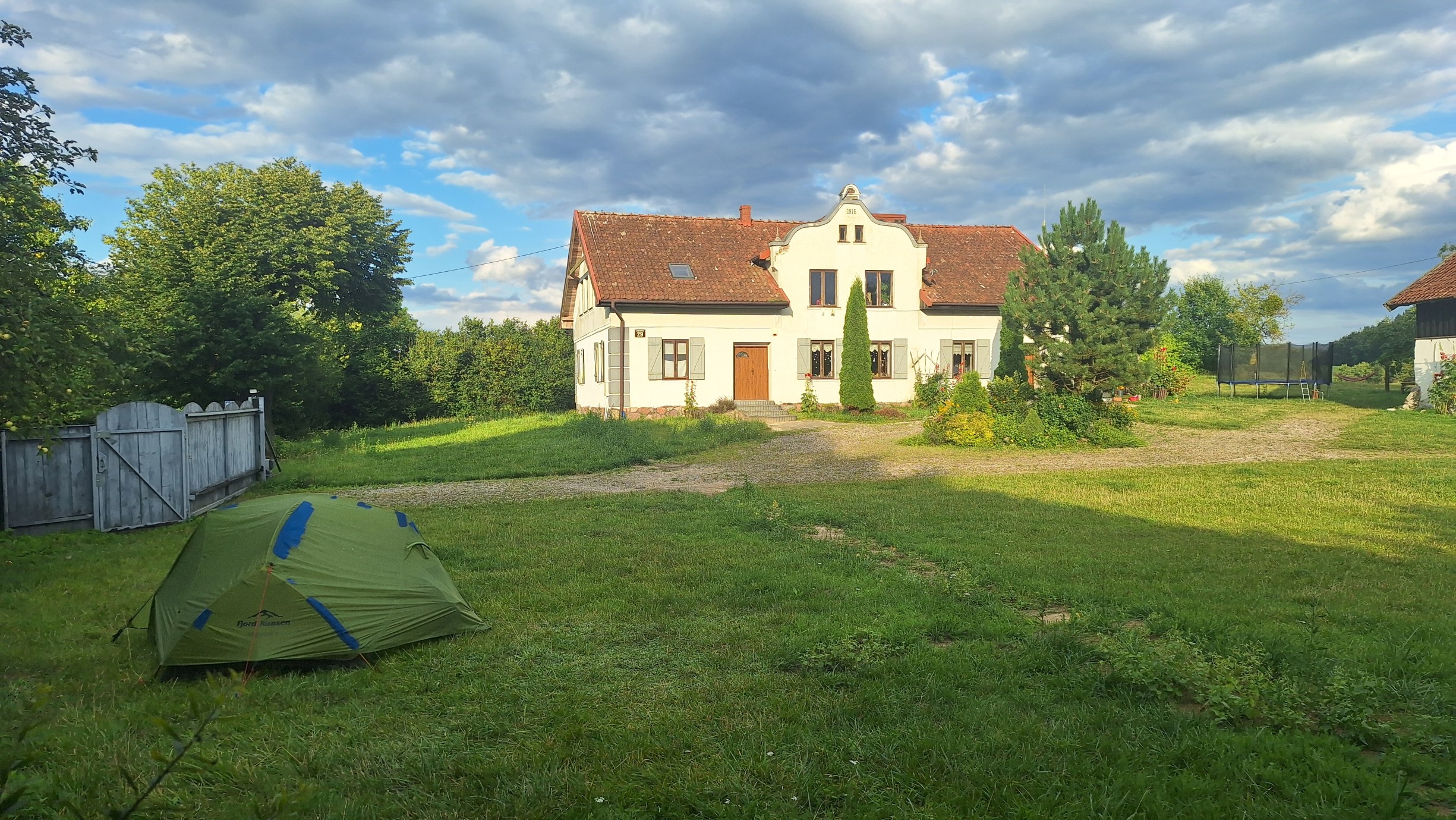
There are also numerous campsites. Wild camping is technically not fully legal in Poland, but it’s tolerated, as long as you don’t do it in national parks, protected areas, or on private land. Green Velo runs through some of the least densely populated regions of Poland, so finding a quiet spot to pitch your tent shouldn’t be a problem.
Food
Eastern Poland is an exciting destination for foodies, offering a variety of regional delicacies that can’t be found elsewhere in the country. Many of them are quite calorie-rich, but who would care about that when you’re cycling for hours every day! You should definitely try:
- Babka ziemniaczana (potato babka) – grated potatoes baked with onions, eggs and bacon
- Kartacze (potato dumplings with meat)
- Placki ziemniaczane (potato pancakes) – another potato classic that you can taste in the Warmia and Mazury region
- Proziaki – baked fluffy pancakes, typically eaten in Podkarpacie
Shops
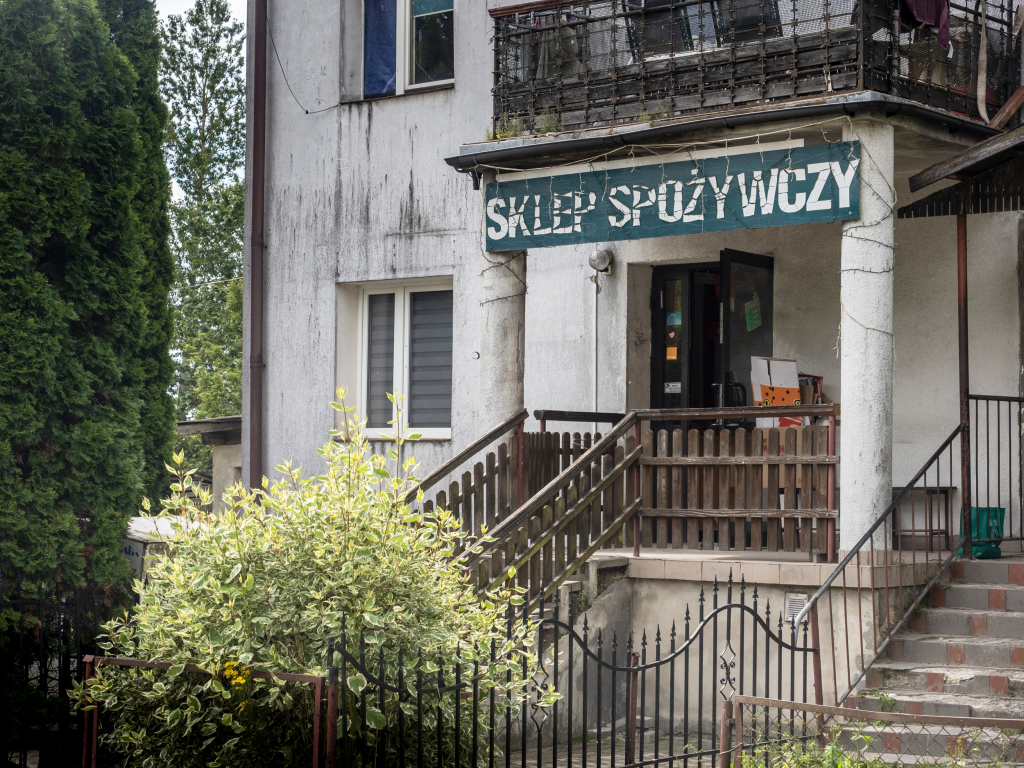
The Green Velo route passes through numerous towns and villages, so getting your supplies should never be a problem. Sometimes, however, the trail follows the more remote dirt roads, and a visit to the grocery store will require a little detour.
Keep in mind that most shops in Poland are closed on Sundays.
Best time to cycle the Green Velo
The Green Velo is at its greenest during Spring: from April to early June, the forests are full of chirping birds, and the meadows turn into vivid carpets of various flowers. It’s a great time to cycle the Green Velo. Just be aware that the first days of May are national holidays in Poland, so the trails might get a bit busier. Mornings and evenings can also be quite chilly, so pack some warmer clothes, especially if you plan to sleep in a tent.
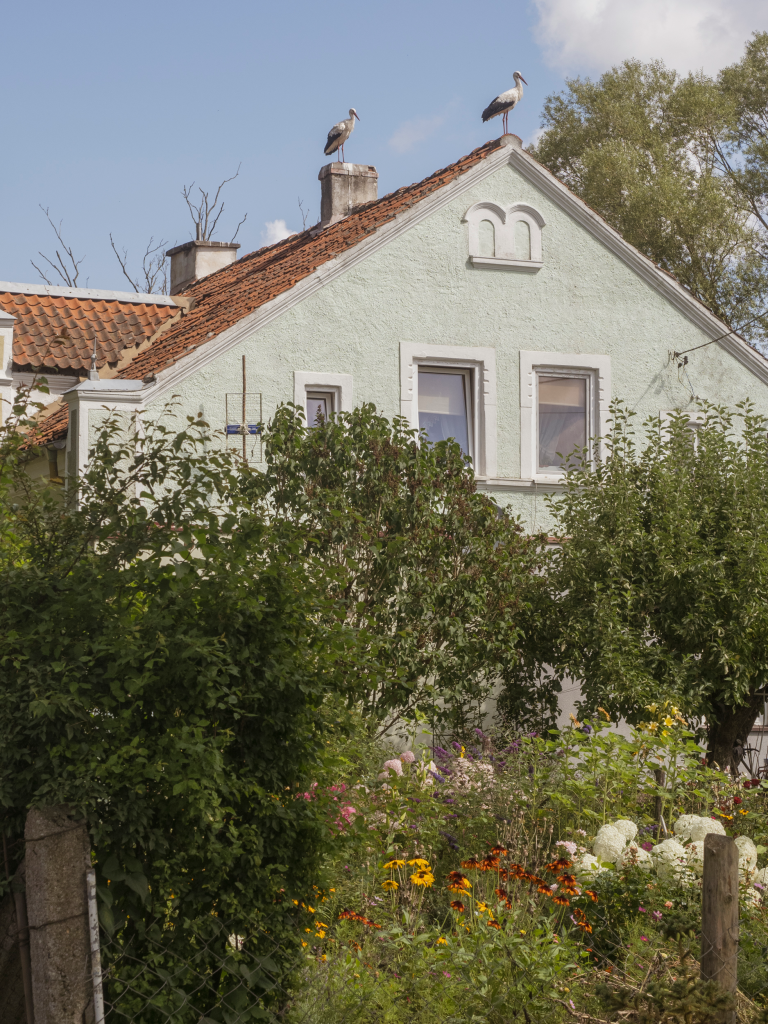
Summer on the Green Velo is fantastic too, as you’ll get a chance to take a dip in the Masurian Lakes and enjoy the long days (especially on the northern part of the trail). The temperatures typically range from 15 to 30 degrees. In the summer months, afternoon thunderstorms are quite common, so keep an eye on the weather forecast and don’t forget a good rain jacket.
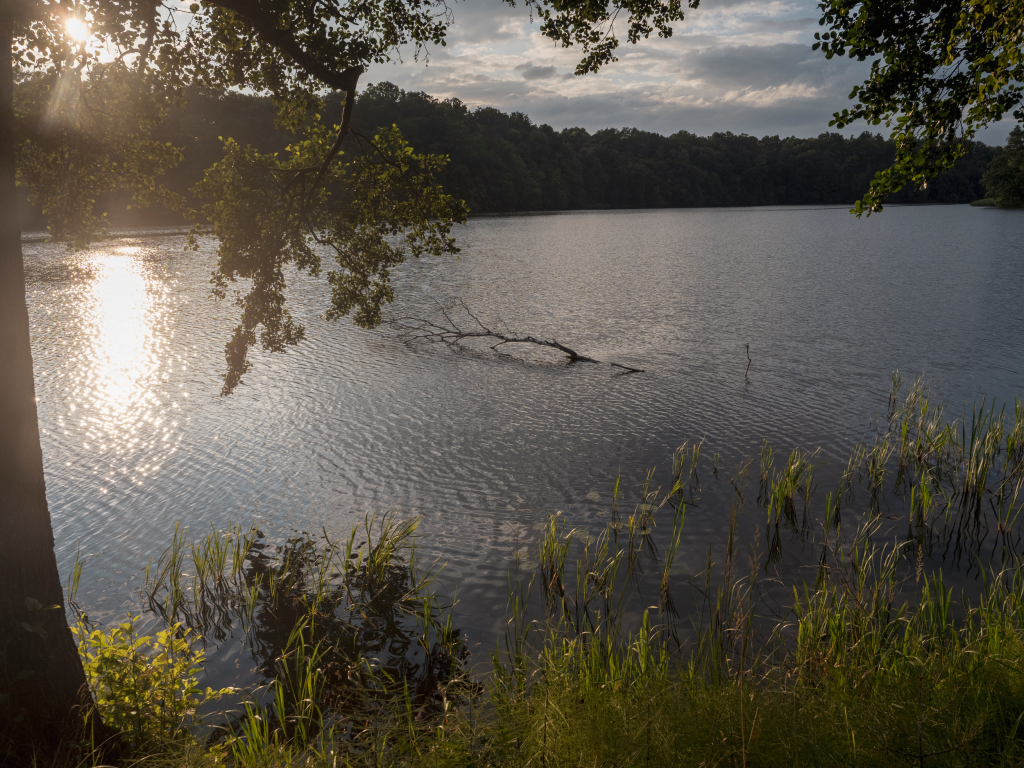
In September and October, you can enjoy what we call the Polish Golden Autumn – the leaves turn yellow and orange, turning the landscape into a magic backdrop for your cycling adventure. The mornings, however, can be pretty chilly (it’s not uncommon for the temperatures to drop below 0 in October), and it can rain a lot.
Getting there – public transportation
Depending on which part of Green Velo you’d like to explore, you have plenty of options to get to the start of the trail using public transport. Many towns along the route have direct train connections from major cities in Poland.
If you want to start cycling in the northern part of Green Velo, you can take a direct train to Elbląg from Gdańsk. The Regio train on this route runs multiple times a day and there are no reservations for bicycle places (but you still have to buy a ticket for your bike). I had a good experience travelling with my bike on this route – usually there was enough space for bikes and the level boarding makes it super simple, even if your bike is fully loaded.
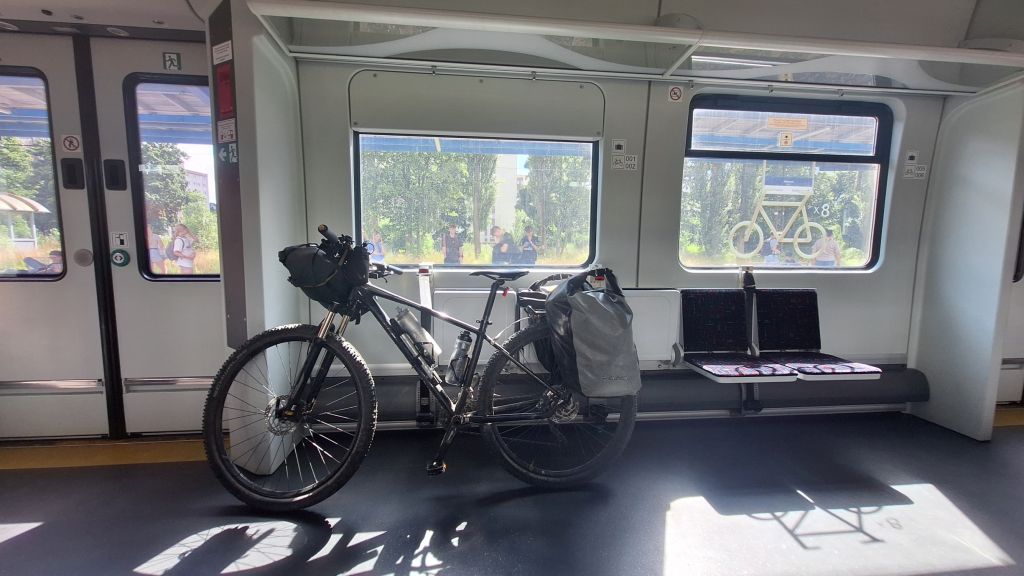
There are direct trains from Warsaw to many towns along Green Velo such as Suwałki, Augustów, Białystok, Hajnówka, Terespol, Chełm, Krasnystaw, Zamość, Przemyśl, Rzeszów, Sandomierz, and Kielce.
If you want to start your adventure in Sanok, you can take a direct train from Kraków.
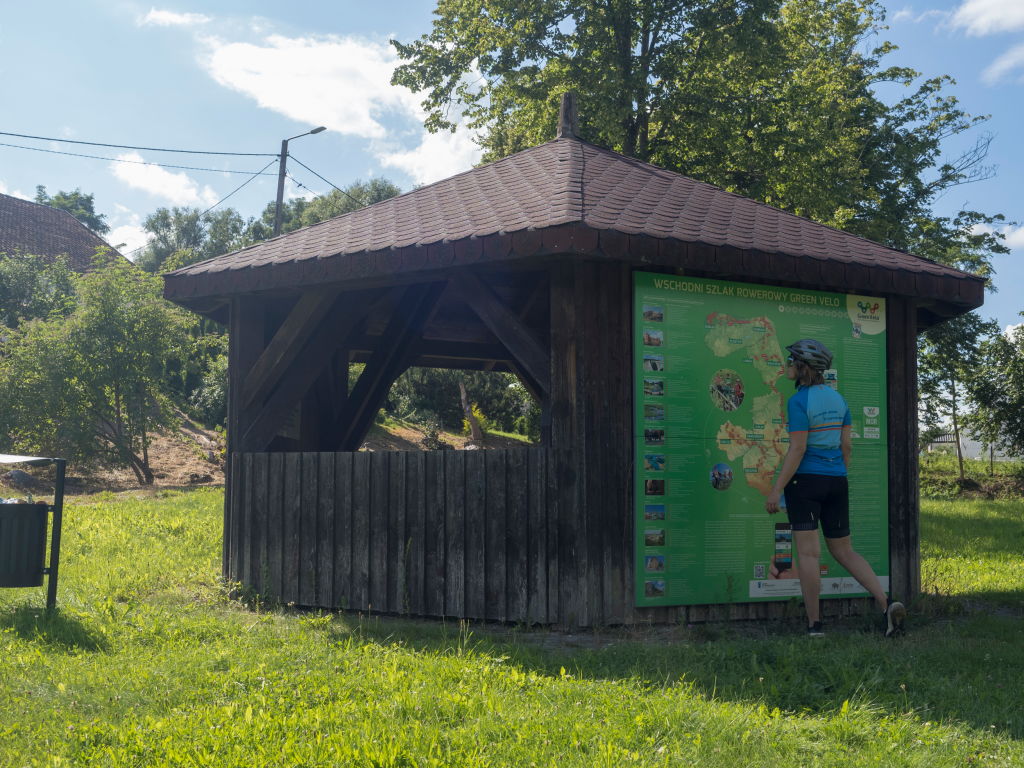
Although the entire Green Velo route is signposted, you should still have a map to help you navigate where signage is missing or unclear. If you’re a fan of paper maps, you can get one in the tourist information points in places like Elbląg, Zamość or Rzeszów. You can also download the PDF version of the map of each region from the official website.
If you prefer using your phone for navigation, the official Green Velo app is a great tool for planning your route and finding the attractions and points of interest along the route.
Another great route planner and navigation tool is Veloplanner, with its rich database of POIs and community-driven features such as photos from the route and reviews. It’ll also allow you to see what surface and road type you can expect at any given part of Green Velo. You can also download the GPX file from there and use it on your bike computer.
 English
  Polski