
Remember the spring of 2020, when the world stopped, borders closed, and all your great travel plans fell through? Manon and Dries, a Belgian couple, had just returned from their bike trip from Brussels to Tokyo when the pandemic started. But thanks to their spontaneous idea to open their garden to travellers, they accidentally started a global community, allowing people to connect and experience adventures and hospitality even when far-away journeys are out of reach. Today, Welcome To My Garden connects thousands of slow-travellers and hosts who want to share their land.
What is Welcome To My Garden?
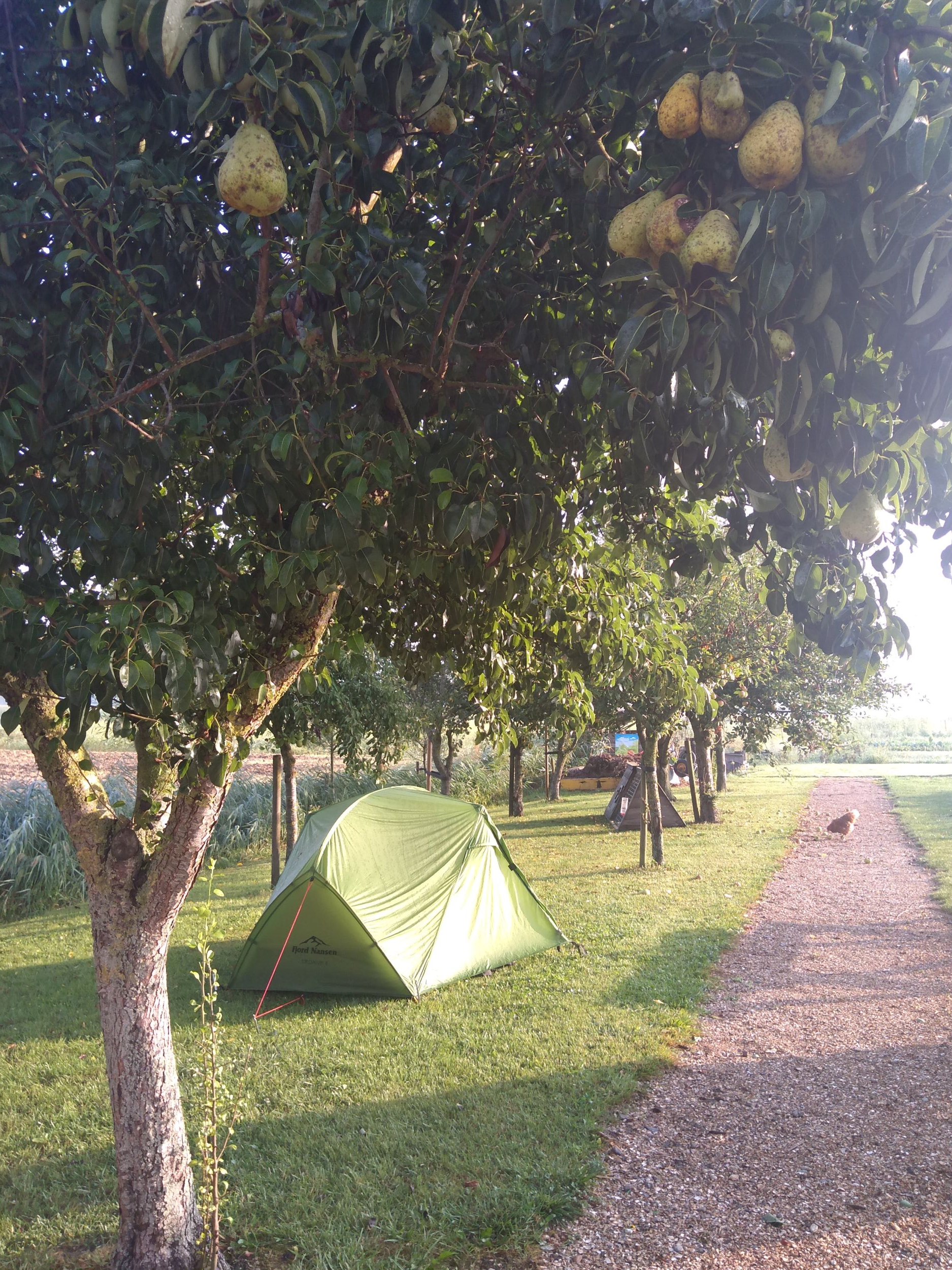
The premise of Welcome to My Garden (WTMG) is simple: if you have some space in your garden where travellers can pitch their tent for one night, you sign up as a host and wait for people to contact you before their trip. If you’re a slow traveller (cyclist, hiker, horseback rider, etc.), you sign up, check the map on the website for hosts along your route, send them a message, and if they’re available, show up at their house to camp in their backyard.
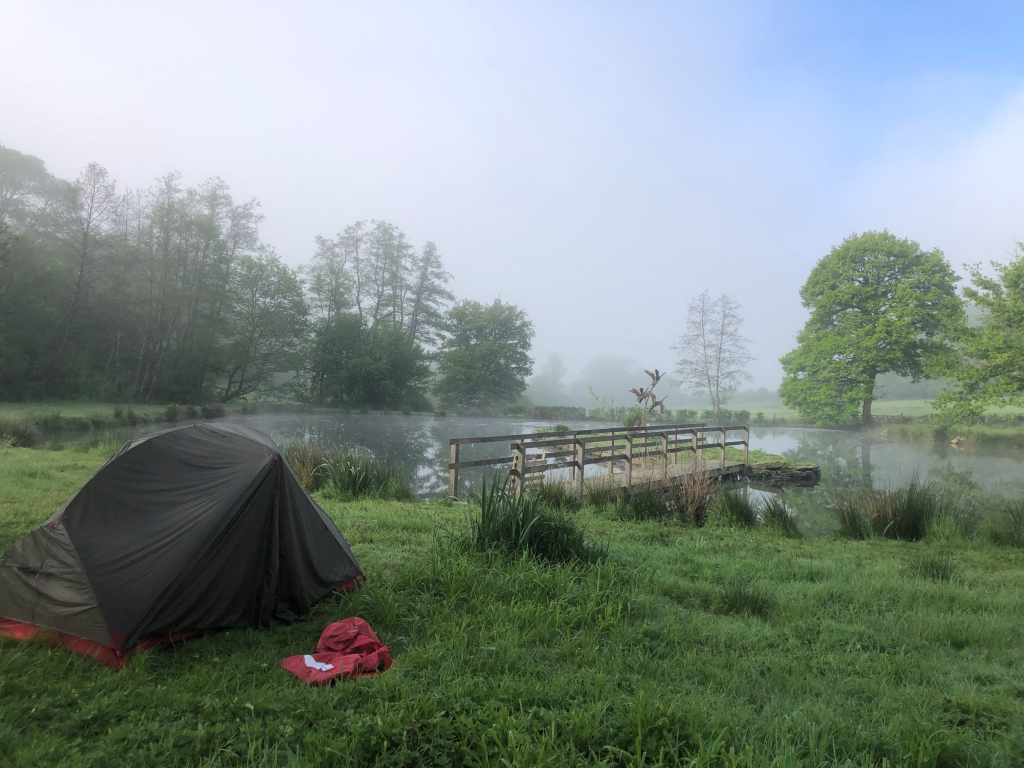
It’s a little like WarmShowers, but with one clear distinction: you don’t sleep in people’s houses but in your tent in their garden. It gives you enough personal space and reduces the effort the host has to put into welcoming you.
“When you host travellers inside your house, it’s much more intimate”, says Manon, the Co-founder of WTMG. “It also requires much more preparation; you need to make the bed, and sometimes food. When people come with their tents, the garden is just there. You don’t have to prepare anything.”
An idea born in the pandemic
When Manon and Dries cycled from Brussels to Tokyo in 2019, they experienced plenty of kindness and hospitality from the people they met along the way. But soon after they returned to Belgium, the borders across the world shut down. The COVID pandemic forced them and millions of other people to stay at home.
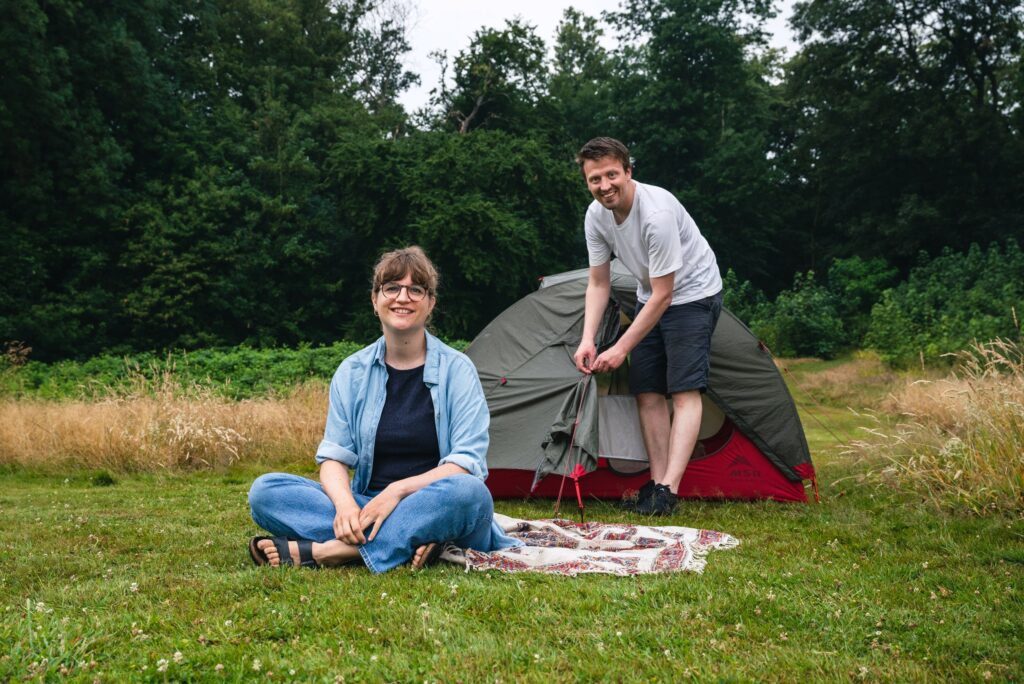
“It was a rainy and depressing Sunday afternoon.” Manon still remembers the day Dries came up with the idea that changed their life. “Everybody was like, ‘What are we gonna do? We can’t travel.’ And Dries thought it would be cool if people who cycle or hike could camp in his parents’ garden, 15 km outside of Brussels.”
He created a simple map with one garden on it and posted it in a Facebook group for hikers.
“All of a sudden, it went crazy”, recalls Manon. “In two hours, people added 50 more gardens to the map. And after two weeks, we had 500 gardens. We never expected people would be so enthusiastic about letting slow travellers camp in their backyards.”
It turned out that, in the midst of depressing news and social isolation, people were desperate to share a positive idea that would allow them to travel locally and connect with others safely, without breaking the rules of social distancing.
Initially, most of the hosts were cyclists and hikers who wanted to give back to the community. But gradually, many people who cannot travel decided to open their gardens and welcome slow travellers.
“We have many older people registered as hosts”, says Manon. “For example, there are two women, Marie-Marte and Christiane, who live in a small village in the Belgian Ardennes. They have hosted around 200 times in their tiny garden. They cannot drive or cycle anymore, so they always say: ‘If you can’t go on holidays yourself, then you let the holidays come to you.'”
Apart from staying in private gardens, travellers can, for example, camp in the garden of a retirement home in Bruges.
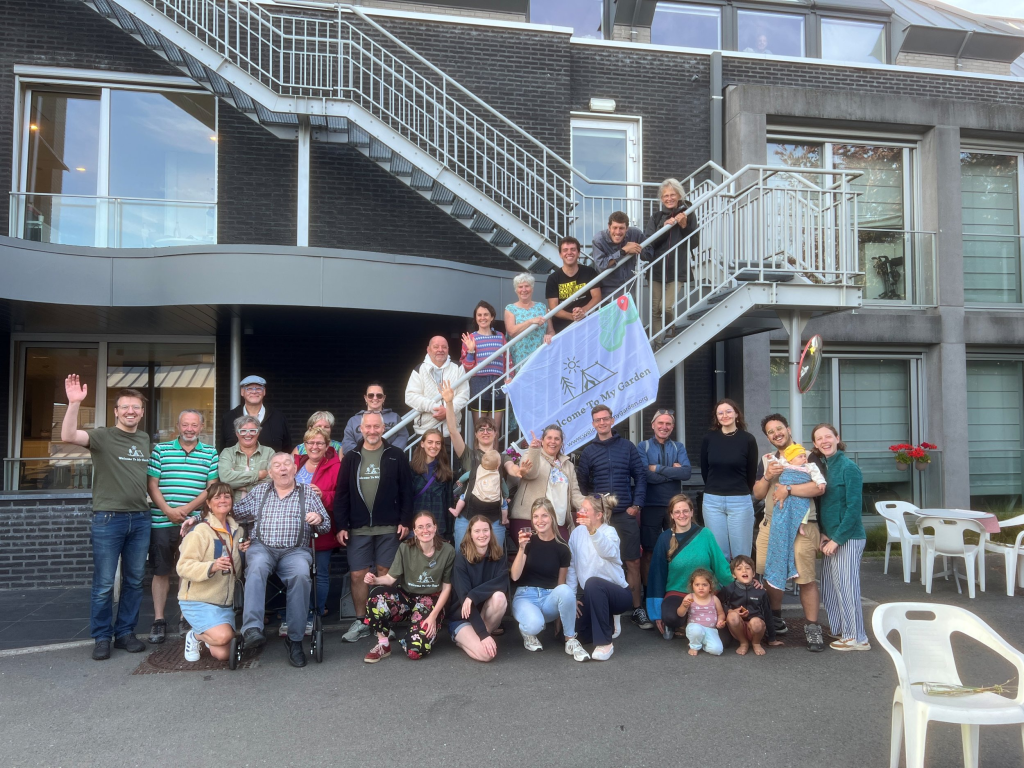
“The retirement centre Westervier has been a host for about a year. Josefien, the coordinator, said, ‘There is always someone here, why wouldn’t we welcome travellers to stay with us?'”
With over 100 permanent residents, the retirement community enjoys hosting cyclists and hikers, giving them a chance to meet people they might not have met otherwise.
“Travellers often get offered coffee, and the residents enjoy talking with them. Last year, they hosted a Spanish-speaking guest, and Josefien suddenly heard one of the residents speaking Spanish”, says Manon. “She was surprised: they had no idea he knew this language! For many older people, especially those living in small villages, Welcome To My Garden is an excellent tool against social isolation.”
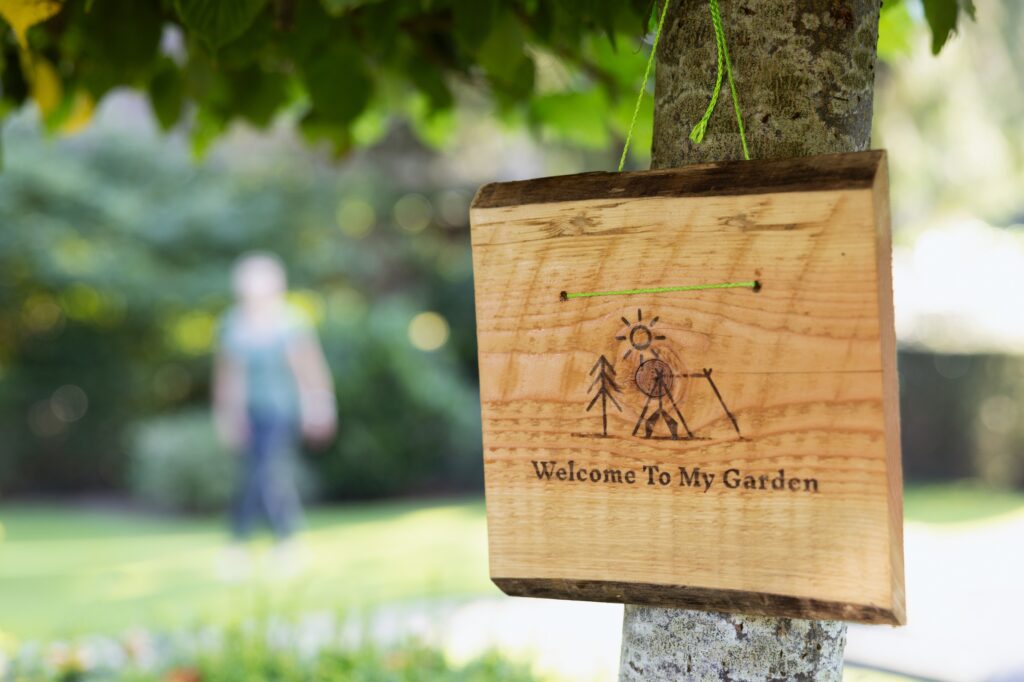
People are good
During their cycle tour from Brussels to Tokyo, Manon and Dries made plenty of memories and experienced kindness from people in different countries.
“We were so full of gratitude”, Manon smiles when she recalls their great adventure. “The biggest thing that I’ve learned from this travel was: wow, people are actually good. There is this narrative in society that the world is dangerous, that people will steal from you, or do other nasty things when you travel. Of course, you have some bad people in the world; I don’t want to be naive about it. But most of them are good. And that’s what WTMG is about: creating social connections that make slow travel possible.”
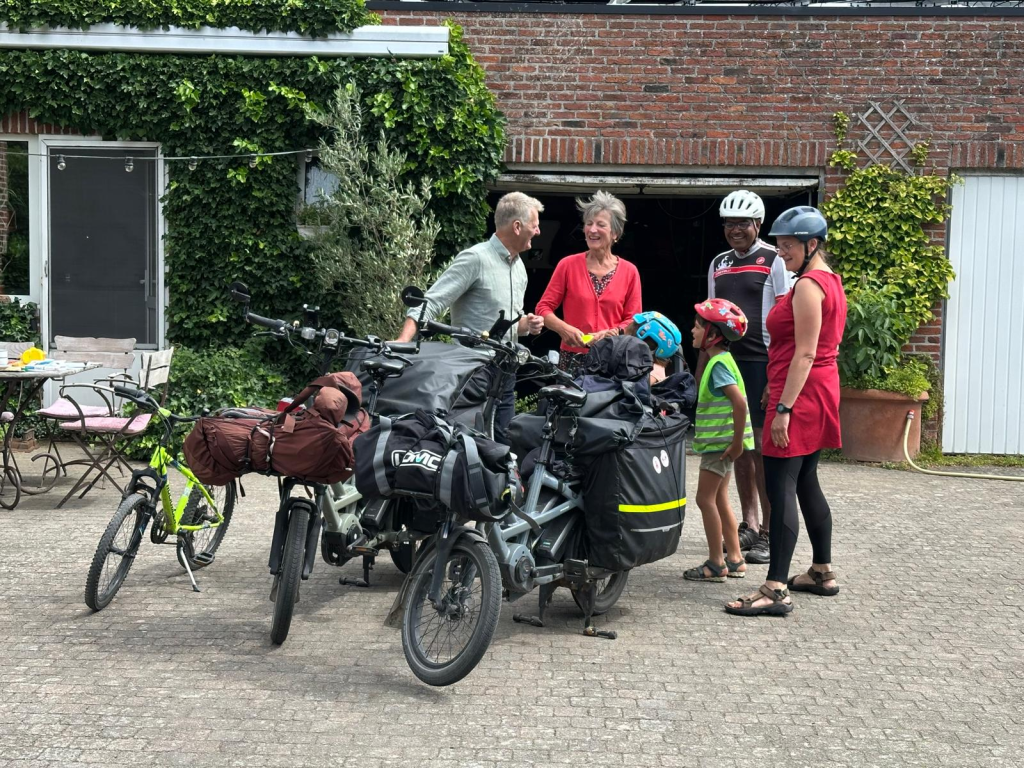
Welcome to My Garden helps to turn even a weekend ride close to home into a unique experience.
“Last weekend, I went with my sister and our kids for just a 24-hour ride. We cycled only 30 kilometres and stayed in a beautiful garden whose owner was very passionate about his region”, says Manon. “He organised a market with local products on Saturdays. There was also a village party to celebrate the longest day of the year. And in those 24 hours, we experienced so much, and I connected with my sister in a more meaningful way than I had in years. I think this kind of travel has a great impact on mental wellbeing: you’re not only out in nature but you also connect with people you wouldn’t have met otherwise, even though they don’t live far.”
Idea spreading by word of mouth
What started as a handful of gardens in Belgium, five years later, is a community of 8000 hosts, all over the world.
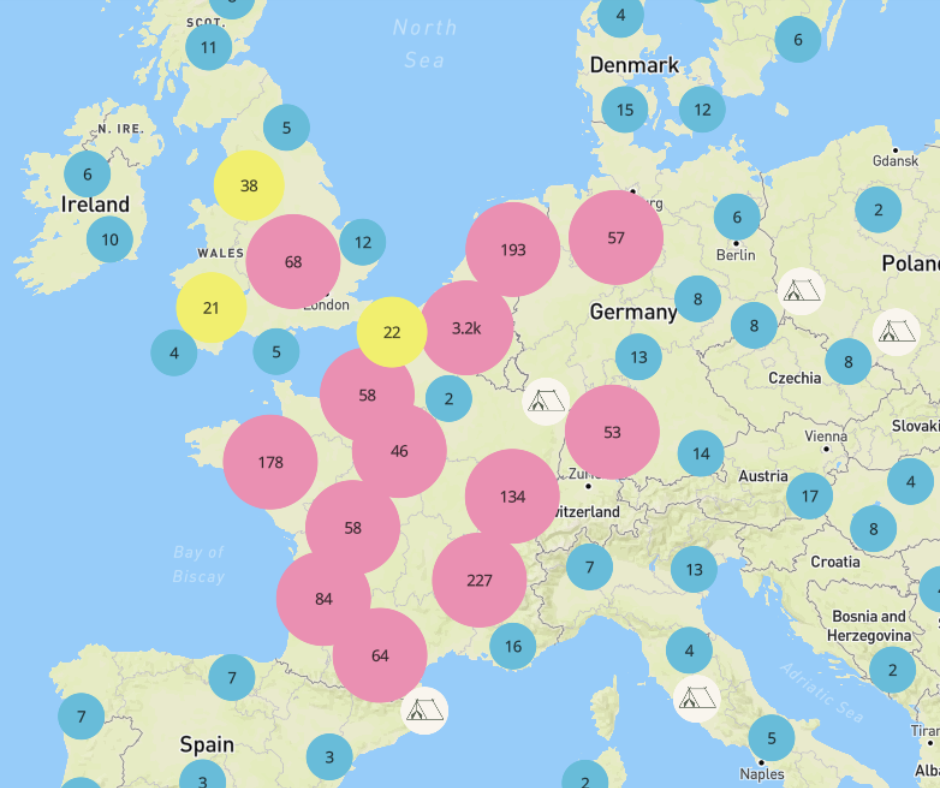
“We have never done any promotional campaigns or paid ads on Facebook. It all happened by word of mouth. We weren’t even aiming to have so many gardens”, explains Manon. “It is not a growth story, it’s a community story.”
Welcome to My Garden is registered as a social enterprise, with three full-time employees who ensure the website functions correctly and that users are safe.
“We decided to introduce paid membership (36 euros per year) because we didn’t want to sell our project to big corporations or sponsors”, explains Manon. “We are working for our community. People are counting on us. As soon as you have a bug on Welcome to My Garden, you have 10 emails in your mailbox. So we drop everything else and try to fix it as fast as possible.”
Today, most gardens are located in Belgium, the Netherlands and France, but the idea is spreading all around the world. There are more than a hundred gardens in the USA. You can also find a host in Kenya, Thailand, Japan, Iran or Colombia.
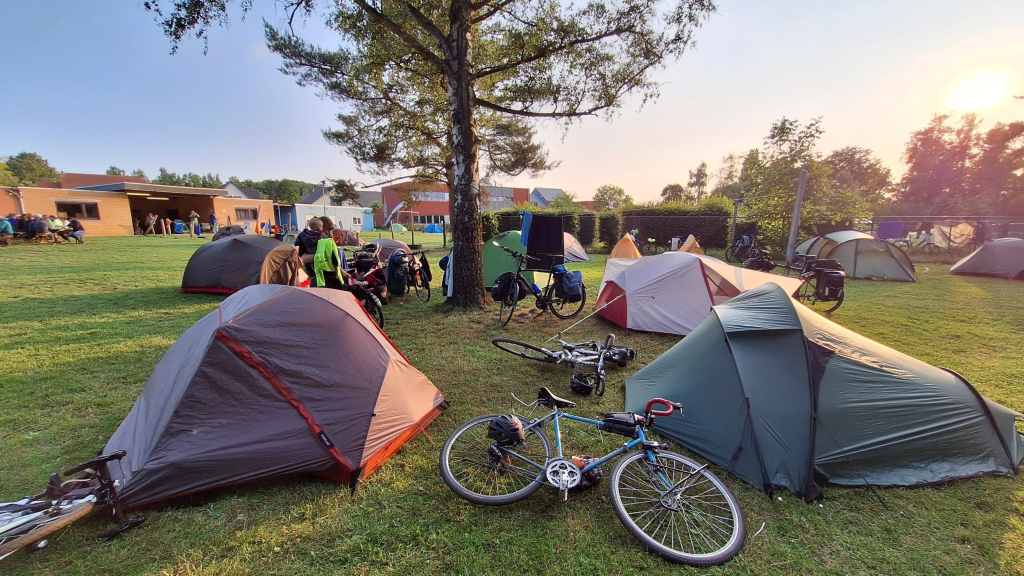
where you can spend a weekend enjoying a true sense of community, riding and camping with cyclists from all around the world. Foto: Manon’s private archive.
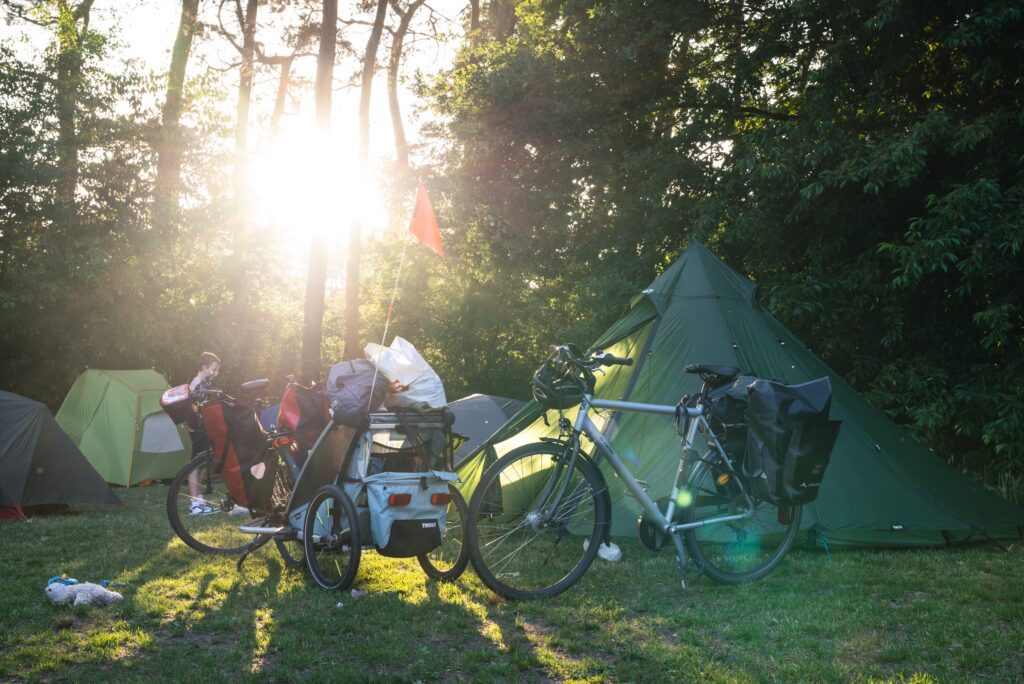
You can join the Welcome To My Garden community as a host for free. Travellers need to purchase a membership (36 euros/year) that allows WTMG to stay fully independent and ad-free.
 English
  Polski
This is a great idea. Less intrusive for the host than Warmshowers, and more independence and privacy for the traveller. I stopped using warmshowers years ago because most ties I got no replies from hosts.
I like the idea of WTMG better, really hope it spreads.